Trump’s Televised Address Triggers Political Firestorm as Calls for the 25th Amendment Intensify
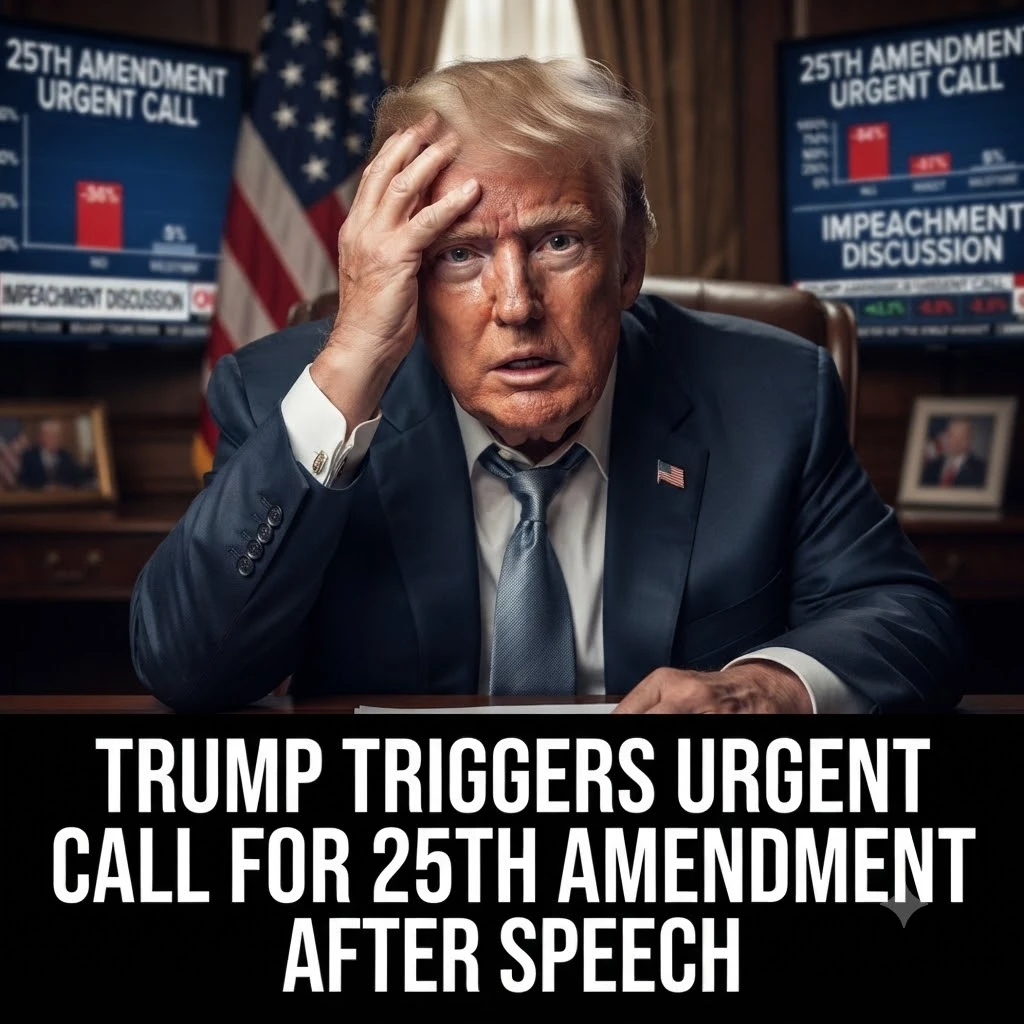
Donald Trump’s latest nationally televised address has ignited one of the fiercest political backlashes of his presidency, fueling renewed debate over his fitness for office while reopening long-running disputes about election integrity, intelligence assessments, and executive accountability.
The speech, intended to present newly declassified information surrounding previous U.S. elections, instead triggered immediate criticism from across the political spectrum. Within hours, lawmakers, analysts, and commentators were questioning not only the substance of the president’s claims but also his performance during the nationally broadcast appearance.
Among the strongest reactions came from California Governor Gavin Newsom, who described the address as a moment worthy of discussions surrounding the 25th Amendment, arguing that the president’s remarks reflected dangerous instability rather than coherent leadership during a period of international uncertainty.

Critics pointed to several moments in which Trump appeared to struggle with lengthy explanations, lost his train of thought, or delivered statements that opponents characterized as confusing and internally inconsistent. Supporters, however, dismissed those criticisms as politically motivated attacks amplified by hostile media coverage.
The controversy deepened almost immediately after the speech when officials associated with the administration offered more measured assessments of the declassified intelligence than the president himself had presented during his nationally televised remarks.

During a media interview following the address, Trump ally John Solomon acknowledged that intelligence agencies had found no evidence that foreign governments successfully altered vote totals or physically changed ballots during the 2020, 2022, or 2024 federal elections. The exchange quickly became one of the evening’s defining moments.
Attention also shifted toward CIA Director John Ratcliffe, whose position placed him at the center of the president’s accusations against the intelligence community. Trump alleged that officials had concealed critical information from him during his first administration and demanded investigations into those responsible.

Ratcliffe’s subsequent public comments, however, stopped short of endorsing the president’s broader allegations regarding manipulated voting systems. Instead, his carefully worded response avoided confirming claims that electronic voting machines or ballot counts had been systematically compromised by foreign actors.
Further scrutiny emerged as journalists and intelligence specialists began examining the newly released documents themselves. Their reviews suggested that one of the most significant conclusions contained within the records differed substantially from the emphasis presented during the president’s address.
According to multiple analysts, the documents primarily reinforced earlier intelligence assessments that Russian influence operations represented the most extensive foreign effort to shape public opinion during the 2020 presidential campaign through coordinated disinformation rather than direct manipulation of vote totals.

Observers noted that this finding received little attention during Trump’s remarks, despite occupying a prominent place within the declassified material. The discrepancy immediately fueled accusations that politically favorable sections had been highlighted while less convenient conclusions were largely ignored.
Even traditionally supportive media organizations appeared unusually cautious in their immediate coverage. Some broadcasters emphasized that they had not independently verified the president’s claims before reporting them, signaling a noticeably more restrained editorial approach than during previous political controversies.

The speech also unfolded against a backdrop of mounting international instability, including heightened military tensions in the Middle East, adding urgency to concerns among critics who argued that national leadership requires clarity and consistency during periods of global crisis.
Whether the address ultimately reshapes public opinion or simply deepens existing political divisions remains uncertain. What is already clear, however, is that the evening transformed what was intended as a presidential presentation into another defining chapter in America’s increasingly contentious debate over leadership, institutional trust, and the future of its democratic system.