Todd Blanche Faces Fierce Senate Questions Over Epstein Case and Legal Conduct
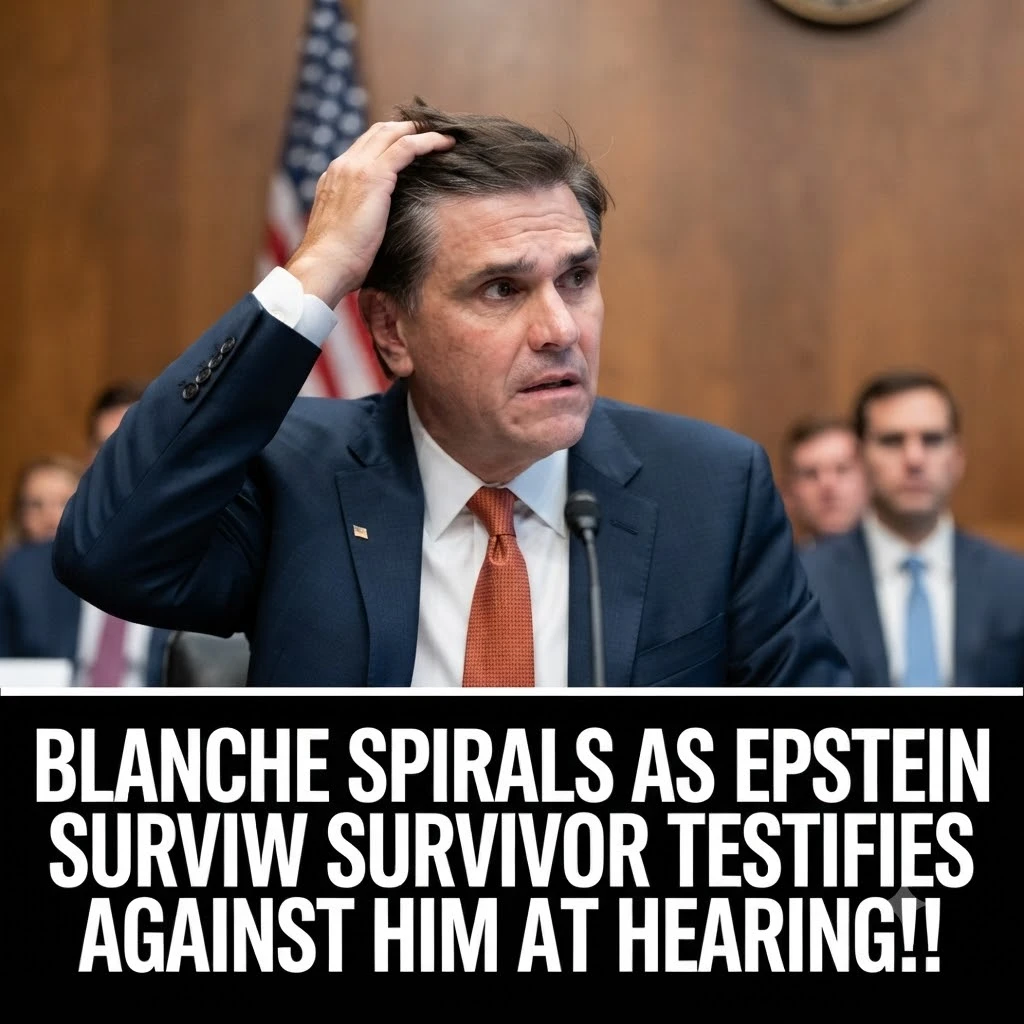
The second day of Todd Blanche’s confirmation hearing for Attorney General unfolded as one of the most emotionally charged sessions in recent Senate memory, with Democratic lawmakers pressing him over the Jeffrey Epstein investigation, his interactions with survivors, and questions surrounding his own professional credibility. What began as a confirmation hearing increasingly resembled a broader examination of trust, accountability, and the ethical standards expected of the nation’s top law enforcement official.
Much of the hearing centered on the presence of several Epstein survivors seated inside the committee room, a powerful reminder that the controversy extends beyond legal arguments into the lives of those still seeking answers. Their attendance shaped the tone of the proceedings, with senators repeatedly emphasizing that justice cannot be measured solely through court filings and criminal convictions.

Senator Dick Durbin opened one of the hearing’s most closely watched exchanges by asking Blanche to make a simple public commitment: personally meet with the survivors who had traveled to Washington within the next month. Durbin argued that any future Attorney General should be willing to hear directly from individuals whose lives were forever altered by Epstein’s crimes.
Blanche declined to make that commitment. He explained that many of the survivors are represented by legal counsel, creating ethical considerations that could complicate private discussions outside established legal channels. His answer, while framed as a matter of professional responsibility, failed to satisfy Democratic members of the committee.

The issue resurfaced moments later when Senator Cory Booker questioned Blanche about his willingness to meet with convicted sex trafficker Ghislaine Maxwell while declining a similar meeting with Epstein’s victims. Booker argued that the apparent contrast raised difficult questions about priorities, compassion, and the message being sent to survivors seeking acknowledgment from the Justice Department.
Booker also raised concerns about Maxwell’s transfer to a minimum-security prison camp following her meeting with Blanche. He questioned whether the move complied with standard Bureau of Prisons practices for inmates convicted of child sex trafficking, suggesting the timing would inevitably invite public scrutiny regardless of the official explanation.

The hearing’s emotional intensity was reinforced by public criticism from Epstein survivor Danny Benky, who argued that Blanche’s conduct demonstrated greater loyalty to the president than to the broader interests of the American public. Benky maintained that the Justice Department requires leadership capable of inspiring confidence among victims as well as the wider public.
Attention later shifted from the Epstein investigation to Blanche’s own legal record. Senator Richard Blumenthal questioned him about a recent 56-page federal court opinion that sharply criticized aspects of his conduct in unrelated litigation and addressed the issue of professional accountability.
Blanche disputed the characterization of the ruling, arguing that the court had not formally referred him for disciplinary proceedings in the manner suggested by critics. Blumenthal challenged that explanation, citing the language contained within the court’s opinion and pressing Blanche to reconcile his testimony with the judicial record.

The exchange quickly became one of the hearing’s most contentious moments, reflecting broader concerns among Democratic senators about whether Blanche had been fully forthcoming under oath. Republicans, however, largely defended the nominee, arguing that disagreements over legal interpretations should not overshadow his qualifications or years of experience in high-profile litigation.
Despite the pointed questioning and emotionally charged testimony, the political outlook for Blanche’s nomination remains largely favorable. With Republican support appearing to hold firm and several key senators signaling confidence in his qualifications, his path toward Senate confirmation continues to look increasingly secure.
Even so, the second day of testimony underscored that Blanche’s nomination has become about far more than filling a Cabinet position. For supporters and critics alike, the confirmation battle now represents a broader test of how the Justice Department should balance independence, accountability, compassion, and public trust while confronting some of the most politically sensitive and emotionally consequential cases in modern American history.