Trump’s Primetime Address Ignites Political Firestorm as Declassified Election Claims Trigger Fresh National Debate
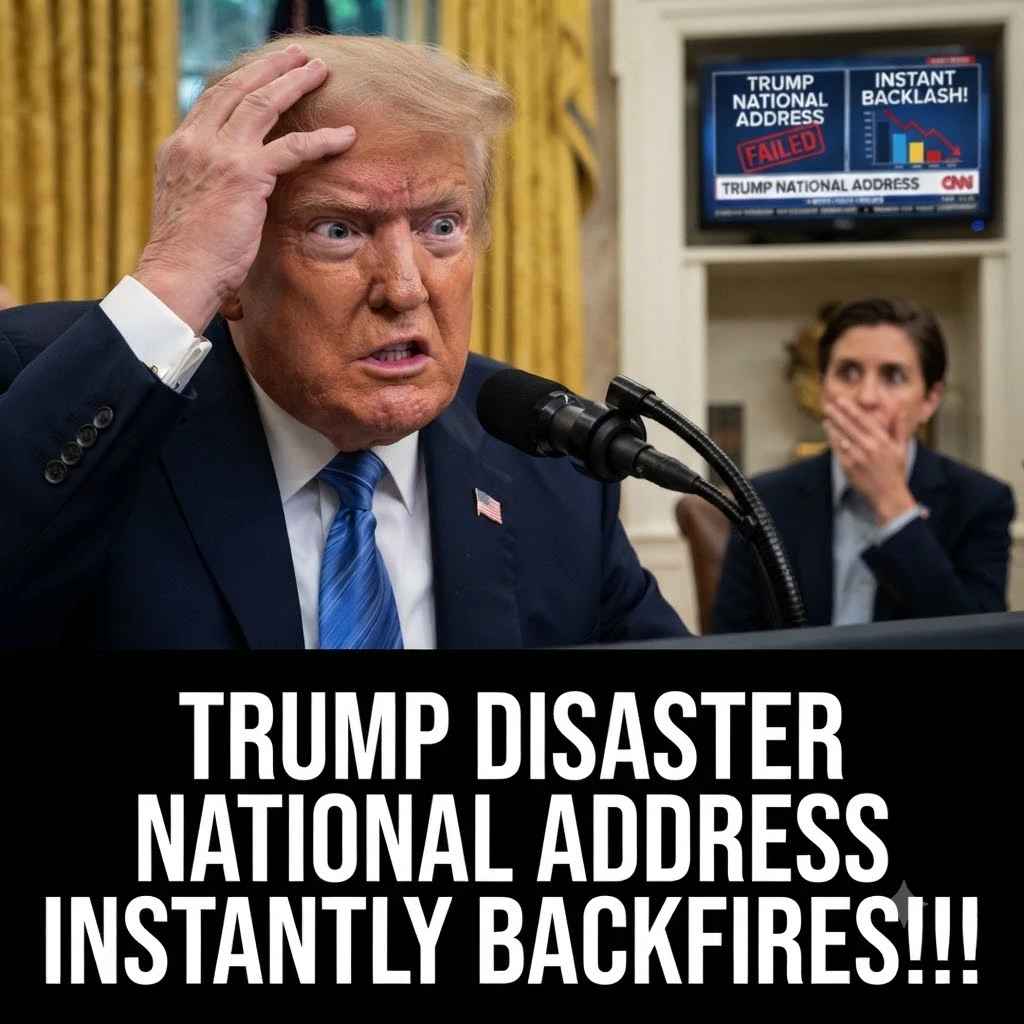
Donald Trump’s nationally televised address from the White House ignited an immediate political storm, reopening bitter disputes over the 2020 election and placing newly declassified intelligence documents at the center of an already polarized national conversation.
Speaking for roughly 13 minutes from the East Room, the president framed his remarks as a long-awaited disclosure of evidence he said had been hidden from both the public and previous investigations. Within minutes, reactions spread across Washington and the media landscape.
Trump reserved some of his sharpest criticism for major television networks. He accused ABC and NBC of deliberately resisting the live broadcast of his speech, describing the networks as politically motivated institutions attempting to suppress information unfavorable to their preferred political agenda.

He went further by suggesting broadcasters using public airwaves should face federal consequences if they refuse to carry presidential addresses, arguing that their licenses should be reviewed because of what he characterized as selective censorship of elected leadership.
The centerpiece of the address focused on allegations involving China. Trump announced the declassification of intelligence files spanning several years, claiming they revealed an unprecedented operation in which Chinese actors accessed information tied to approximately 220 million American voter records during the 2020 election cycle.
According to the president, those records—including voter names, addresses, and political affiliations—formed the foundation of a broader effort to facilitate fraudulent ballots benefiting Joe Biden. He presented the allegations as evidence of foreign interference that demanded renewed congressional action.

Election experts and analysts quickly challenged that narrative, noting that voter registration databases are largely public records across many states and are routinely accessed by political campaigns, researchers, journalists, and advocacy organizations under existing election laws.
Trump also alleged that intelligence officials deliberately withheld critical information from him while he served in office. He claimed Presidential Daily Briefings had been altered by entrenched bureaucrats and that important FBI intelligence reports were intentionally buried inside federal agencies.
Adding another dramatic claim, the president asserted that bags of sensitive government documents intended for destruction years earlier had instead been accidentally preserved, describing the episode as evidence of profound institutional failures within the nation’s intelligence bureaucracy.

He further alleged that intelligence reports pointed to electronic election interference linked to Venezuela’s government, arguing that sophisticated digital manipulation plans had been identified. Trump urged Congress to swiftly approve his proposed election security legislation, calling it essential to restoring public confidence.
However, attention rapidly shifted toward the contents of the declassified material itself. Journalists and intelligence observers reviewing the released documents argued they contained extensive references to Russian efforts to influence American political narratives during the 2020 campaign, particularly through disinformation targeting Joe Biden and Hunter Biden.
Critics noted that while Russia occupied a prominent place in the documents, Trump’s address devoted almost no attention to those findings, instead emphasizing allegations involving China and Venezuela. That contrast immediately fueled accusations that the speech selectively highlighted evidence supporting predetermined political conclusions.

The political fallout extended beyond partisan debate. Senator Mark Warner sharply criticized television networks for broadcasting portions of the address without immediate fact-checking, warning that unchallenged election claims could further erode public confidence in democratic institutions.
As lawmakers, intelligence officials, and legal experts continue examining both the speech and the newly released records, the controversy is likely to deepen an already fierce national debate over election integrity, government transparency, media responsibility, and the enduring political legacy of the 2020 presidential race.