Middle East on the Brink: U.S. Strikes on Iran Trigger Regional Retaliation and Raise Fears of a Wider War
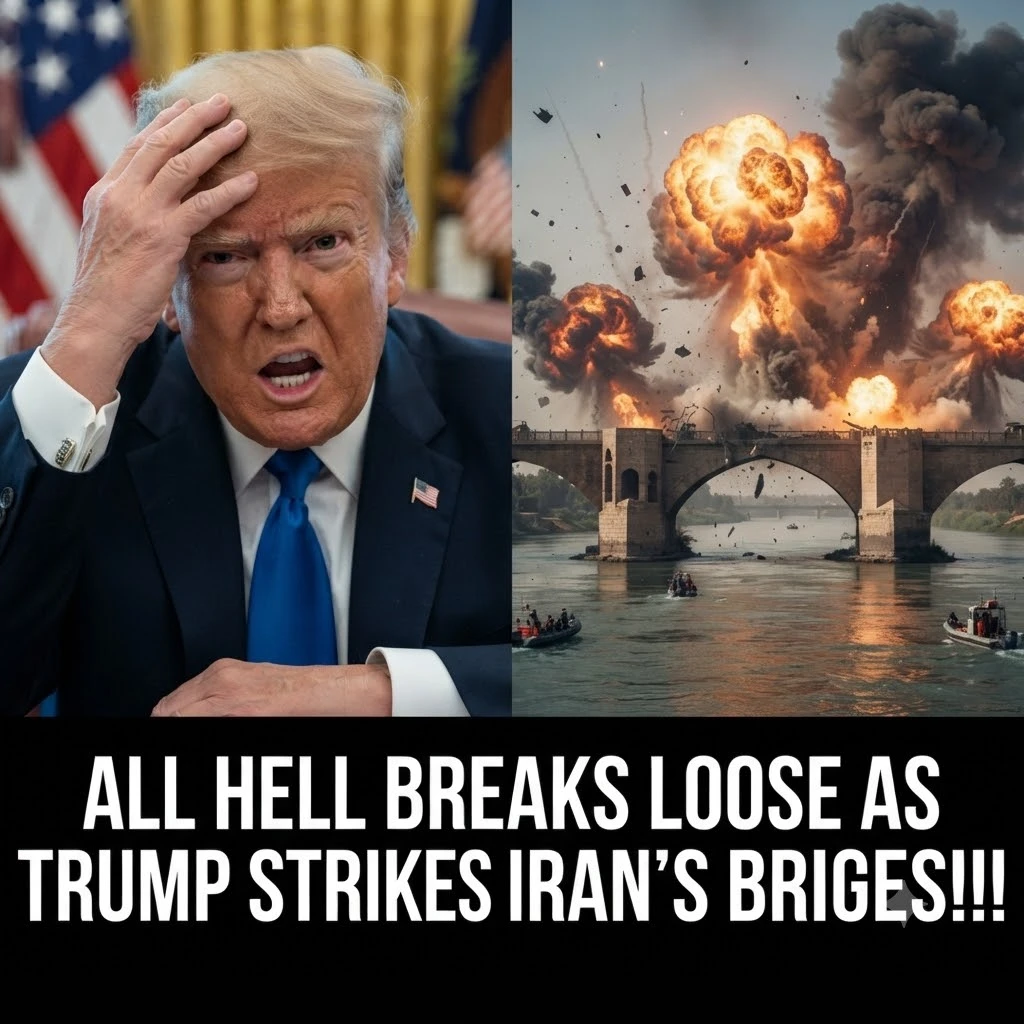
The Middle East entered one of its most volatile moments in recent years after the United States launched coordinated airstrikes against key Iranian transportation infrastructure, prompting an immediate military response that sent shockwaves across the Gulf and reignited fears of a broader regional conflict.
American forces targeted several strategic bridges, railway links, and logistics hubs in Iran’s Hormozgan Province, aiming to disrupt military supply routes supporting naval operations near the Strait of Hormuz. Officials described the strikes as precision attacks designed to weaken Iran’s operational capabilities without targeting civilian populations.
Among the damaged sites were the Bandar Khamir overpass, the Garave bridge, and a major freight railway serving Shahid Rajaei Port, Iran’s largest commercial gateway. Iranian authorities, however, reported civilian casualties, claiming at least seven people were killed when one bridge was struck during the operation.

The military action represented a dramatic escalation in Washington’s campaign to pressure Tehran, shifting beyond sanctions and proxy confrontations toward direct attacks on infrastructure viewed as essential to Iran’s military logistics. Analysts warned the move risked fundamentally changing the nature of the confrontation.
Iran answered swiftly. Under what officials described as an “infrastructure-for-infrastructure” strategy, waves of drones and ballistic missiles were launched toward neighboring countries hosting American military installations, dramatically widening the geographical scope of the crisis within hours.
One of the most alarming targets was the King Fahd Causeway, the only land connection between Bahrain and Saudi Arabia. Emergency crews rushed to the area as reports emerged of attempted strikes, highlighting the vulnerability of critical regional infrastructure.

Explosions and interceptor activity were reported across Bahrain, Kuwait, and Qatar as air-defense systems engaged incoming projectiles. Military sources indicated that American positions, including HIMARS assets stationed in Kuwait, were among the intended targets during the retaliatory campaign.
The growing instability quickly disrupted civilian life. Commercial flights arriving and departing from Doha were suspended amid concerns over missile activity, while oil facilities in Iraq reportedly reduced operations as governments assessed the rapidly evolving security environment across the Gulf.
Adding another layer of uncertainty, an Iranian-aligned militia reportedly announced a multimillion-dollar bounty targeting President Donald Trump, underscoring how quickly military confrontation has spilled into political and symbolic escalation with potentially unpredictable consequences.

Defending the operation, White House Press Secretary Karoline Leavitt argued that the strikes were a direct response to Iranian attacks threatening international shipping through the Strait of Hormuz. She framed the campaign as part of the administration’s broader “Operation Epic Fury,” intended to permanently degrade Iran’s military capacity.
During a televised national address, President Trump projected confidence, insisting the United States remained stronger and more secure than ever while predicting that the benefits of the campaign would become apparent in the near future.

Yet economists warned that military success may come with steep financial costs. Fighting near the Strait of Hormuz—through which roughly one-fifth of global oil supplies typically pass—has already intensified concerns over disruptions to energy markets and global shipping.
With expectations that crude oil prices could surge beyond $100 per barrel and strategic petroleum reserves already under pressure, governments, businesses, and consumers now face the prospect that a regional military confrontation could rapidly evolve into an economic crisis felt far beyond the Middle East.