Inside the White House Rift: Iran Diplomacy Unravels as JD Vance Finds Himself Under Fire
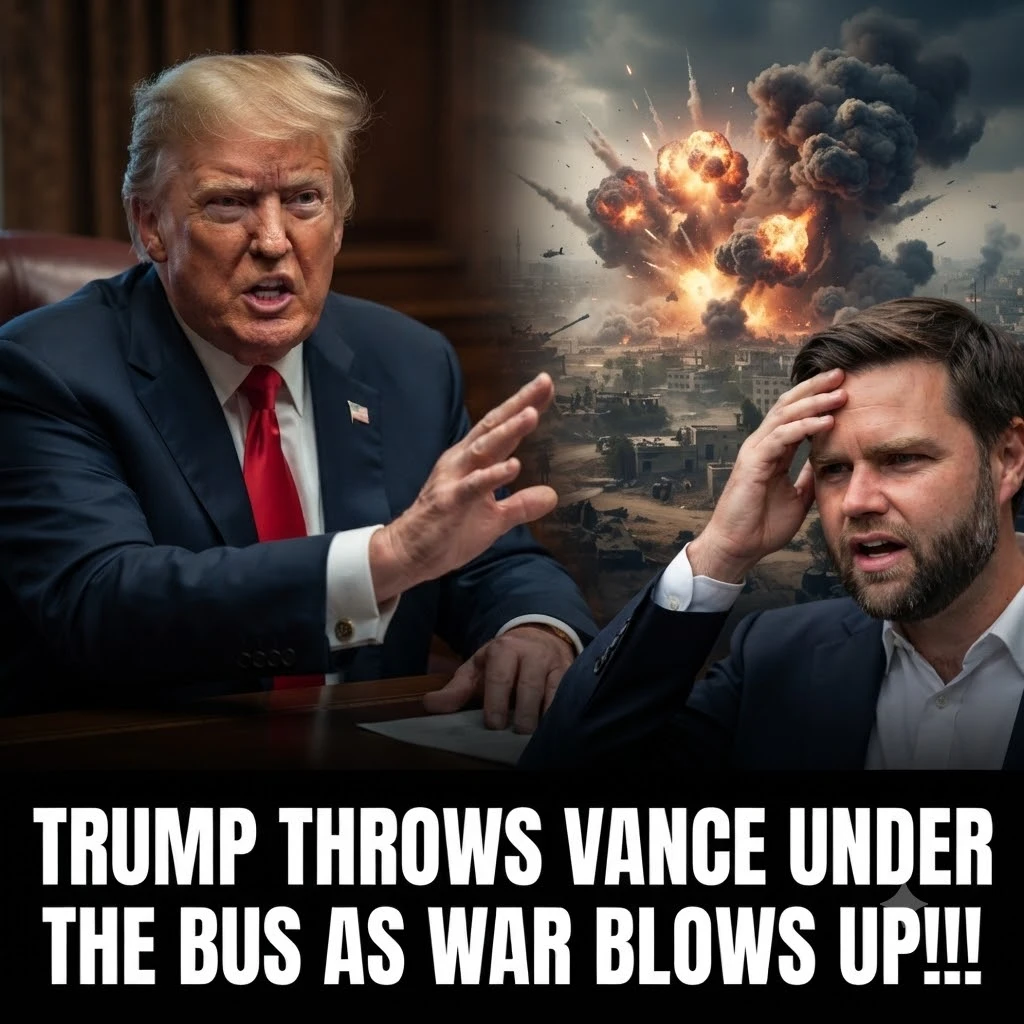
The fragile unity surrounding President Donald Trump’s foreign policy appeared to crack wide open this week as a failed diplomatic initiative with Iran ignited an extraordinary wave of internal criticism, political finger-pointing, and growing uncertainty over the administration’s strategic direction.
At the center of the turmoil stands Vice President JD Vance, who has increasingly become the public face of a diplomatic effort that collapsed before it could produce a lasting breakthrough. As military tensions escalated instead of easing, influential voices within conservative circles rapidly shifted responsibility toward him.
What had been envisioned as a memorandum aimed at reducing hostilities quickly lost momentum as Washington embraced a far more aggressive military posture. The abrupt transition from negotiation to confrontation exposed deep disagreements over how the United States should approach one of the world’s most volatile security crises.

The backlash intensified when prominent conservative commentators openly questioned Vance’s judgment. Once regarded as a rising figure within Trump’s political movement, the vice president suddenly found himself defending not only failed diplomacy but also his credibility among longtime allies.
As criticism mounted, an even more explosive controversy emerged through reports alleging that confidential diplomatic discussions had been compromised. According to the allegations, sensitive information exchanged during negotiations may have reached politically connected figures with significant financial interests tied to regional developments.
The reports suggested that individuals close to the president profited enormously from privileged knowledge surrounding the negotiations, allegedly using geopolitical uncertainty to influence financial markets. While the accusations remain fiercely disputed, they injected fresh suspicion into an already volatile political environment.

Additional claims alleged that details from the negotiations were quietly shared with Israeli officials through unofficial channels, raising uncomfortable questions about diplomatic confidentiality and the protection of highly sensitive national security discussions during a period of escalating regional instability.
Vance responded forcefully, dismissing every allegation as entirely fabricated. Defending several senior figures associated with the negotiations, he insisted they had devoted enormous effort toward preventing conflict and rejected suggestions that financial motives had influenced diplomatic decision-making.
Yet the controversy refused to fade. During subsequent public appearances, Vance argued that organized political campaigns backed by foreign interests deliberately undermined the proposed agreement, fueling public opposition and making successful negotiations virtually impossible before talks had fully matured.

Those remarks immediately triggered another round of criticism. Political opponents accused the vice president of promoting conspiracy theories rather than accepting responsibility for the failed initiative, while even some conservative observers questioned whether such accusations further complicated relations with key international partners.
Beyond Washington’s political drama, the consequences have begun reaching ordinary Americans. As diplomatic hopes evaporated and military operations expanded, energy markets reacted sharply. Refining margins surged, placing renewed upward pressure on gasoline prices already burdening households across the country.
Financial markets also reflected growing anxiety. Mortgage rates climbed to their highest levels in months, increasing borrowing costs for prospective homeowners and reinforcing fears that geopolitical instability could spill deeper into the domestic economy if uncertainty continues.

The unfolding crisis illustrates how rapidly foreign policy setbacks can evolve into broader political battles. What began as an ambitious attempt to reduce regional tensions has instead exposed competing visions inside the administration, intensified public divisions, and raised fresh questions about leadership during one of the most delicate moments of Trump’s presidency.
Whether the administration can restore internal cohesion remains uncertain. For now, the collapse of diplomacy has become more than a foreign policy disappointment—it has evolved into a defining political test, one that may shape both the White House’s credibility abroad and Americans’ confidence at home in the months ahead.