Federal Judge’s Explosive Ruling Throws Todd Blanche and Trump Legal Strategy Into Fresh Turmoil
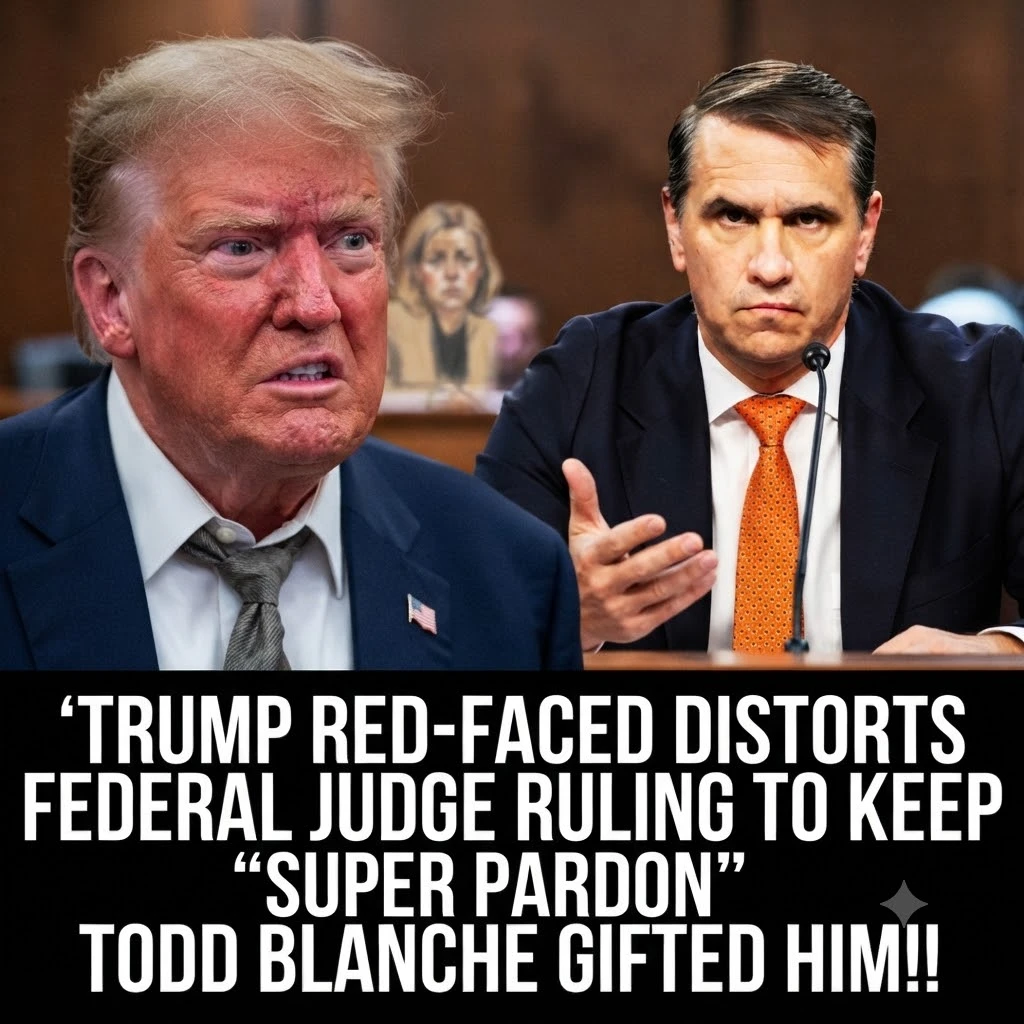
A blistering federal court ruling has reignited scrutiny of Donald Trump’s legal strategy, placing Attorney General nominee Todd Blanche under an intense spotlight after a judge sharply criticized a controversial agreement tied to a high-profile January 6 legal dispute.
The 56-page opinion, issued by Federal Judge Williams, questioned not only the legal foundation of the case but also the conduct of the parties involved. The decision has quickly become one of the most closely examined judicial opinions in Washington.
At the center of the controversy sits what had publicly been presented as the “Jan. 6 Anti-Weaponization Fund,” a financial arrangement that immediately attracted political attention. Yet the court proceedings suggested that the fund itself may not have been the most significant element.

Instead, attention shifted toward a separate one-page agreement signed shortly after the fund’s creation. Critics argue the document sought to provide sweeping protections for Donald Trump, members of his family, and affiliated entities against potential tax disputes, audits, and future legal liabilities.
The arrangement has drawn extraordinary criticism because of its unprecedented scope. Opponents have described it as an attempt to secure protections extending far beyond the ordinary limits of negotiated government settlements, raising profound constitutional and legal questions.
Judge Williams stopped short of deciding whether such private executive agreements could legally provide broad immunity. Instead, the ruling focused narrowly on the manner in which the agreement was presented before the federal court.

According to the opinion, the lawsuit appeared fundamentally different from a traditional adversarial proceeding. Rather than two genuinely opposing sides litigating disputed legal issues, the court concluded that both parties effectively pursued the same objective throughout the litigation.
That conclusion proved central to the judge’s reasoning. The opinion described the litigation as collusive and characterized it as an improper attempt to obtain judicial legitimacy for an arrangement lacking sufficient legal and factual support.
The ruling went even further by describing the proceedings as a fraud upon the court, language rarely employed in federal opinions and one that carries serious professional implications for attorneys participating in the litigation.

As part of the decision, Judge Williams prohibited the parties from continuing to characterize the disputed arrangement as a court-approved settlement within the context of her proceedings, drawing a sharp distinction between private agreements and judicial endorsement.
The opinion also placed Todd Blanche under increasing professional pressure. The judge referred issues arising from the litigation to disciplinary authorities for further review, potentially exposing him to scrutiny over whether his conduct complied with the ethical obligations governing licensed attorneys.
Compounding those difficulties, Blanche now faces pointed questions during Senate confirmation proceedings. Lawmakers have examined his explanations regarding the agreement, particularly why the arrangement allegedly bypassed more conventional forms of judicial oversight.

Judge Williams’ opinion specifically challenged portions of Blanche’s earlier testimony, suggesting that several explanations offered to the court were, at minimum, misleading and potentially inconsistent with the factual record developed during the litigation.
One section of the ruling—widely discussed by legal observers—clarifies an important limitation. The court expressly stated that it was not deciding whether the executive branch possesses authority to privately grant broad immunity through separate agreements. That constitutional question, the opinion emphasized, remains unresolved.
Legal analysts therefore expect the controversy to extend well beyond this single decision. Any definitive ruling on the validity of the private agreement would likely require separate litigation capable of directly addressing the constitutional issues left untouched in Judge Williams’ opinion.
For Todd Blanche, the consequences now extend beyond the courtroom. With confirmation hearings underway and disciplinary scrutiny gathering momentum, the federal ruling has transformed an already contentious nomination into a broader debate over legal ethics, executive authority, and the limits of government power.