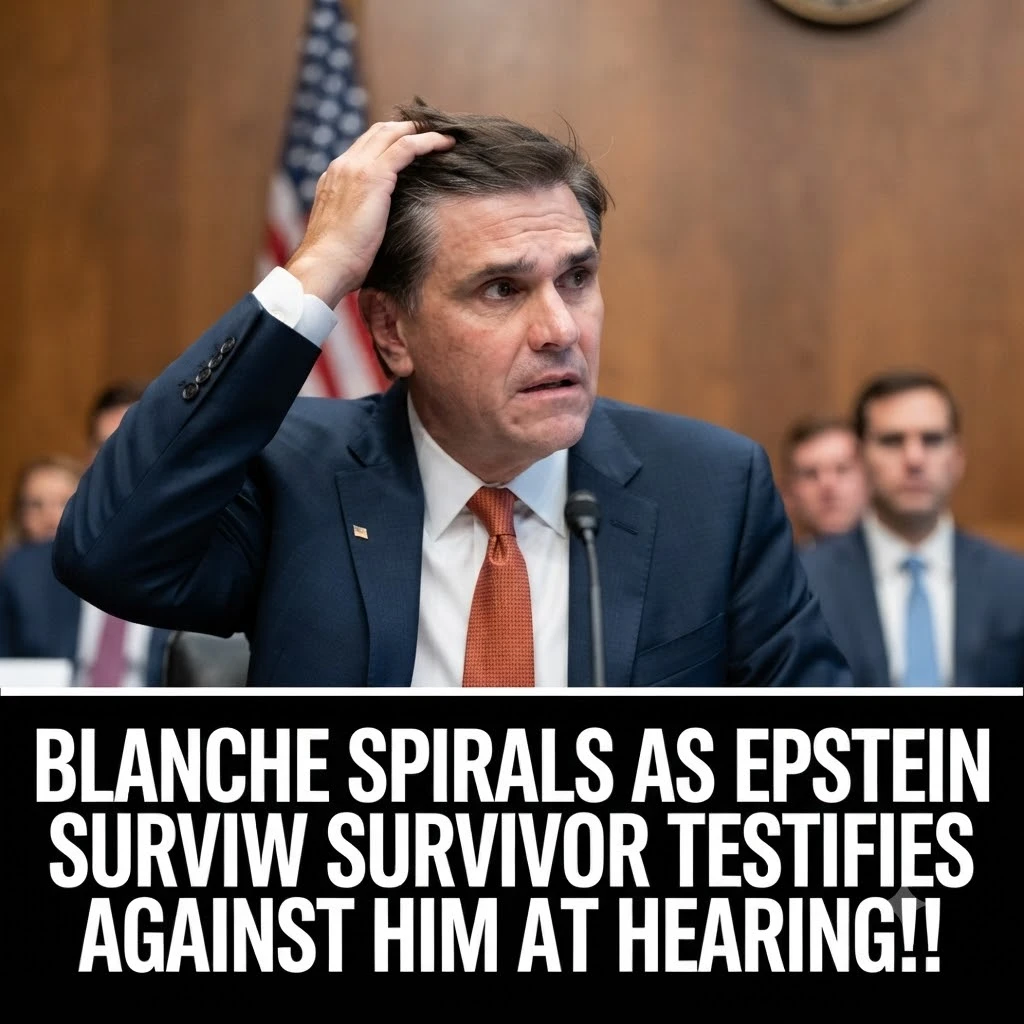
Todd Blanche Faces Intense Senate Scrutiny Over Epstein Investigation and Court Sanctions

Todd Blanche’s confirmation hearing for Attorney General unfolded under extraordinary pressure as senators questioned his handling of the Jeffrey Epstein investigation while a separate federal court ruling cast an additional shadow over his nomination, placing his judgment, ethics, and leadership under renewed examination.
The hearing took on an especially emotional tone as ten survivors connected to Jeffrey Epstein’s trafficking network attended the proceedings, transforming what might have been a routine confirmation session into a deeply personal confrontation over justice, accountability, and the treatment of victims.
Senator Dick Durbin placed Blanche in the spotlight by asking whether he would personally meet with the survivors within thirty days if confirmed. The request reflected growing frustration among lawmakers who believe victims deserve direct engagement from the nation’s highest law enforcement official.

Blanche declined to make that commitment, instead proposing that members of a specialized Justice Department task force handling human trafficking cases meet with the survivors. He argued that many were represented by legal counsel, limiting his ability to communicate with them directly.
While pledging to work through attorneys where appropriate, Blanche maintained that the department remained committed to supporting victims. His response, however, left several senators dissatisfied, with critics arguing that symbolic leadership requires direct engagement during matters of exceptional public importance.
Questions also emerged over the scope of the federal investigation into Epstein’s trafficking operation. Lawmakers and advocates argued that thousands of identified victims have yet to receive comprehensive interviews, raising concerns that important evidence and testimony may never have been fully explored.

According to those concerns, only a relatively small portion of the approximately 1,400 identified victims have reportedly undergone formal debriefings by federal investigators. Critics contend that this has left significant gaps in understanding the full extent of Epstein’s criminal network.
Those unresolved questions have fueled broader concerns about whether individuals connected to Epstein have escaped meaningful scrutiny. Advocates argue that incomplete investigative work has allowed some former associates to deny knowledge of the trafficking operation without facing substantial challenges.
The debate also returned to the vast volume of investigative material still unavailable to survivors and the public. Millions of pages of records, along with surveillance footage reportedly recovered from Epstein’s properties, remain at the center of continuing demands for greater transparency.

Complicating Blanche’s confirmation prospects further, a federal judge in Florida issued sanctions connected to separate litigation involving a lawsuit against the Internal Revenue Service, creating another politically sensitive issue just as senators began evaluating his nomination.
The court’s lengthy opinion concluded that the legal strategy behind the case lacked a sufficient factual and legal foundation, describing the settlement as an improperly constructed arrangement rather than a conventional resolution supported by established legal principles.
Central to the dispute was the creation of what became known as an “anti-weaponization fund,” an initiative that drew internal disagreement within the Treasury Department. While one senior legal official reportedly resigned during the controversy, Blanche has been accused of playing a significant role in advancing the plan.

The Florida court has now referred its findings to an ongoing ethics complaint before New York’s legal disciplinary authorities, ensuring that questions surrounding Blanche’s professional conduct will likely continue well beyond the Senate confirmation process.
Taken together, the emotionally charged testimony from Epstein survivors and the mounting legal scrutiny have transformed Blanche’s nomination into far more than a confirmation hearing. Instead, it has become a broader test of public confidence in the Justice Department’s independence, integrity, and willingness to confront difficult questions without hesitation.