Middle East on Edge as U.S.-Iran Standoff Fuels Fears of Wider Regional Conflict
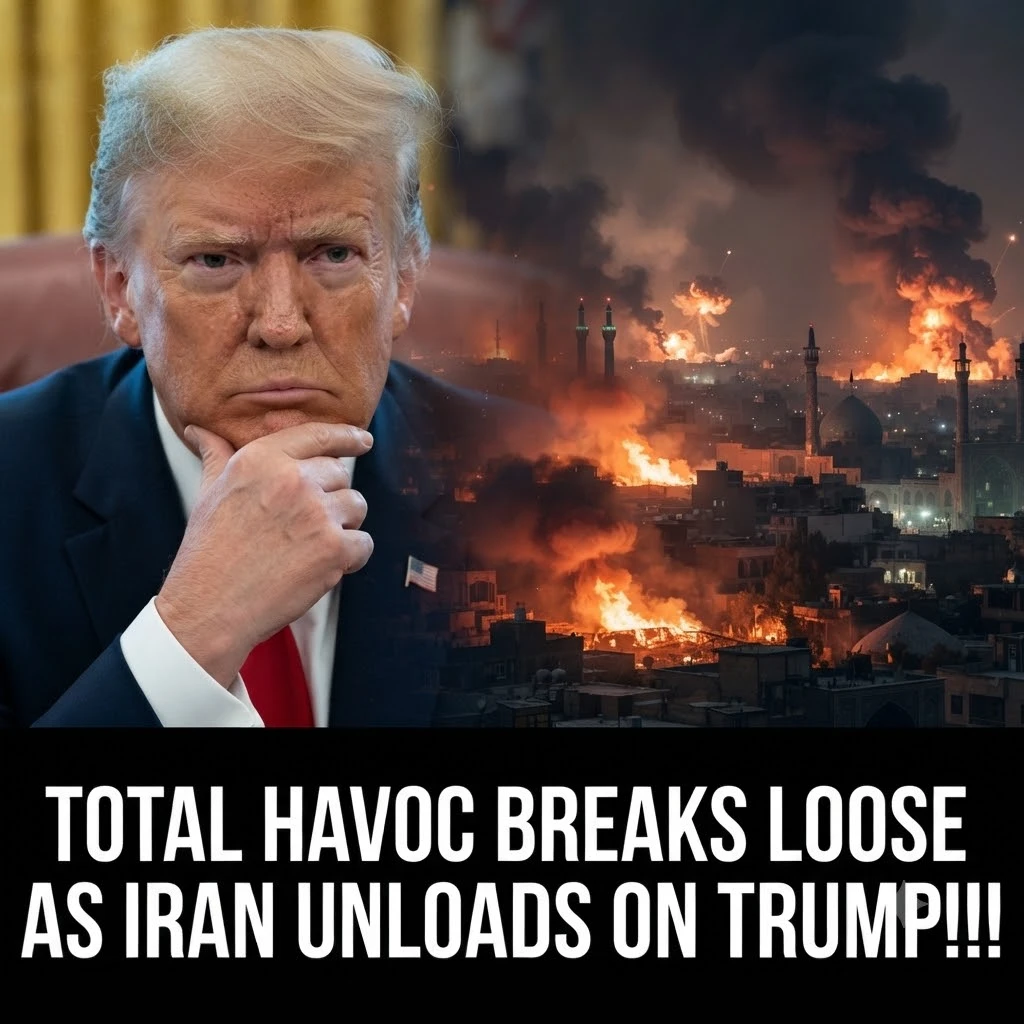
Tensions across the Middle East have entered another volatile chapter as the war of words between Washington and Tehran grows increasingly intense. Military claims, political threats, and mounting economic uncertainty are combining to create one of the region’s most unpredictable security crises in recent years.
Reports circulating from multiple sources describe a series of alleged Iranian drone and ballistic missile attacks targeting areas linked to U.S. military operations across the Gulf. While the full extent of the reported strikes has not been independently verified, the claims have heightened concerns that the conflict could expand beyond its current boundaries.
According to accounts emerging from the region, locations in Kuwait, Bahrain, Jordan, Qatar, the United Arab Emirates, and Oman have all been drawn into the growing confrontation. Footage shared online has also fueled debate over the effectiveness of air-defense systems deployed to protect strategic military installations.

Additional reports from Iranian media claimed satellite imagery showed damage at facilities associated with American forces. Separate allegations involving attacks on commercial shipping and naval vessels near the Strait of Hormuz have further raised alarm over the security of one of the world’s most critical maritime trade routes.
The U.S. military has meanwhile accused Iran of endangering civilian shipping by targeting commercial vessels operating in regional waters. Officials have warned that continued attacks on international maritime traffic threaten both regional stability and the global economy, particularly as shipping companies reassess risks in the Gulf.
Political rhetoric has escalated alongside the military confrontation. During a televised interview, President Donald Trump asserted that Iranian representatives had privately expressed interest in reaching an agreement. He suggested Tehran feared further military action and claimed diplomatic channels remained open despite the ongoing hostilities.

Trump also warned that failure to pursue negotiations could result in significantly expanded military operations. His remarks suggested that additional strikes could target infrastructure considered strategically important, underscoring Washington’s willingness to increase pressure if diplomacy fails to gain momentum.
Among the most closely watched claims were references to military operations involving Iran’s Kharg Island, the country’s principal oil export hub. Trump argued that previous strikes had been carefully calibrated to avoid triggering a global energy crisis while maintaining military pressure on Tehran.
Iranian officials quickly rejected Trump’s account. Senior government representatives insisted that Tehran had neither requested negotiations nor altered its broader strategic position. Instead, they argued that economic sanctions and military pressure would not force Iran into concessions, describing such expectations as a serious miscalculation.

Beyond the battlefield, the confrontation is sending ripples through global financial markets. Oil prices have climbed amid fears that instability around the Strait of Hormuz could disrupt energy exports. Even the possibility of prolonged shipping interruptions has been enough to unsettle traders and energy analysts worldwide.
The strategic waterway remains one of the world’s most vital energy corridors, carrying a significant share of internationally traded crude oil. Any sustained disruption would likely affect fuel prices, supply chains, and inflation across major economies, extending the consequences far beyond the Middle East.

As competing narratives continue to emerge from both Washington and Tehran, independent verification remains essential. What is already clear, however, is that the latest confrontation has intensified geopolitical uncertainty, leaving governments, financial markets, and millions of people watching closely for signs of either diplomatic progress or a dangerous new escalation.
Nếu muốn, mình cũng có thể Viết lại theo đúng phong cách của Reuters, The Economist, The New York Times, hoặc Daily Mail với giọng văn cuốn hút hơn nhưng vẫn giữ chuẩn báo chí.