Escalating Iran Conflict, Press Evasion, and Domestic Controversies Intensify Pressure on Trump Administration
The Trump administration faced mounting pressure on multiple fronts as military operations against Iran expanded, fresh questions emerged over presidential messaging, and a series of domestic controversies reignited debate over energy policy, defense priorities, and economic leadership.
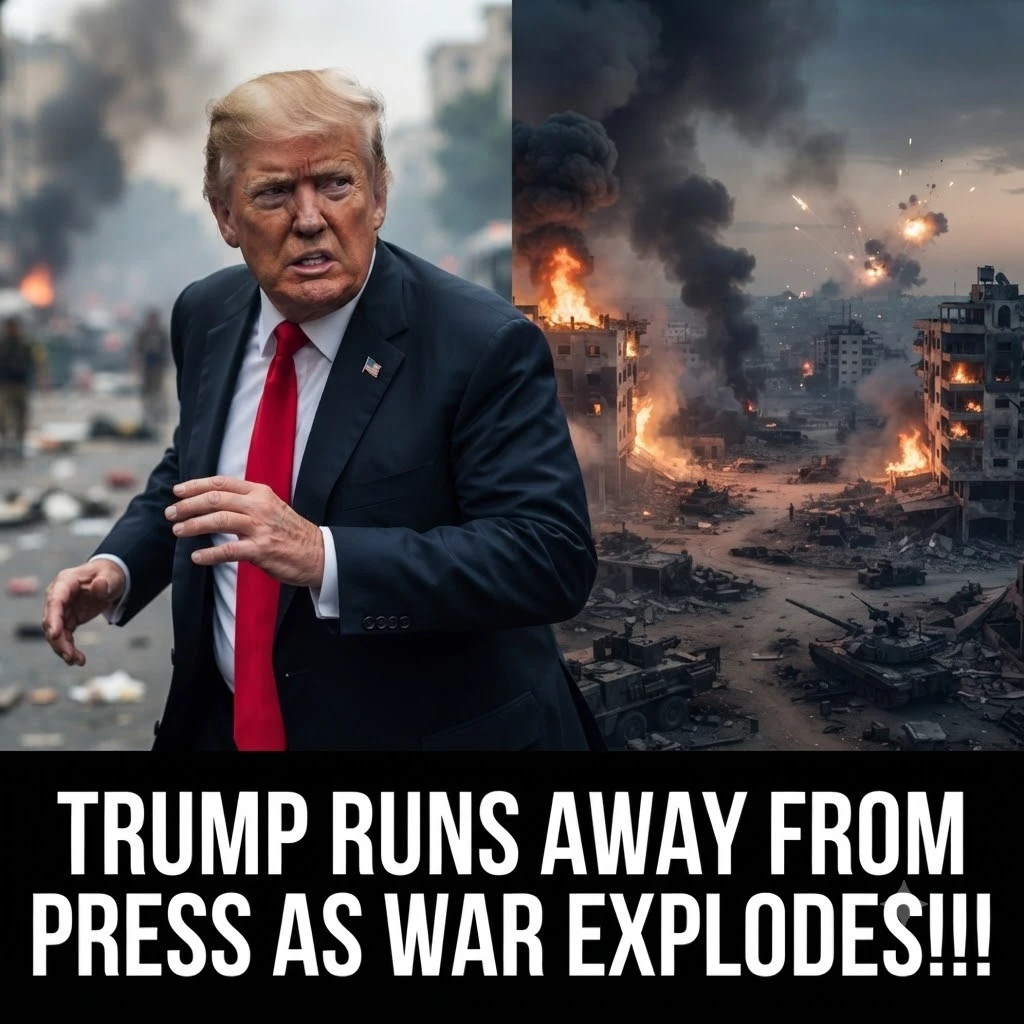
The most urgent developments unfolded in the Middle East, where reports indicated an intensified wave of U.S. military strikes targeting strategic locations across Iran, including areas near Kharg Island and Qeshm. Regional tensions rose further as explosions were also reported in Bahrain, Kuwait, and Iraq.
As the military campaign widened, concern increasingly shifted toward its humanitarian consequences. Local reports from Iran claimed that a missile landed near a hospital in Ahvaz treating children undergoing chemotherapy, forcing sections of the medical facility to be evacuated amid fears of further attacks.

The reported incident has renewed international concern over civilian safety as fighting escalates. Although battlefield claims remain difficult to independently verify during active conflict, humanitarian organizations continue urging all parties to minimize risks to hospitals and other protected civilian sites.
Attention has also turned to reports suggesting the administration is weighing broader military options. According to accounts circulating in Washington, officials have discussed expanding operations beyond airstrikes, including possible action against deeply fortified nuclear facilities believed to lie beneath mountainous terrain.
Those reports have intensified speculation about whether the conflict could evolve into a more prolonged regional confrontation. Security analysts warn that any significant escalation risks drawing additional actors into the crisis while increasing uncertainty across global energy markets.

President Donald Trump added to the uncertainty during a brief exchange with reporters. Asked whether he had established a deadline for Iran before authorizing additional military action, he declined to offer a specific timetable, instead suggesting Iranian leaders already understood the consequences they faced.
Moments later, Trump described Iran as eager to negotiate while simultaneously expressing confidence that the United States would soon defeat the country militarily. The contrasting remarks immediately fueled debate over whether Washington’s diplomatic and military objectives remain fully aligned.
Despite growing international instability, the president maintained an optimistic assessment of the American economy. He argued that financial conditions remained strong and highlighted relatively stable oil prices as evidence that the conflict had not produced the severe economic disruption many analysts anticipated.

Meanwhile, the Pentagon drew attention for reasons unrelated to the Middle East after Defense Secretary Pete Hegseth announced a new medical screening initiative designed to identify testosterone deficiencies among members of the U.S. armed forces.
Supporters described the program as an effort to improve troop readiness and long-term health. Critics, however, questioned the administration’s priorities, arguing that symbolic cultural initiatives were receiving significant attention while major geopolitical and operational challenges continued unfolding overseas.
Energy policy also returned to the spotlight following mounting pressure on the PJM Interconnection, the nation’s largest electrical grid. After encouraging Americans to make full use of air conditioning during extreme summer temperatures, federal officials soon confronted emergency conservation requests as electricity demand surged.

The developments revived broader debate over the resilience of the nation’s energy infrastructure and the balance between fossil fuels and renewable power. Supporters of competing energy strategies seized on the incident to reinforce longstanding arguments about grid reliability and future investment priorities.
Adding to an already eventful news cycle, Trump sparked fresh controversy while criticizing the CHIPS Act, claiming without providing evidence that its funding standards unfairly favored transgender applicants. The remark quickly generated political backlash and renewed debate over one of the country’s signature semiconductor initiatives.
Taken together, the military escalation abroad and the succession of contentious domestic developments have created an exceptionally challenging political landscape. As international tensions deepen and scrutiny intensifies at home, the administration faces growing demands for clearer strategy, greater consistency, and more transparent communication.