‘Country Over Party’: Why America’s Veterans Believe Patriotism Must Be Reclaimed
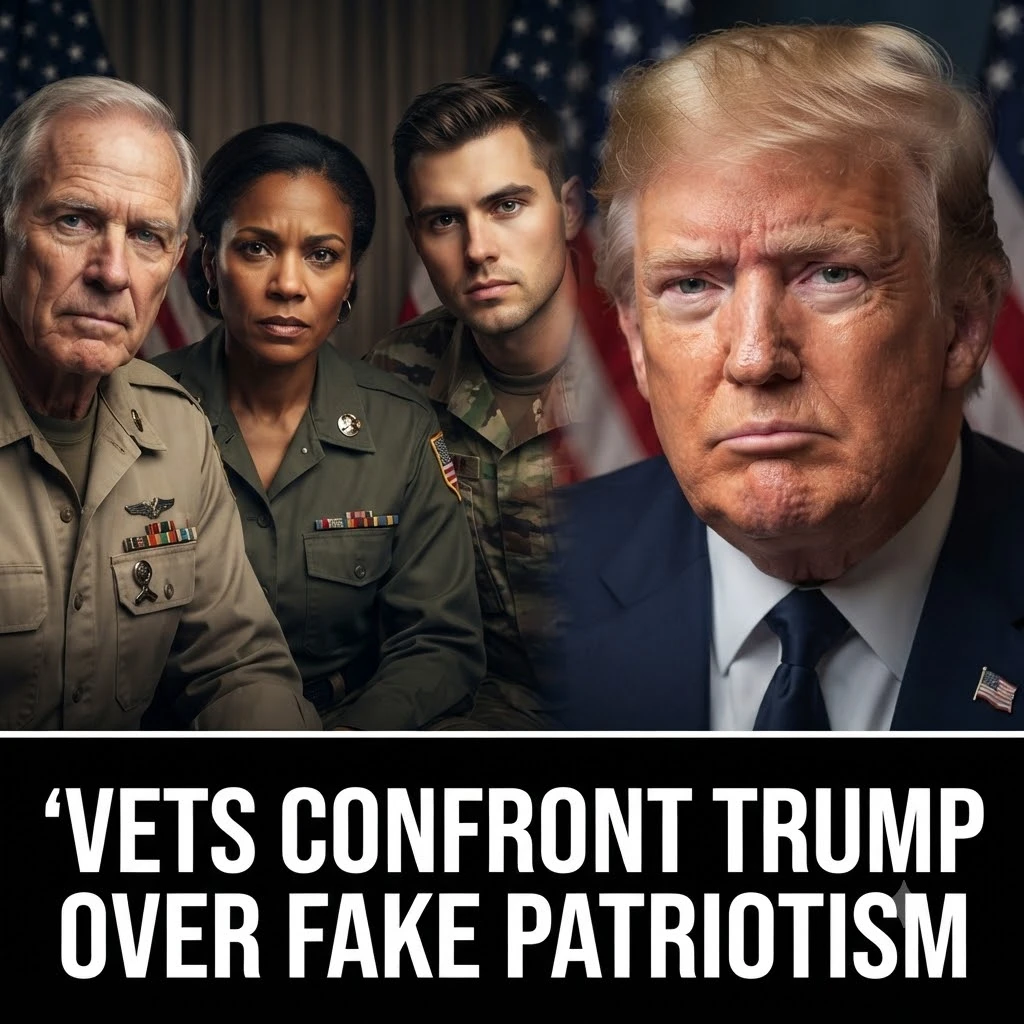
For many Americans, patriotism has become one of the nation’s most fiercely contested ideas. Yet among military veterans who have served through war, sacrifice, and political change, love of country often carries a meaning far removed from campaign slogans or partisan battles.
Their understanding of patriotism begins long before military service. It lives in childhood memories of Independence Day parades, neighborhood celebrations, and flags waving along quiet streets—moments when national pride was defined by shared community rather than political division or ideological conflict.
That nostalgia, however, is increasingly accompanied by concern. Many veterans believe younger generations are inheriting an America where opportunity feels less attainable than it once did. Rising housing costs, uncertain career prospects, and widening economic inequality have weakened confidence in the promise long known as the American Dream.

For those who wore the nation’s uniform, patriotism is measured not by unquestioning loyalty to political leaders but by commitment to the country itself. The principle of placing nation above party has become, in their view, one of democracy’s most essential—and increasingly endangered—values.
Foreign policy remains another area where veterans express growing unease. Many argue that America’s global leadership depends not only on military strength but also on trusted alliances built over generations, relationships they believe remain fundamental to both national and international security.
NATO occupies a central place in that discussion. Veterans frequently point to the alliance’s unprecedented decision to invoke Article 5 after the September 11 attacks, reminding Americans that allied nations stood beside the United States during one of its darkest moments.

Some now fear that an increasingly isolationist approach could weaken those partnerships while creating opportunities for geopolitical rivals to expand their influence. They argue that diplomacy, cooperation, and credible alliances remain indispensable components of American power in an increasingly competitive world.
Domestic concerns weigh just as heavily. Gun violence has become a source of profound frustration, particularly among veterans who understand firearms through professional military service rather than political symbolism. Many describe the continued loss of children’s lives to gun violence as a national emergency demanding urgent attention.
Their perspective carries unique credibility. Having trained extensively with weapons under strict discipline, they reject the notion that responsible firearm ownership and stronger public safety measures must exist in opposition to one another.

The meaning of patriotism becomes even more personal when veterans recall spending Independence Day far from home. For some, July Fourth unfolded not beneath fireworks but amid combat zones, where moments of national reflection offered rare comfort during dangerous military deployments.
One veteran recalls gathering with fellow Marines in Iraq to read the Declaration of Independence between operational missions, pausing briefly amid uncertainty to reconnect with the ideals that had inspired their service despite the realities surrounding them.
Another remembers celebrating while flying a military aircraft overseas, when her crew informally adopted the number “1776” as their aircraft identification for the day. The symbolic gesture, though lighthearted, reflected a powerful desire to remain connected to home while serving abroad.

Despite today’s political polarization, many veterans continue to believe the country’s greatest strength lies in its ability to unite across differences. Military service, they argue, teaches people from every race, religion, region, and political background to trust one another with their lives.
That philosophy is increasingly visible inside Congress through bipartisan groups composed of former service members who commit to working across party lines. Supporters see these efforts as proof that cooperation remains possible—and that rebuilding public trust may begin by placing country before politics once again.