Contentious Senate Hearing and Rising Global Tensions Place Trump Administration Under Intensifying Scrutiny
A contentious Senate confirmation hearing, escalating tensions with Iran, and a series of politically charged domestic developments combined to produce another turbulent day in Washington, exposing sharp divisions over national security, executive accountability, and the direction of U.S. governance.
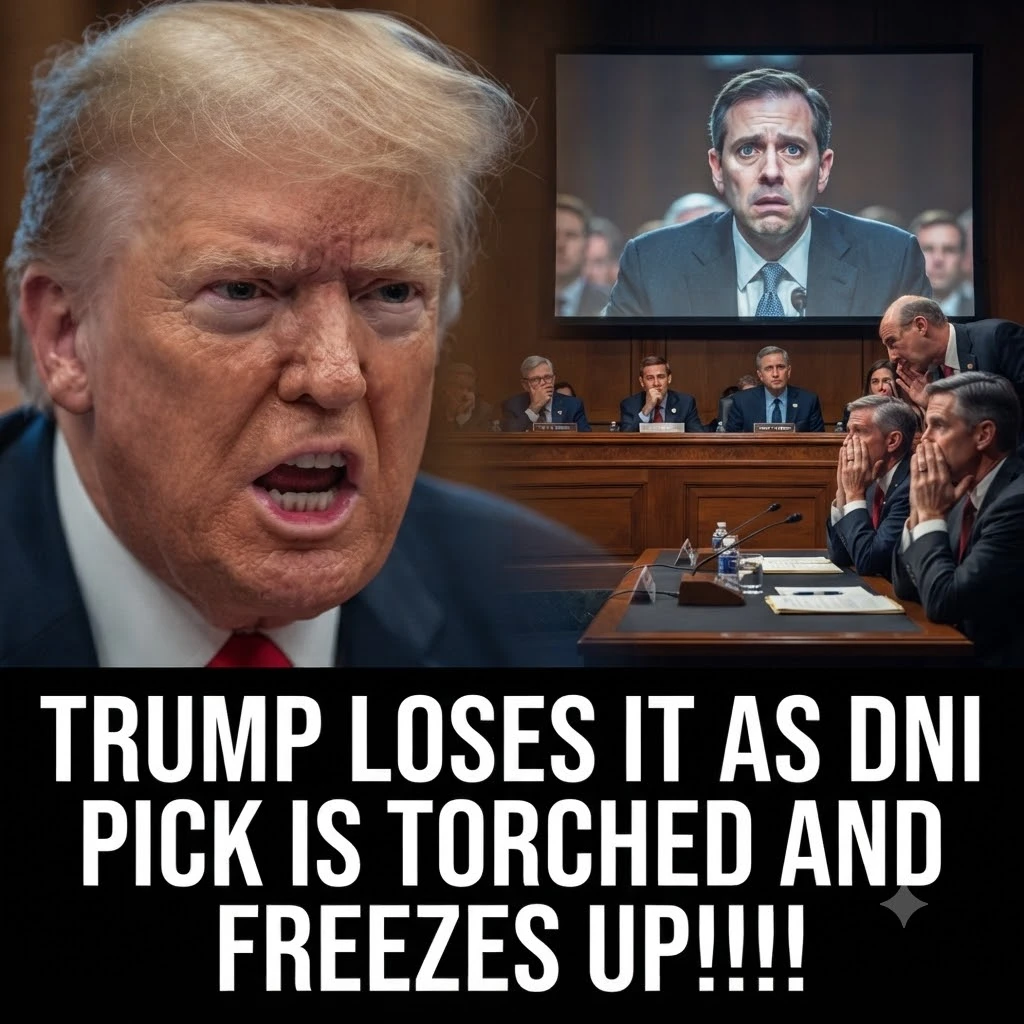
Much of the attention centered on Jay Clayton, President Donald Trump’s nominee to serve as Director of National Intelligence, whose confirmation hearing quickly evolved into an extended confrontation with Democratic senators demanding clear answers on matters they described as fundamental to public trust.
Senator Jon Ossoff repeatedly pressed Clayton with what appeared to be a straightforward question: who won the 2020 presidential election. Rather than offering a direct response, Clayton maintained that he would not revisit the issue, emphasizing only that Joe Biden had been officially certified.

The exchange immediately raised concerns among several lawmakers about Clayton’s willingness to provide independent assessments if confirmed to oversee the nation’s intelligence community. Critics argued that credibility begins with acknowledging established facts, particularly when seeking one of Washington’s most sensitive security positions.
Independent Senator Angus King reinforced that criticism by warning that avoiding direct answers could undermine confidence in Clayton’s repeated promises to “speak truth to power.” The tense discussion highlighted broader concerns about political independence within senior national security appointments.
The hearing grew even more uncomfortable when Ossoff questioned Clayton about a federal operation in Fulton County, Georgia, reportedly involving former Director of National Intelligence Tulsi Gabbard. Clayton responded that he had only recently become aware of the matter and had not previously considered it.

Another difficult moment emerged when senators questioned Clayton about the presidential pardon granted to former Honduran President Juan Orlando Hernández, who had been convicted on major narcotics trafficking charges prosecuted in the Southern District of New York.
Initially appearing uncertain about the case, Clayton struggled to recall the details before ultimately acknowledging that the pardon had indeed been issued. For critics, the hesitation became another example of what they viewed as evasive testimony under sustained questioning.
The atmosphere deteriorated further when committee chairman Senator Tom Cotton abruptly ended portions of the proceedings after tensions spilled beyond the witness table. His decision to halt follow-up questioning added another dramatic chapter to an already confrontational hearing.

Beyond Capitol Hill, geopolitical uncertainty deepened following reports that senior administration officials met in the White House Situation Room to discuss additional military operations targeting Iran amid an already volatile regional security environment.
Iranian authorities claimed recent U.S. strikes resulted in civilian casualties, allegations firmly rejected by U.S. Central Command, which insists American operations have not targeted civilian infrastructure. The conflicting narratives have further complicated an already fragile diplomatic landscape.
The regional dispute intensified after Iranian officials threatened to close the Bab-el-Mandeb Strait, one of the world’s most strategically important shipping routes. At the same time, commercial maritime traffic through the Strait of Hormuz has reportedly slowed dramatically amid mounting security concerns.

Financial markets briefly responded after Trump suggested Iran had expressed interest in renewed negotiations. However, Iranian officials swiftly denied any outreach, insisting their current priority remains national defense rather than diplomatic engagement with Washington.
Meanwhile, a series of domestic controversies added to the administration’s challenging political environment. Debate intensified over plans for a commemorative U.S. Mint gold coin bearing Trump’s likeness, raising legal and constitutional questions about longstanding traditions governing official currency.
Additional scrutiny emerged over reports that Defense Secretary Pete Hegseth has delayed promotions for several senior Navy officers without publicly explaining the decisions, while political debate continued over contrasting measures of economic performance and quality of life across Republican-led states.
Taken together, the day’s events underscored the extraordinary breadth of challenges confronting the administration, where contentious confirmation battles, international crises, and politically sensitive domestic decisions continue to intersect, shaping an increasingly polarized national conversation with implications extending far beyond Washington.