Congress Returns to Washington as Security, Immigration and Economic Policy Dominate Political Debate
Congress returned to Washington this week with an agenda dominated by national security, immigration enforcement and economic uncertainty, setting the stage for another intense political confrontation between Republican leaders and Democratic officials over the nation’s priorities.
House Republican leaders opened the week with a series of press conferences addressing foreign policy, border security and government spending, while Democratic governors sought to highlight the economic challenges facing states and local communities.
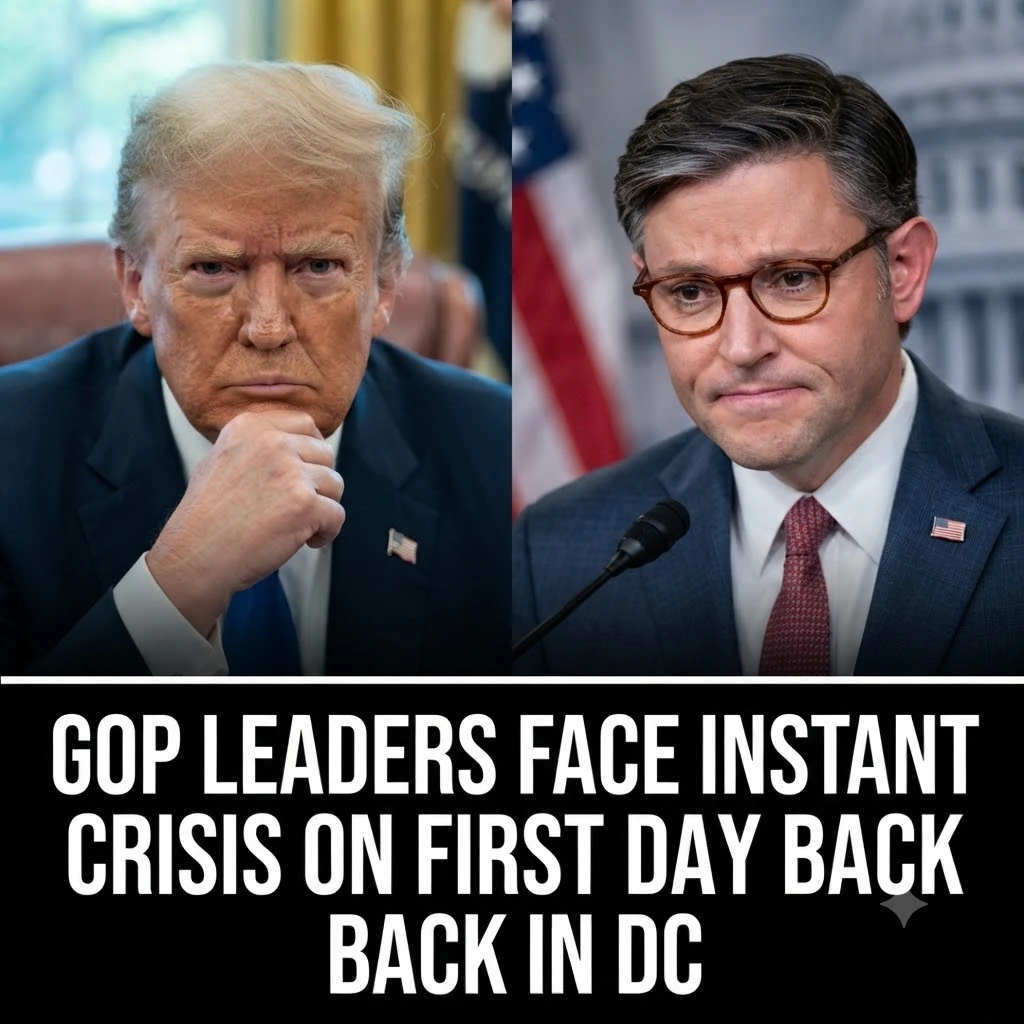
Speaker Mike Johnson emphasized what he described as growing threats confronting the United States, arguing that lawmakers must remain focused on strengthening national security while expanding investment in defense capabilities amid an increasingly uncertain global environment.

During questions from reporters, Johnson was also asked about a fatal ICE enforcement incident in Maine that has attracted significant public attention. The Speaker said he had not yet received detailed briefings on the matter and declined to comment further.
The exchange underscored how immigration enforcement continues to generate difficult political questions, particularly as federal operations remain under heightened public scrutiny and lawmakers face growing pressure for greater transparency and accountability.
Foreign policy quickly emerged as another central theme. Addressing tensions involving Iran and maritime security in the Strait of Hormuz, Johnson argued that negotiations require caution while avoiding detailed discussion of potential congressional authorization for future military action.

Other Republican lawmakers echoed broader themes surrounding national unity, border security and patriotism. Their remarks reflected the party’s continued emphasis on immigration enforcement and what they view as the importance of maintaining public confidence in American institutions.
Democrats offered a sharply different perspective. In a televised interview, New York Governor Kathy Hochul argued that rising living costs remain the most immediate concern for many households struggling with persistent economic uncertainty.
Hochul contended that recent federal trade policies have contributed to higher prices affecting consumers, farmers and healthcare providers. She said communities across New York continue feeling pressure from increased costs for fuel, food and essential services.

Immigration policy also featured prominently during the governor’s remarks. Hochul expressed concern about recent enforcement actions and called for approaches that balance border security with humanitarian responsibilities and respect for legal due process.
The governor additionally highlighted a new statewide initiative affecting one of America’s fastest-growing industries. New York announced a temporary pause on permits for additional large-scale data centers while officials review their long-term impact on electricity infrastructure.

According to Hochul, rapidly expanding data centers have significantly increased demand on the state’s power grid, raising concerns about reliability and higher utility costs for residential customers and small businesses alike.
State officials intend to use the review period to establish updated standards governing future projects. Proposed measures include stronger infrastructure requirements and financial contributions supporting long-term investments in grid resilience.

Beyond policy debates, Hochul emphasized the importance of cooperation between state and local governments. She described her working relationship with New York City leadership as evidence that practical collaboration can produce more predictable governance.
The contrasting messages delivered throughout the day reflected broader differences in governing philosophy. Republicans largely centered their arguments on national security, defense and immigration enforcement, while Democrats emphasized affordability, infrastructure and state-level economic management.
As lawmakers settle back into Washington following the congressional recess, debates over security, immigration, energy and the economy are expected to dominate both legislative negotiations and the broader political conversation heading toward the next election cycle.