Federal Judge Voids Trump-Linked IRS Settlement, Calls Lawsuit a Bad-Faith Abuse of the Courts
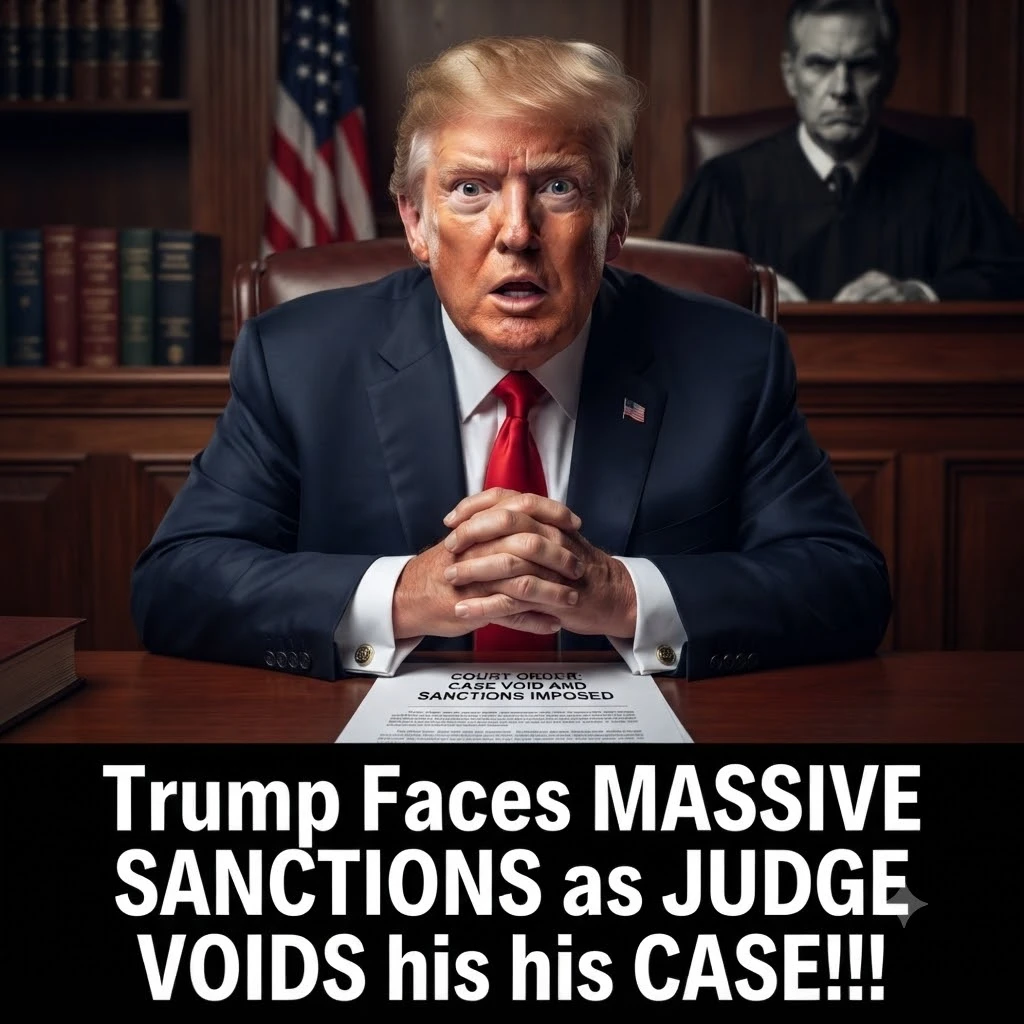
A sweeping federal court ruling has reignited legal scrutiny surrounding Donald Trump after a judge dismantled a controversial settlement tied to an IRS lawsuit, describing the entire case as a calculated abuse of the judicial system rather than a legitimate legal dispute.
In a detailed 56-page opinion, U.S. District Judge Kathleen Williams concluded that the agreement at the center of the litigation was legally void from the outset. The court found the lawsuit lacked genuine adversarial parties, making it fundamentally incompatible with the purpose of federal litigation.

According to the ruling, the case functioned as a carefully orchestrated legal exercise rather than an authentic dispute requiring judicial intervention. Judge Williams wrote that every principal participant ultimately answered to the same political leadership, eliminating the independence necessary for a valid lawsuit.
The decision paints a striking picture of a legal strategy designed not to resolve conflict but to secure judicial approval for an agreement carrying sweeping legal consequences. The court determined that the litigation appeared intended to provide official legitimacy to a settlement beyond ordinary judicial authority.

That settlement allegedly sought to shield Donald Trump, members of his family, business affiliates, and related entities from a broad range of potential criminal and tax liabilities. Judge Williams ruled that such objectives could not be accomplished through litigation built upon manufactured legal controversy.
Beyond voiding the agreement, the court imposed significant sanctions under Rule 11 of the Federal Rules of Civil Procedure, a powerful mechanism reserved for filings made in bad faith or without a proper legal foundation. The order delivered both financial and professional consequences.

Among the most striking directives, the court instructed its clerk to forward copies of the opinion directly to disciplinary authorities overseeing attorneys Todd Blanche and Stanley Woodward in New York and the District of Columbia. The referrals place both lawyers under heightened professional scrutiny.
Another attorney involved in the litigation, Alejandro Brito, was formally referred to the Florida Bar for disciplinary review. The judge concluded that his conduct warranted independent examination, extending the fallout beyond the courtroom into the legal profession’s own regulatory process.

Daniel Z. Epstein also faced immediate consequences. Judge Williams ordered that his future applications to appear before the Southern District of Florida on a temporary basis would be denied for at least one year, citing concerns arising directly from his participation in the case.
The ruling went even further by effectively erasing the disputed settlement from future litigation. Trump, Donald Trump Jr., Eric Trump, the Trump Organization, and the Internal Revenue Service are prohibited from presenting the purported agreement as legitimate evidence in subsequent official proceedings.

Financial penalties accompanied the disciplinary measures. Judge Williams ordered Donald Trump to personally reimburse attorney fees incurred by a coalition of thirty-five former federal judges whose intervention alerted the court to what they believed were serious procedural irregularities.
Trump must also pay legal expenses generated by three independent court-appointed attorneys who served as amici, assisting the court in navigating the unusually complex legal questions presented throughout the proceedings before the final decision was ultimately reached.

The timing of the opinion has drawn particular attention throughout Washington. The sharply worded order arrived just before Todd Blanche was scheduled to face a congressional confirmation hearing, ensuring that the ruling would become part of an already politically charged national conversation.
Judge Williams also emphasized a broader principle extending beyond the immediate parties. Citing previous federal precedent, the opinion reaffirmed that American courts exist to resolve genuine disputes, not to endorse performative litigation capable of undermining public confidence in the rule of law.
Whether appeals follow or additional disciplinary actions emerge, the decision already stands as one of the most forceful judicial rebukes connected to Trump-related litigation. Its legal reasoning is likely to influence future debates over courtroom integrity, attorney accountability, and the limits of strategic litigation.