THE SILENT RESPONSE: How Mark Carney’s Quiet Moves Turned Trump’s Joke Into a Diplomatic Moment
When Donald Trump casually joked about calling Mark Carney a “future Canadian governor,” the comment sounded like something many Americans have heard before from Trump—part humor, part provocation.
The remark reportedly came during a discussion about protecting the waters of the Great Lakes from the spread of invasive Asian carp, an environmental issue that affects both the United States and Canada.
Trump suggested he would happily work with American governors on the problem—and jokingly referred to Carney as though he were one of them.
To some listeners, it sounded like a throwaway line.
But in diplomatic circles, words like that rarely pass unnoticed.
What happened next was not loud, not dramatic, and not filled with angry speeches.
Instead, less than 24 hours later, Carney responded with something far more calculated: silence followed by strategy.
And for many observers, his three actions quietly shifted the tone of the moment.
1. The Power of Not Responding
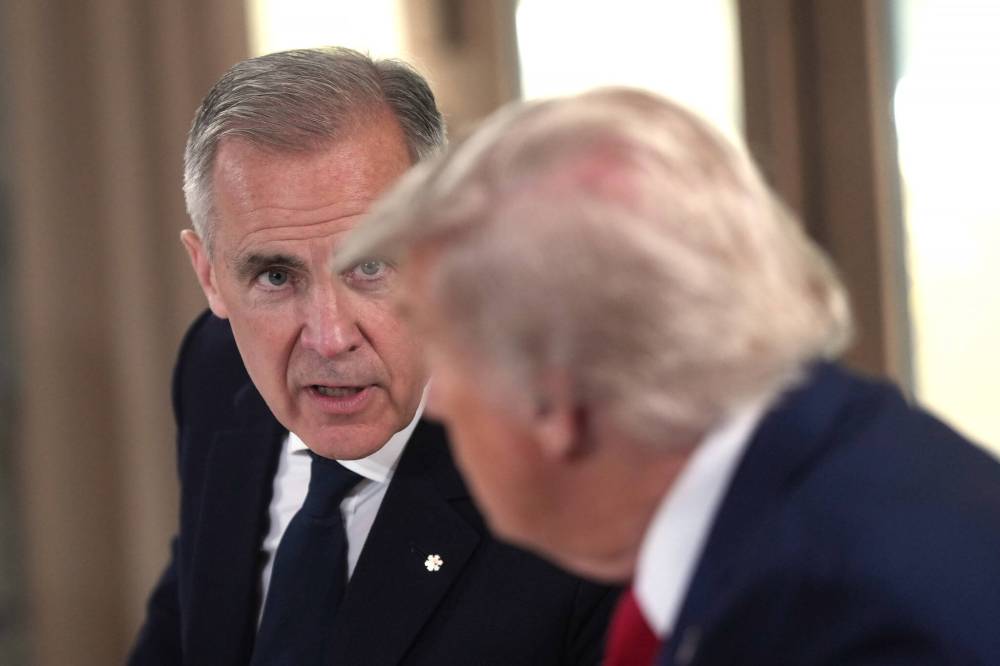
The first move was the simplest.
Carney declined to engage.
Rather than firing back with a sharp comment or social-media rebuttal, he reportedly told reporters he would not respond to every tweet or remark directed at him.
For longtime political watchers—especially older Americans and Canadians who have seen decades of international diplomacy—that response carried a familiar meaning.
Sometimes the strongest reply is refusing to play the game at all.
By not directly confronting Trump’s remark, Carney avoided turning the comment into a headline-dominating political fight.
There was no escalation.
No back-and-forth.
No viral clash.
And in doing so, he quietly denied Trump the stage that public feuds often create.
For a politician known for dominating headlines through confrontation, the absence of conflict can sometimes be the most unexpected outcome.
2. Quietly Expanding Canada’s Global Relationships

The second move was less visible but potentially more significant.
Carney began emphasizing the need for Canada to strengthen and diversify its relationships with other global partners.
For decades, Canada’s economy has been deeply intertwined with that of the United States. The two countries share the world’s longest undefended border and one of the most integrated trading relationships on the planet.
But that closeness has also created vulnerabilities.
When American political leaders use tariffs, trade threats, or territorial rhetoric, Canadian policymakers often find themselves balancing cooperation with independence.
Carney’s push for broader international partnerships appeared to send a subtle message: Canada intends to maintain strong ties with Washington—but not rely on them exclusively.
For audiences in the U.S. and the U.K., the move echoes a familiar reality of modern geopolitics.
Even close allies quietly hedge their bets.
3. A Renewed Focus on Security
The third development came in the realm of defense.
Recent statements from Carney and Canadian officials have placed increased attention on military preparedness and national security.
For Canada, discussions about defense investment have been growing for years—particularly as NATO allies face pressure to strengthen their capabilities.
While the issue goes far beyond any single political remark, the timing added another layer to the broader diplomatic atmosphere.
For many analysts, it reinforced the message that Canada intends to protect its sovereignty and strategic independence while continuing to cooperate with allies.
The Larger Meaning Behind a Small Moment
To casual observers, the entire episode might seem minor.
A joke.
A quiet response.
A few policy discussions.
But politics between neighboring nations often unfolds in precisely these small, understated moments.
For older audiences in the United States and Britain—people who remember decades of shifting alliances and leadership styles—the story feels less like drama and more like a lesson in contrast.
One leader uses humor and provocation to dominate the conversation.
The other answers with restraint and long-term positioning.
Neither approach is new.
But when they collide, even a simple joke about a “future governor” can become a revealing glimpse into how modern diplomacy really works.
In the end, the moment did not explode into a political feud.
There were no angry speeches or dramatic headlines.
Just three quiet moves that turned a joke into something far more interesting: a reminder that sometimes, the most powerful responses in politics are the ones delivered without raising your voice.