🚨 “A Promise Tested”: The Night Doubt Shook the World’s Strongest Alliance

There are moments in history when nothing visibly breaks—no sirens, no explosions, no official declarations—yet something deep and foundational quietly shifts.
This feels like one of those moments.
When Donald Trump described NATO as a “paper tiger,” the words didn’t just echo through a single news cycle. They landed in the minds of allies, generals, diplomats—and ordinary citizens who have, for decades, lived under the quiet protection of a promise most never had to think about.
A promise called Article 5.
The Promise That Held the World Together
For 77 years, NATO has been more than a military alliance. It has been a psychological shield—a reassurance that no nation would stand alone in the face of aggression.
At its heart lies Article 5:
If one member is attacked, all members respond.
It sounds simple. Almost obvious. But history tells us otherwise.
That clause has only been invoked once—after the September 11 attacks. And when it was, the world responded not with hesitation, but with unity. European allies stood beside the United States, not because they had to, but because they believed in something larger than borders: trust.
That trust is what made NATO powerful.
Not just tanks. Not just budgets.
Belief.
When Words Become Signals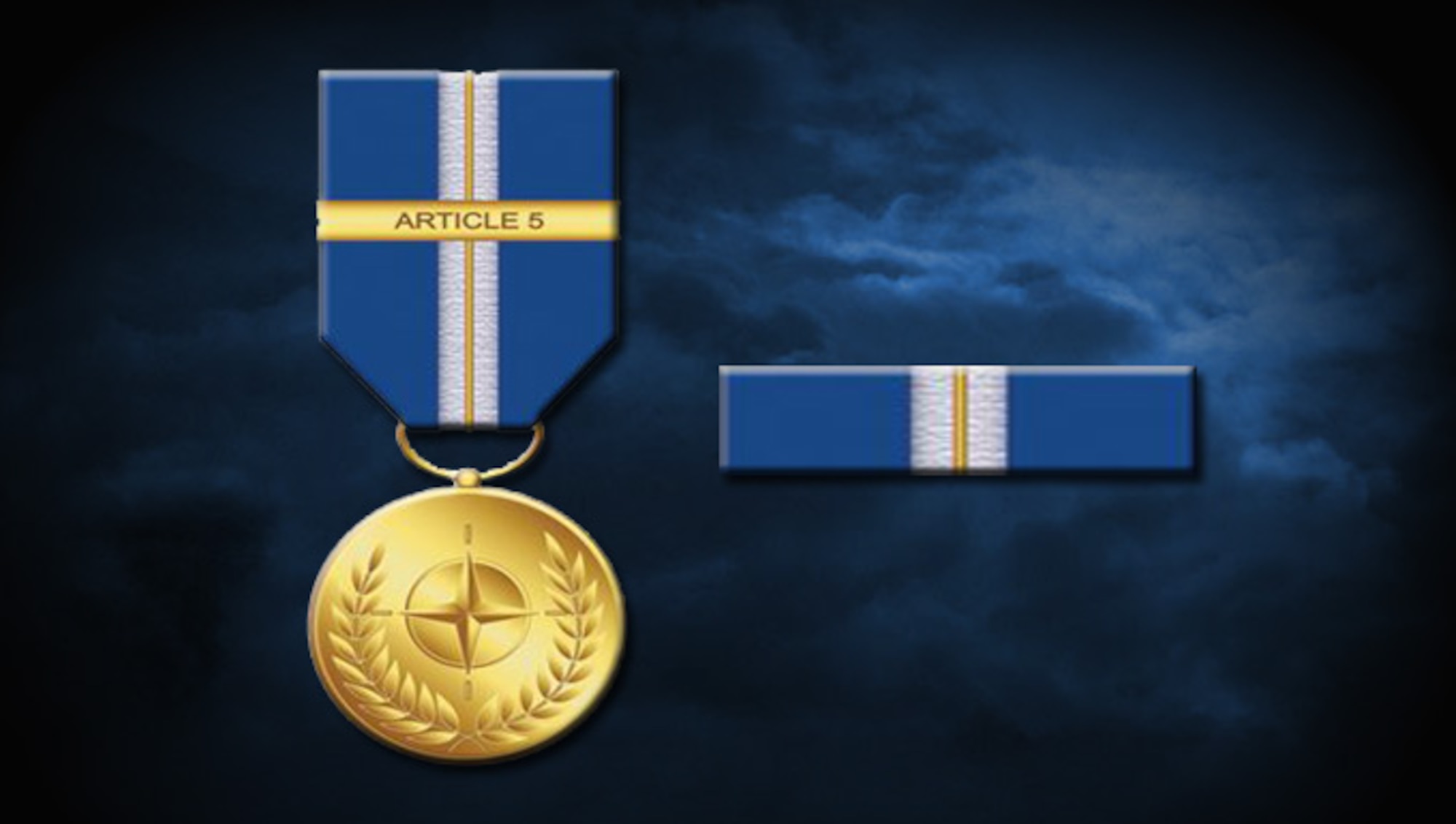
Criticism of NATO is not new. Even during his presidency, Trump repeatedly questioned whether allies were contributing enough, whether the United States was carrying too much of the burden.
But calling NATO a “paper tiger”?
That’s different.
Because words like that don’t just criticize—they signal.
They suggest doubt.
They hint at a future where the United States might step back—not necessarily with a dramatic withdrawal, but with something quieter… and perhaps more dangerous: reduced commitment.
Former ambassador William Taylor explained that while a president may not be able to formally pull the U.S. out of NATO without Congress, there are other ways to weaken the alliance.
Funding can be reduced.
Military presence can shrink.
Commitment can… fade.
And in alliances, perception can be as powerful as action.
The Fragility of “Bedrock”
In Washington, something unusual happened.
Republicans and Democrats—often deeply divided—spoke with one voice. Lawmakers across party lines defended NATO as “the most successful military alliance in history,” emphasizing its role in maintaining global stability for more than seven decades.
That kind of unity is rare.
But perhaps even more telling is why it happened.
Because for many in Congress, NATO isn’t just policy—it’s bedrock.
Or at least, it used to be.
Today, even that word feels… less certain.
If leaders begin to question foundational commitments, allies inevitably begin to ask:
Is the ground beneath us still solid?
Allies Listening in Silence
Across Europe, reactions have been measured—but not indifferent.
Diplomacy rarely shows panic. It shows restraint. Carefully chosen words. Neutral tones. Public confidence.
But behind closed doors?
Questions linger.
What happens if the United States—the backbone of NATO—steps back?
Who fills that gap?
Can Europe defend itself at the same scale?
And perhaps the most unsettling question of all:
Would Article 5 still mean what it once did?
Because an alliance is not just a treaty.
It is a shared expectation.
And expectations, once shaken, are hard to restore.
Power Isn’t Just Military 
It’s easy to think of NATO in terms of numbers: troop counts, defense spending, aircraft carriers.
But its true strength has always been something less visible.
Credibility.
The belief that if something happens—something terrible—no country will hesitate.
The belief that the response will be immediate, unified, and unwavering.
That belief has prevented conflicts as much as it has responded to them.
Because deterrence doesn’t require action.
It requires certainty.
And certainty is fragile.
A Shift or Just a Moment?
Supporters of Trump might argue this is simply negotiation strategy—pressure on allies to contribute more, to take defense more seriously.
And there’s truth in that.
For years, U.S. leaders from both parties have pushed European nations to increase military spending. NATO itself has long acknowledged the imbalance.
But there’s a difference between pressure and doubt.
Pressure strengthens alliances.
Doubt weakens them.
So the question becomes:
Is this rhetoric part of a larger strategy…
or the beginning of a deeper shift in how America sees its role in the world?
The Quiet Fear No One Says Out Loud 
No official statement will say it.
No diplomat will phrase it this way.
But the underlying fear is simple:
What if, one day, the call comes—and the response isn’t guaranteed?
What if Article 5 becomes… negotiable?
That possibility alone changes everything.
Because alliances don’t collapse overnight.
They erode slowly—through hesitation, through uncertainty, through moments where words begin to carry less weight than they once did.
Why This Moment Matters
It’s easy to dismiss headlines as political noise. Another statement. Another debate. Another cycle that will fade.
But history often turns on moments that seem small at first.
A phrase.
A doubt.
A shift in tone.
And suddenly, the world is not quite the same.
NATO has endured wars, crises, and decades of change. It has adapted, expanded, and remained one of the most powerful symbols of collective security in modern history.
But like any structure built on trust, it depends on something intangible.
Confidence.
And confidence, once questioned, is never quite as effortless again.
The Question That Remains
So is NATO still unshakable?
Or are we witnessing the first visible cracks in something we always assumed would last forever?
No official answer exists—yet.
But the conversation has started.
And once questions like these are asked… they don’t simply disappear.