Why Trump Looked Visibly Irritated With Finland’s President — And the Three Subtle Moves That Changed the Tone
Diplomatic meetings are supposed to follow a script.
Handshake.
Polite smiles.
Carefully chosen words that signal unity—even when differences exist.
So when Donald Trump appeared unusually irritated during his recent meeting with Finnish President Alexander Stubb at the White House, seasoned observers paid attention.
On the surface, the visit was a success.
The two leaders announced progress on an icebreaker cooperation agreement, a practical symbol of growing U.S.–Finnish collaboration in Arctic security.
But beneath the formal language, something else was unfolding.
And it didn’t escape the cameras.
A Meeting Meant to Signal Alignment

For Trump, the meeting was meant to reinforce a familiar theme: American leadership, bilateral strength, and strategic influence.
Finland, newly prominent in NATO and Arctic discussions, was a useful partner—and, potentially, a showcase.
Yet as the cameras rolled, the body language told a more complicated story.
Trump spoke at length.
Stubb listened—but not in the way Trump seemed to expect.
First Moment: The Body Language That Raised Eyebrows
As Trump outlined his position, viewers noticed that President Stubb appeared less engaged than protocol usually demands.
Eye contact was intermittent.
His posture relaxed.
At moments, he seemed distracted—smiling faintly, even chuckling.
Some viewers online interpreted these gestures as dismissive. Others suggested cultural difference, or simple fatigue during a long diplomatic day.
But to Trump—who places enormous importance on visible respect and attentiveness—the optics mattered.
In diplomacy, perception often outweighs intention.
And perception, in this case, was not flattering.
Second Moment: The EU Card Trump Didn’t Want Played

The tension sharpened when Stubb began emphasizing Finland’s continued commitment to joint policy development with the European Union and Nordic partners.
It was a reasonable statement.
A predictable one.
But it cut directly against Trump’s preferred framing.
Trump repeatedly sought to steer the conversation toward U.S.-led cooperation, highlighting America as the central pillar of the agreement. Stubb, however, calmly redirected the discussion—underscoring that Finland’s decisions would remain coordinated with Brussels and its regional allies.
Several times, his remarks appeared to interrupt Trump’s momentum.
Not confrontational.
Not aggressive.
Just firm.
For Trump, who often expects bilateral meetings to reinforce American primacy, the message was unmistakable: Finland would cooperate—but not realign.
Third Moment: The Question That Sealed the Mood
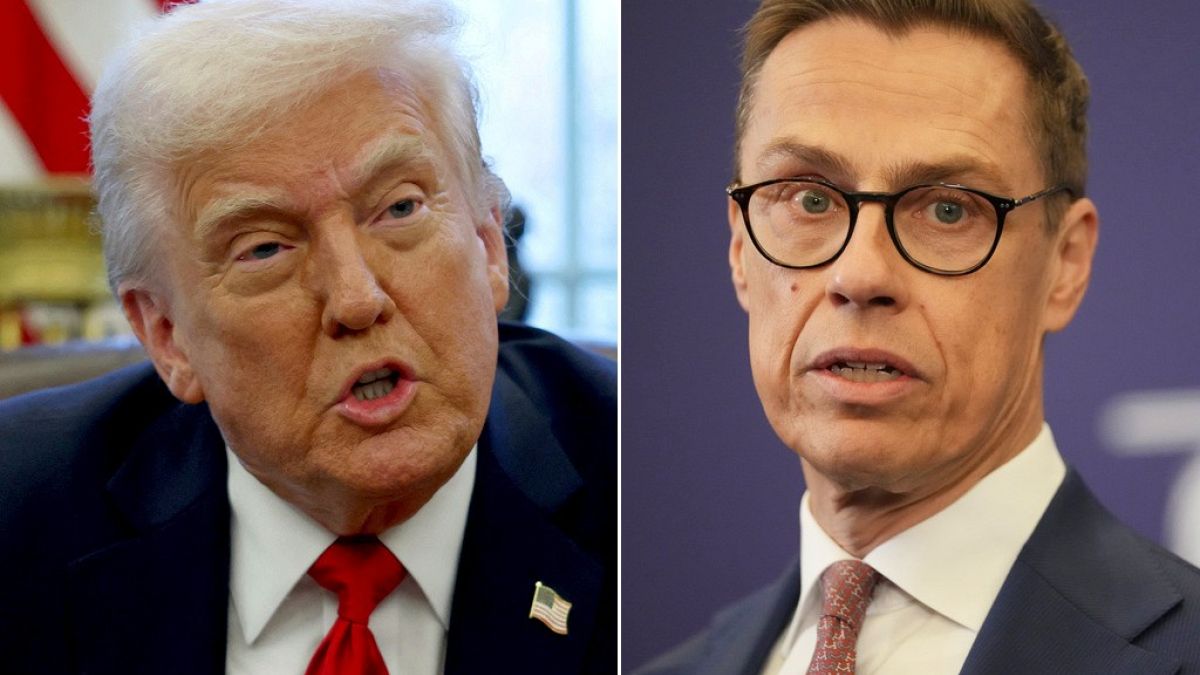
The final shift came when a reporter posed a question directly to President Stubb—asking whether Finland felt pressure to choose between U.S. leadership and European coordination.
Stubb’s answer was diplomatic, but unambiguous.
Finland, he said, does not see cooperation as a zero-sum choice. Its security and economic future are rooted in multilateral alignment, not exclusive dependence.
Trump’s expression changed.
The meeting had crossed from symbolism into boundary-setting.
Why This Moment Struck a Nerve
For observers familiar with Trump’s leadership style, the irritation made sense.
Trump values:
-
Visible deference
-
Clear hierarchy
-
Personal affirmation
Stubb offered none of those—at least not overtly.
Instead, he offered calm independence, a style common in Nordic diplomacy but often frustrating to leaders who prefer dominance over consensus.
For older Americans and Europeans watching, the exchange felt revealing rather than explosive.
It showed how quickly tone can shift when expectations of respect collide with expectations of equality.
When Diplomacy Isn’t About Anger — But Control

Trump didn’t lose his temper dramatically.
There was no outburst.
No walkout.
No sharp words.
But the tension was there—in pauses, expressions, and clipped responses.
Because sometimes, anger in diplomacy doesn’t announce itself.
It tightens.
And in this meeting, the tightening spoke volumes.
A Quiet Lesson in Modern Alliances
Finland left the White House with its agreement intact.
But it also left having made something clear:
Partnership does not require submission.
Respect does not always look like agreement.
And leadership, in a multipolar world, is no longer claimed—it’s negotiated.
Trump may have expected affirmation.
Alexander Stubb offered autonomy.
And that difference—small in words, large in meaning—was enough to sour the room.