When Satire Hits a Nerve: Why Trevor Noah’s Grammy Jokes Cut Deeper Than Anyone Expected
There are moments in American public life when laughter does not dissolve tension — it sharpens it.
Trevor Noah’s remarks at the Grammys were one of those moments.
On the surface, they sounded like what audiences have come to expect from a seasoned satirist: clever, playful, lightly irreverent. But beneath the applause and the smiles, something else was happening — something far more personal, far more volatile. For Donald Trump, those jokes did not land as harmless entertainment. They landed as an attack on identity, legacy, and control.
And that is why they mattered.
A Joke About Greenland — Or a Strike at Trump’s Self-Image
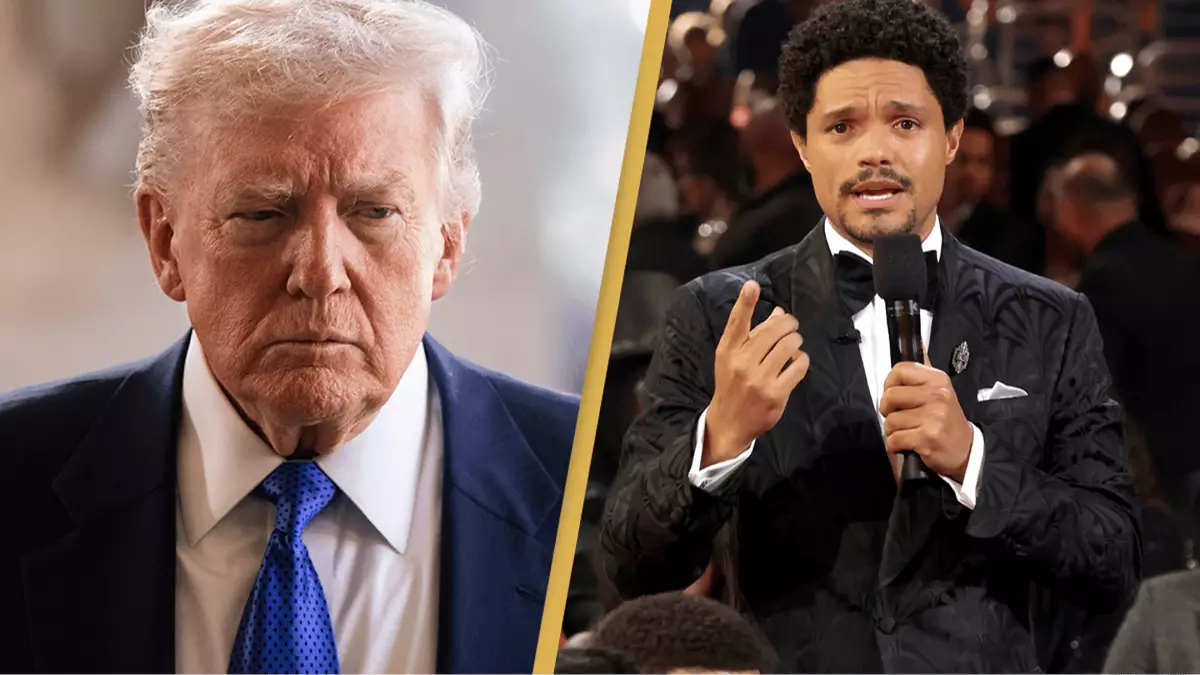
When Noah reduced Trump’s long-discussed interest in purchasing Greenland to something resembling a personal whim — a playground fantasy rather than a geopolitical maneuver — he wasn’t merely poking fun at an old headline.
He was dismantling a narrative Trump has spent years trying to construct.
For Trump, the Greenland proposal was never about ice, territory, or even Denmark. It was about scale. Permanence. History. Trump has always wanted to be remembered not as a caretaker of institutions, but as a man who expanded them — physically, visibly, unmistakably.
Real estate logic has always framed his worldview. Bigger land. Bigger deals. Bigger headlines. In that context, Greenland wasn’t absurd — it was symbolic.
By laughing it off as indulgence, Noah didn’t just mock the proposal. He stripped it of grandeur. He reframed it not as strategy, but as ego. Not as vision, but as impulse.
For a man who has built his public life on the idea that he alone sees the “big picture,” that kind of reframing cuts deep.
Why Satire Hurts Trump More Than Criticism

Criticism can be dismissed as partisan. Satire cannot.
That’s the trap Trump has always struggled with. When a politician attacks him, he attacks back. When journalists question him, he calls them corrupt. But when a comedian laughs — especially one admired across generational and ideological lines — the usual weapons fail.
Laughter suggests consensus.
And consensus is dangerous.
Among older Americans and Britons — particularly those who came of age before politics became constant performance — satire carries moral weight. Think of Mark Twain. Think of Peter Cook. Think of George Carlin. Humor, in those traditions, isn’t about cruelty. It’s about exposure.
Trevor Noah, standing on one of entertainment’s most visible stages, wasn’t yelling. He wasn’t accusing. He was shrugging.
And that shrug said: this is not as serious as you claim.
For Trump, whose authority depends on being taken seriously at all times, that is destabilizing.
The Epstein Reference: Timing Is Everything

If the Greenland joke wounded Trump’s ego, the Epstein reference struck at something far more fragile — reputation management.
Trump has spent years trying to surgically separate his name from Jeffrey Epstein’s. The strategy has been consistent: deny closeness, redirect blame, suggest political enemies are responsible for keeping the story alive.
Noah didn’t accuse. He didn’t present evidence. He didn’t need to.
He reminded.
By referencing Epstein at a moment when newly released files had already stirred public unease, Noah re-attached Trump’s name to a shadow Trump desperately wants to escape. For older audiences — those who remember how reputations were once destroyed not by proof, but by association — this matters.
In that generation, character is cumulative. It’s not about one event. It’s about patterns.
Noah’s words didn’t create suspicion. They reactivated memory.
Why This Resonates With 45–65+ Audiences
Younger viewers may scroll past these moments. Older ones do not.
For many Americans and Britons in mid-to-later life, politics is not entertainment. It is biography. They remember Watergate. They remember the slow drip of truth, the erosion of trust, the feeling of watching institutions bend under the weight of ego.
When they hear a joke that exposes arrogance or evasiveness, they don’t laugh lightly. They listen.
Noah’s comments tapped into something familiar: the discomfort of watching powerful men insist on their own myth while the cracks become harder to ignore.
This isn’t about liking Trevor Noah. Many older viewers don’t follow him closely. Some don’t find him funny at all.
But they recognize the moment.
They recognize when a narrative slips.
Why Trump’s Reaction Was Inevitable
Trump does not rage against jokes because they insult him. He rages because they reduce him.
Authoritarian personalities fear ridicule more than opposition. Opposition legitimizes them as a force worth fighting. Ridicule renders them human — fallible, small, ordinary.
Noah didn’t present Trump as dangerous. He presented him as transparent.
And transparency is Trump’s enemy.
That is why even indirect jokes provoke disproportionate anger. They threaten the illusion of control. They suggest that the audience — the public — is no longer fully captive.
A Quiet Shift We Shouldn’t Ignore
This episode is not about Trevor Noah versus Donald Trump.
It’s about something subtler: the slow cultural shift in how authority is perceived.
When comedians can puncture political myth without shouting, when jokes linger longer than speeches, when older audiences nod rather than recoil — something is changing.
Not dramatically.
Not overnight.
But perceptibly.
For a generation that values dignity, legacy, and restraint, Noah’s remarks didn’t feel reckless. They felt revealing.
And for Trump, that may be the most unsettling part of all.
Because once a story changes — once a powerful figure is seen through a different lens — it rarely returns to its original shape.
Not in politics.
Not in history.
And not in memory.