War, Power, and a Question on Live Television: The Moment Washington Couldn’t Ignore
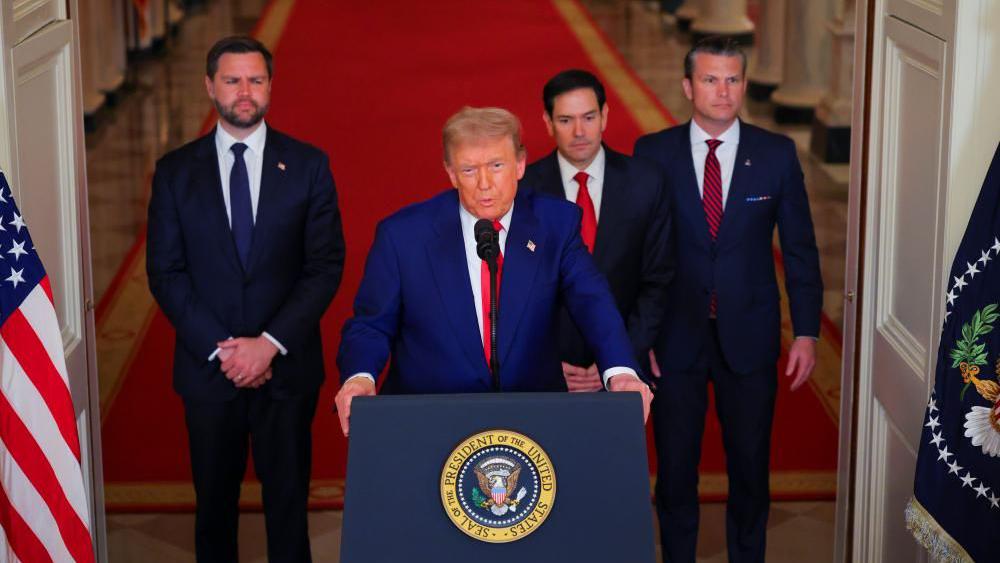
In modern geopolitics, crises rarely unfold quietly. When military conflict erupts, the consequences ripple far beyond the battlefield. In Washington this week, a sudden escalation involving Iran has triggered a storm of political tension, public anxiety, and urgent debate.
Within hours of reports of U.S. military strikes, television networks filled their broadcasts with breaking banners and urgent analysis. Commentators described a rapidly evolving situation in the Middle East—one that appeared to shift from diplomatic tension to open confrontation almost overnight.
According to early accounts circulating in political circles, the escalation followed a breakdown in already fragile negotiations. Diplomatic efforts reportedly collapsed, and within days military action began, sending shockwaves through global markets and foreign ministries alike.
The scale of the reported strikes stunned observers. Analysts described coordinated attacks across multiple strategic targets, sparking retaliatory missile exchanges across the region. The possibility of a wider regional conflict quickly became the focus of international concern.
For many Americans and Britons watching events unfold, the speed of the escalation raised unsettling questions. In an age of nuclear anxieties and fragile alliances, wars are no longer distant events. They unfold instantly, across television screens and smartphones.
At the center of the debate lies the justification for the military action. Supporters argue that preventing nuclear proliferation remains a core strategic priority for Western security. In that view, decisive action may avert far greater dangers in the future.

Critics, however, argue that the evidence supporting the urgency of such action remains unclear. Some policy analysts have questioned whether intelligence assessments truly indicated an immediate nuclear threat requiring rapid military intervention.
Public opinion has also entered the conversation. Early polling data circulating among political analysts suggests a majority of Americans express concern about entering another prolonged conflict in the Middle East.
For a generation shaped by memories of Iraq and Afghanistan, those concerns resonate deeply. Many voters recall how quickly limited military actions can evolve into years-long entanglements with enormous human and financial costs.
Yet the most dramatic moment of the unfolding debate came not from the battlefield, but from a television studio.

During a live broadcast discussing the unfolding crisis, Vice President Kamala Harris raised a question that quickly spread across political media: whether the decision to strike had received proper congressional authorization.
The question struck at the heart of a constitutional tension that has existed in American politics for decades—the balance between presidential authority as commander-in-chief and Congress’s power to declare war.
Legal scholars immediately began weighing in. Some argued that modern presidents often rely on broad military authorizations passed years earlier. Others warned that bypassing Congress risks eroding constitutional safeguards designed to prevent unilateral wars.

Across the Atlantic, British analysts observed the debate with familiar concern. The United Kingdom, a close ally in many U.S. military operations, has faced its own domestic debates over parliamentary approval for overseas military action.
For voters in both countries, the issue is not only strategic—it is democratic.
Who decides when a nation goes to war?
As the situation continues to develop, that question may become as important as the military operations themselves. Congress could move to assert its authority, or the executive branch could continue directing the conflict independently.

History shows that wars often begin with uncertainty but evolve into defining moments for governments and societies.
What began as a sudden military escalation has now opened a broader debate about power, responsibility, and the limits of executive authority.
And as the world watches closely, the next decisions made in Washington may determine whether this moment becomes a contained crisis—or the beginning of something far larger.