$2 Trillion Gone: The Week Wall Street Stopped Believing
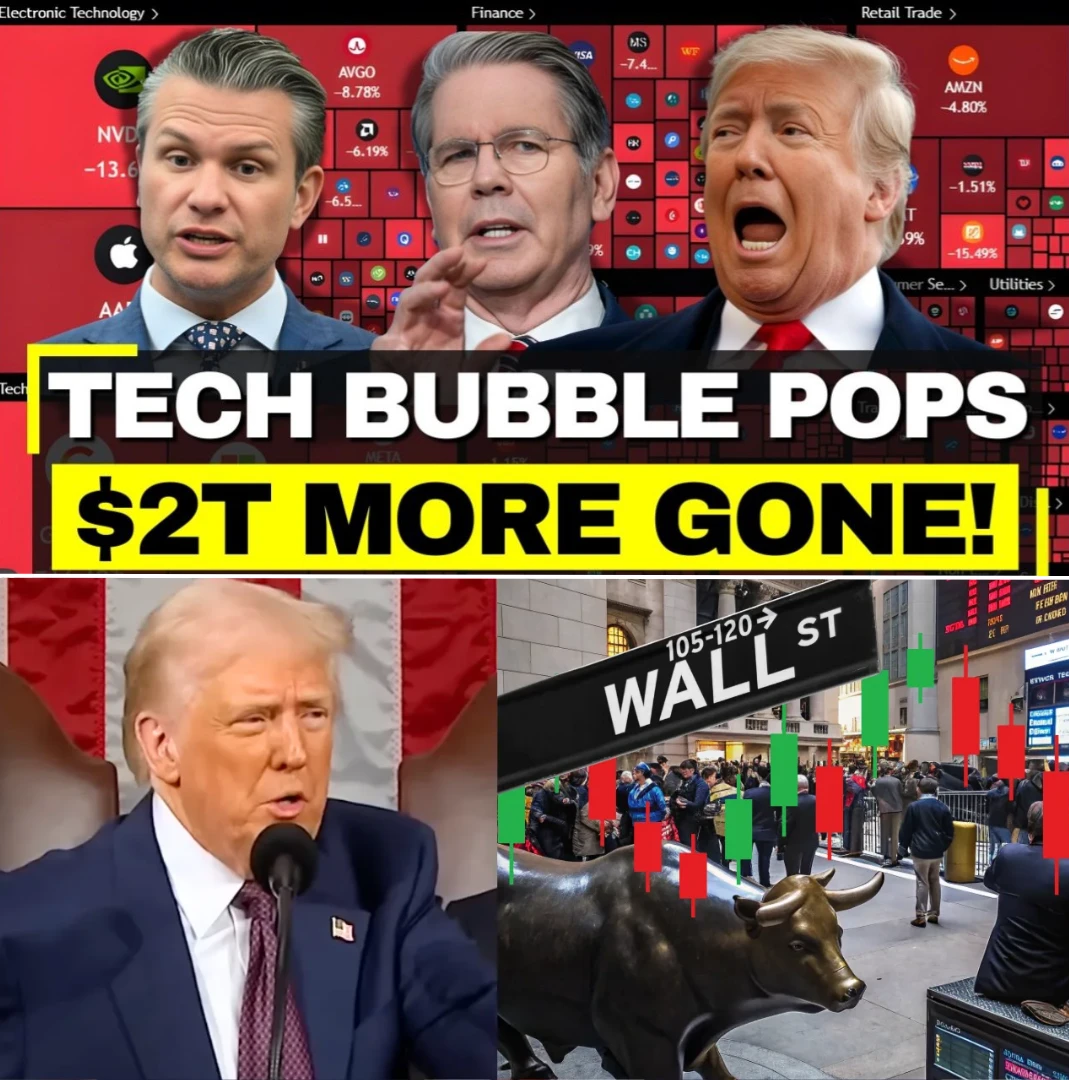
In the final week of March 2026, something shifted on Wall Street. It wasn’t just another volatile stretch—it felt deeper, sharper, more unsettling. In a matter of days, over $2 trillion in market value simply vanished.
The numbers alone were staggering. The Dow Jones closed at 45,672, nearly 5,000 points below its record high reached just six weeks earlier. What had looked like unstoppable momentum suddenly reversed into a relentless downward slide.
It wasn’t an isolated drop. The market had now endured its fifth consecutive week of losses. On Friday alone, all major indices fell sharply, with the Nasdaq officially entering correction territory after slipping more than ten percent from its peak.
Big Tech, long the backbone of market confidence, showed clear signs of strain. Nvidia, Microsoft, Alphabet, and Meta all declined noticeably, sending a signal that even the strongest pillars of growth were no longer immune.
At the heart of the turmoil was energy. Rising tensions around Iran disrupted critical oil routes, pushing Brent crude above $108 per barrel. That surge reignited inflation fears and complicated expectations for any near-term interest rate relief.
Geopolitics added another layer of instability. Markets swung wildly on unverified headlines—trillions gained on rumors of diplomacy, only to evaporate when those hopes proved unfounded. Confidence began to look fragile, almost reactive.
Economic data offered little reassurance. Service sector growth slowed dangerously close to contraction levels, while layoffs surged dramatically. The underlying message was clear: the economy was losing momentum at a time it could least afford it.
Meanwhile, the so-called “fear gauge” told its own story. The VIX surged past 31, reaching levels not seen since the early pandemic era. Institutional investors were no longer hedging—they were bracing for something potentially systemic.
Even more troubling was the behavior of the bond market. Yields on 10-year Treasury notes climbed to 4.44% despite falling equities. Instead of seeking safety, investors appeared to be pulling back broadly, raising concerns about deeper structural anxiety.
The term few wanted to say out loud began circulating again: stagflation. Slowing growth, rising unemployment, and elevated energy costs formed a dangerous combination—one that historically leaves policymakers with few effective tools.
Looking ahead, the outlook remained uncertain at best. Analysts warned that if oil prices pushed beyond $110, the Dow could fall further toward 43,000. The selling pressure, many believed, had not yet fully played out.
Beyond the numbers, something more intangible was eroding. A $2 trillion loss in a single week does more than dent portfolios—it shakes global confidence. Questions emerged about the durability of U.S. financial leadership in an increasingly unstable world.
What made this moment distinct was not just volatility, but the sense of transition. Markets were no longer reacting to temporary shocks; they were recalibrating expectations in real time, under pressure from forces that felt both immediate and unresolved.
By the end of the week, one thing was undeniable: this was no ordinary correction. It was a test—of resilience, of policy, and of belief. And for the first time in a long while, that belief appeared uncertain.