A System Under Strain: The Escalating Clash Between Executive Power and Judicial Independence

A recent video from Adam Briefing has brought renewed attention to a deepening institutional conflict in Washington, one that raises fundamental questions about the balance of power at the heart of American democracy.
At the center of the unfolding situation is Donald Trump, whose latest actions have intensified scrutiny over the relationship between the executive branch and the judiciary.
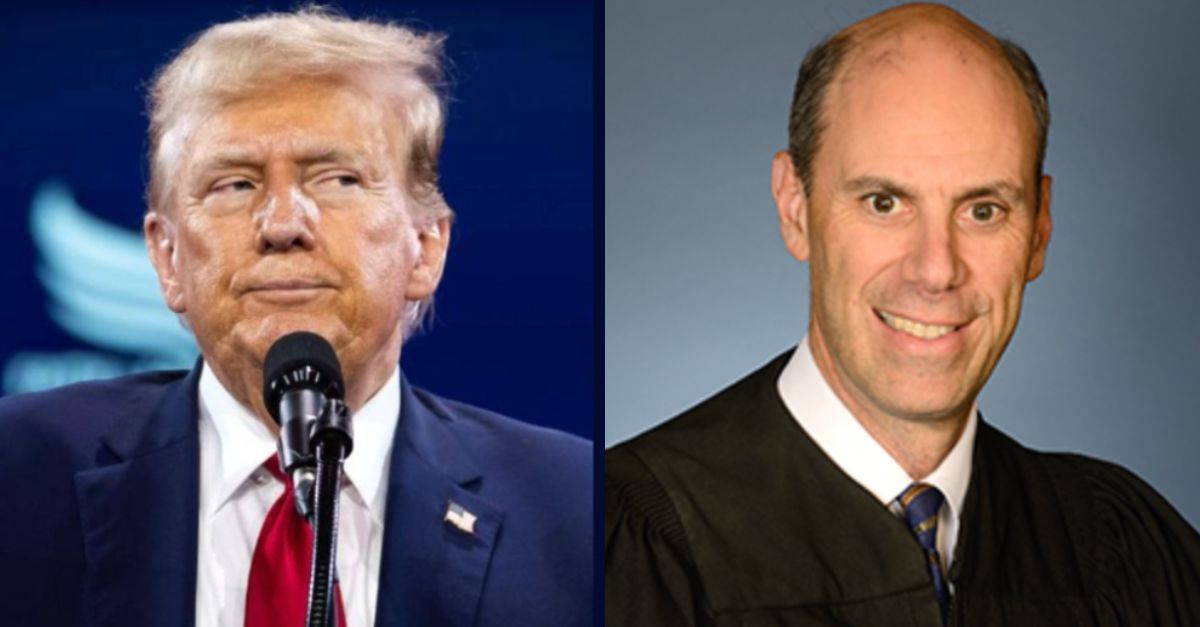
The immediate trigger was a ruling by federal judge James Boasberg in Washington, D.C., who blocked subpoenas issued by the Department of Justice targeting Jerome Powell.

In his decision, Boasberg stated that there was no clear evidence of wrongdoing. He suggested the subpoenas risked appearing as a form of pressure on the Federal Reserve, an institution designed to remain independent from political influence.
The ruling quickly sparked a forceful response. Trump publicly criticized the judge, using sharp language and questioning the legitimacy of judicial authority in decisions that constrain executive actions.
More notably, Trump called for the judge’s removal through impeachment, arguing that unelected judges should not limit policies pursued by an elected president—an argument that has drawn significant legal and political debate.
This rhetoric prompted a rare and direct response from John Roberts. In a public statement, Roberts emphasized that impeachment is not an appropriate response to judicial disagreement.
His remarks underscored a long-standing principle: that courts must remain independent, free from external pressure, and able to interpret the law without fear of retaliation from other branches of government.
Beyond the legal arguments, the situation has taken on broader political dimensions. Lawmakers are closely watching developments, with discussions emerging around accountability, oversight, and the limits of executive authority.

Attention has also turned to the Federal Reserve itself. Any perception of political influence over monetary policy could have far-reaching consequences, potentially affecting economic stability and global confidence in US financial institutions.
Meanwhile, concerns have been raised about the wider impact of escalating rhetoric. Public discourse surrounding legal institutions has become increasingly charged, with potential implications for trust in the system as a whole.
For observers in the United States and the United Kingdom, the moment feels particularly significant. It highlights not just a single dispute, but a broader test of how democratic institutions respond under sustained pressure.

As events continue to unfold, the stakes extend beyond individual decisions or personalities. They touch on the enduring framework that governs how power is exercised—and, just as importantly, how it is restrained.
In the end, the question is not simply about one ruling or one response, but about whether the balance between authority and accountability can hold firm in an increasingly complex political landscape.