The Tariff Shockwave: How Canada Turned Economic Pain into a Strategic Counteroffensive Against the United States
More than 100,000 Canadian jobs have vanished or been reduced under the weight of U.S. tariffs, sending shockwaves through industries once tightly bound to American demand. What began as policy has become a deeply personal economic rupture.
Steel mills in Sault Ste. Marie are shedding workers by the thousand, while auto plants in Oshawa and Windsor fall silent. Across British Columbia, shuttered lumber mills stand as physical reminders of a trade relationship unraveling in real time.
The damage is not abstract. It is visible in paychecks that disappeared, factories that dimmed their lights, and communities forced to recalibrate overnight. Entire sectors—from forestry to auto manufacturing—have been pushed into contraction simultaneously.
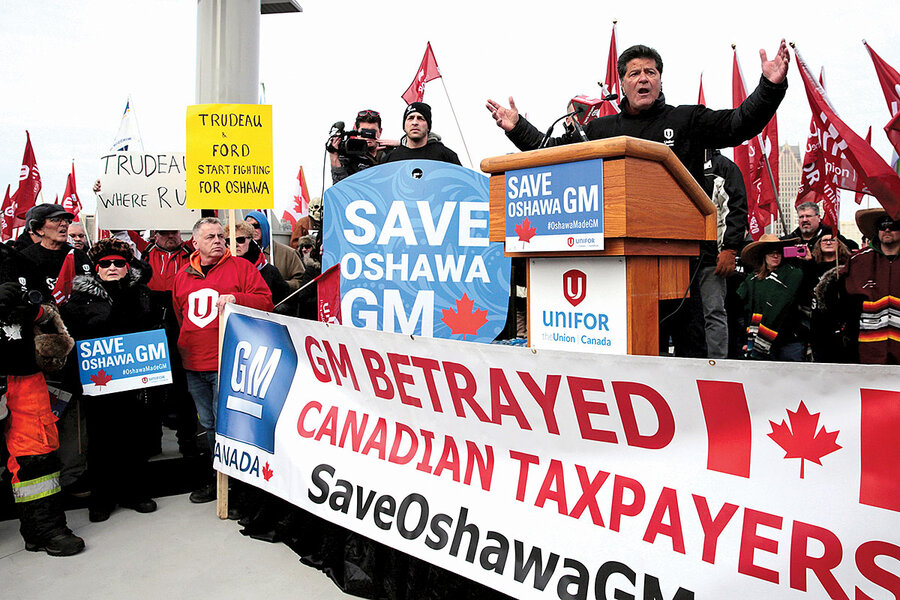
Ontario alone lost tens of thousands of jobs in a single quarter, marking its sharpest manufacturing decline outside pandemic conditions. Youth unemployment surged to levels unseen in over a decade, exposing generational vulnerabilities within an already strained economy.
Yet beneath the surface of economic loss, a different story is unfolding—one not of retreat, but of recalibration. Canada’s response has not been to plead for relief, but to quietly construct a strategy designed for long-term leverage.
Rather than simply retaliating, policymakers have engineered countermeasures with precision. Tariffs remain targeted at sectors where American producers directly compete, ensuring pressure lands exactly where it carries political and economic consequences within the United States.

At the same time, Canada has moved to protect itself. Tariffs on essential imports have been reduced or eliminated, preventing domestic shortages while allowing the counteroffensive to operate without inflicting self-harm on Canadian consumers and industries.
More significantly, the country has begun redirecting its economic pathways. Exports once destined for American markets are being rerouted to Europe, Asia, and beyond, forming new partnerships that may outlast the conflict that created them.
This diversification is not temporary. It is structural. Trade with non-U.S. partners has surged, signaling a deliberate effort to reduce dependence on a single dominant market—a shift that could permanently reshape North American economic dynamics.

A pivotal moment arrived when the U.S. Supreme Court ruled that key tariffs lacked proper legal authority. Overnight, the legal foundation of the trade war weakened, transforming economic grievances into potential claims backed by judicial validation.
For Canadian negotiators, this ruling is more than symbolic. It provides a framework to quantify losses—not merely as economic hardship, but as damages tied to actions deemed unlawful by America’s own highest court.
As the upcoming trade agreement review approaches, Canada is preparing to enter negotiations from a position that would have seemed improbable just a year ago. The country now holds both economic alternatives and legal leverage.

For the United States, the stakes are equally profound. Supply chains that cross borders multiple times are now vulnerable to disruption, and industries in key states face the risk of losing long-standing Canadian partnerships.
What emerges from this moment is not simply a trade dispute, but a transformation. Canada’s strategy blends necessity with calculation, turning imposed damage into strategic opportunity, and reshaping the balance of economic power in subtle but enduring ways.
The question now is no longer who started the conflict, but who will define its outcome. As negotiations loom, one reality becomes increasingly clear: the consequences of this trade war will not end at the bargaining table—they will echo for years.