The Quiet Power of Style: How Melania Trump Turned Fashion into Influence

In Washington, power is often measured in speeches, policies, and headlines. Yet sometimes, it reveals itself more subtly—through presence, precision, and image. Few public figures embody this quieter form of influence more than Melania Trump.
At the center of her visual identity sits an unmistakable symbol: the Hermès Birkin bag. Frequently seen draped over her arm, particularly in rare crocodile leather variations, the bag is more than an accessory—it is a statement of status, control, and deliberate curation.
To many observers, this choice reflects more than wealth. It signals entry into an elite global circle where fashion becomes language. The Birkin, notoriously difficult to acquire, represents exclusivity—an unspoken reminder that influence often begins long before a word is spoken.
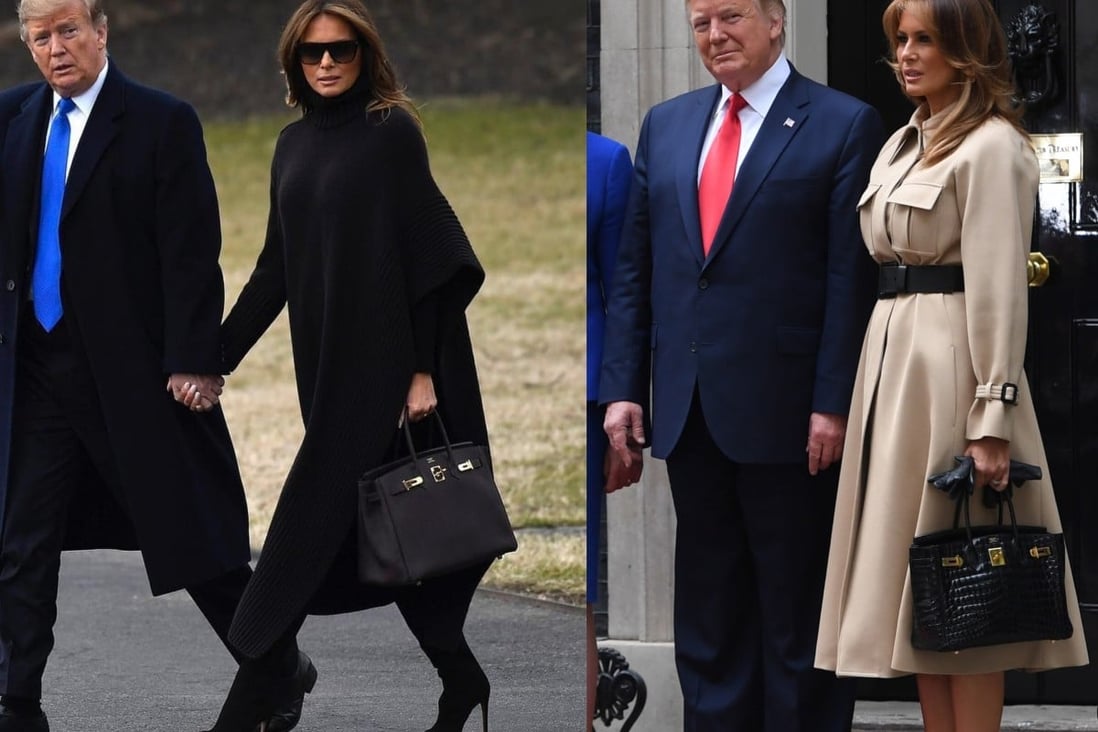
But Melania’s transformation into a global political figure required more than luxury symbols. When her husband, Donald Trump, entered the White House, she stepped away from a successful modeling career—an intentional shift that reframed her public role entirely.
That decision carried weight. In a culture that often celebrates independence through career visibility, Melania’s choice projected a different narrative: one of strategic withdrawal. By stepping back, she positioned herself not as a competitor for attention, but as a stabilizing presence within a turbulent political landscape.
Yet stepping back did not mean fading out.
Despite public refusals from several high-profile designers to dress her during the early days of the administration, Melania maintained a polished and commanding aesthetic. Behind the scenes, a team of stylists ensured consistency, elegance, and precision—every appearance calculated, every detail intentional.

This level of discipline reveals something deeper about modern political imagery. In an era driven by viral moments and instant judgment, appearance is no longer superficial—it is strategic. Melania understood this instinctively, leveraging her background in fashion to navigate scrutiny with composure.
Her modeling experience became an unexpected asset. At public events, where cameras search relentlessly for imperfection, she moved with the confidence of someone trained to command attention without speaking. Posture, expression, timing—each element worked in harmony to project control.
For supporters, this translated into admiration. For critics, it remained a point of fascination. Either way, the effect was undeniable: Melania’s presence softened, reshaped, and at times elevated the broader image of the Trump administration.
There is also an undercurrent of contrast in her public persona. While political discourse around her often grew loud and divisive, her own presentation remained restrained, almost distant. This contrast amplified her impact, allowing her silence to speak as loudly as any statement.
In many ways, Melania Trump represents a different kind of political figure—one who operates not through rhetoric, but through perception. Her choices, from wardrobe to demeanor, form a carefully constructed narrative about control, elegance, and resilience under pressure.
Ultimately, her story is not just about fashion or symbolism. It is about the power of image in a media-saturated age—where influence can be worn, carried, and communicated without ever needing to be explained.
And in that space, where style meets strategy, Melania Trump carved out a presence that remains impossible to ignore.