🚨 Isolation or Strategy? Global Reaction Builds After Trump’s U.N. Moment

A single speech can shape global perception.
And in this case, the reaction appears to be spreading far beyond the room.
Following remarks delivered on the international stage, Donald Trump is facing a growing wave of criticism—not just domestically, but from across key allied nations.
At the center of it all is a widening gap:
How the U.S. sees its actions… vs. how the world interprets them.
🌍 Allies Step Back, Not Forward
Countries traditionally aligned with Washington—including Canada, Japan, and the United Kingdom—are reportedly seeing strong negative public sentiment toward U.S. military actions involving Iran.
Polls and public reactions suggest:
- Approval ratings are deeply negative
- Public skepticism is higher than during the Iraq War
- Citizens are wary of another prolonged conflict
For democratic leaders, this creates a political dilemma:
Support the U.S. — and risk backlash at home
or
Distance themselves — and risk weakening alliances
So far, many appear to be choosing caution.
⚠️ The Strait of Hormuz Problem

One of the clearest signs of hesitation is the lack of support in securing the Strait of Hormuz.
This narrow passage is one of the most critical oil routes in the world.
Any disruption there affects global markets instantly.
Yet despite its importance:
- Several allies have declined direct involvement
- Multinational coordination remains limited
- The burden increasingly falls on the U.S. alone
That absence speaks volumes.
🧠 Public vs. Private Support
Trump has maintained that allies privately support U.S. actions, even if they hesitate publicly.
But critics point to a contradiction:
If support truly exists behind closed doors…
why is visible cooperation so limited?
And more importantly:
Why is the U.S. now seeking assistance after initially signaling it didn’t need any?
This gap between messaging and reality is fueling skepticism.
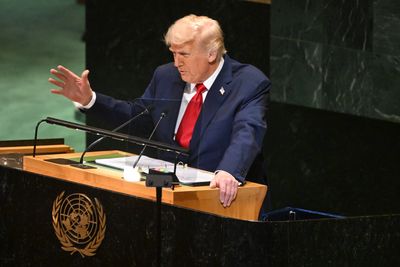
🏛️ The United Nations Moment

The United Nations has long been a stage for diplomacy, consensus, and global signaling.
Moments like these aren’t just speeches—they are tests of international alignment.
Observers noted that instead of rallying unified backing, the tone and response suggested something else:
- Unease among delegates
- Lack of visible enthusiasm
- A sense of distance rather than solidarity
Not necessarily rejection—but certainly not strong endorsement.
🔥 Strength or Isolation?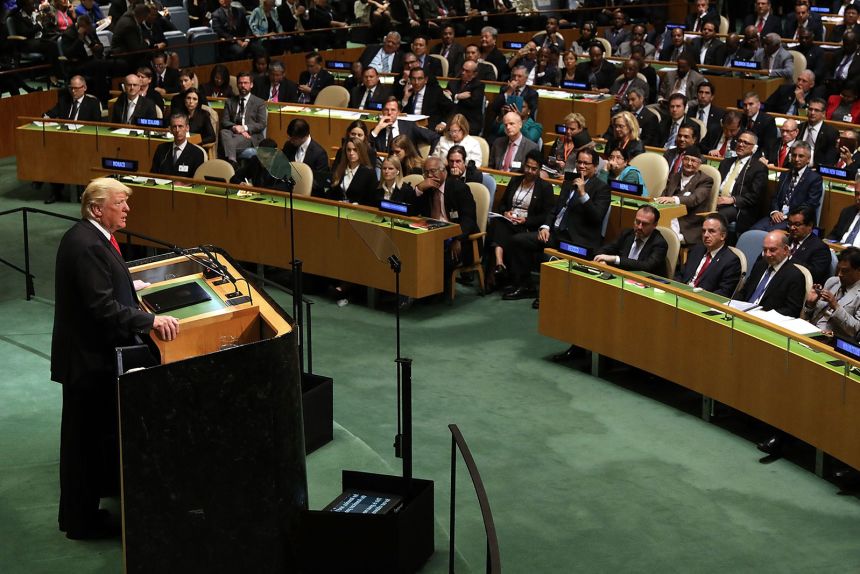
The original intention may have been to project strength.
But internationally, the perception appears different:
- Acting without allies can signal decisiveness…
- But it can also signal isolation
And in global politics, perception often becomes reality.
⚖️ A Strategic Crossroads
This moment highlights a critical question for U.S. foreign policy:
Is it better to move fast alone…
or slower, with allies fully aligned?
History shows that coalition support can define the success—or failure—of long-term engagements.
Without it, even the strongest nations face limits.
👀 What Comes Next?
The situation remains fluid.
There is no official indication of a breakdown in alliances—but the tone has clearly shifted.
- Allies are cautious
- Public opinion is skeptical
- And global coordination remains uncertain
For Trump, this is more than a diplomatic moment.
It’s a test of whether American leadership can still bring others along—or must increasingly go it alone.