A 12-Hour Turnaround: How One Victory Reframed the Political Narrative in Florida

Less than twelve hours after Donald Trump dismissed the loss of his Mar-a-Lago district, a relatively unknown figure, Emily Gregory, began a calculated sequence of moves that would shift the political conversation overnight.
Gregory’s victory had already surprised observers, but what followed proved even more consequential. Rather than celebrating quietly, she stepped directly into the spotlight, reframing the narrative with a precision that caught both supporters and critics off guard.
Her first move was subtle yet devastatingly effective. On social media, Gregory publicly thanked Trump for encouraging her family to use mail-in voting, a method he had repeatedly criticized. The irony was impossible to ignore.

By highlighting that her own winning margin relied on mail-in ballots, Gregory exposed a contradiction that resonated widely. It suggested that Trump’s rhetoric and real-world influence were no longer aligned, creating confusion among his own voter base.
The second step escalated matters from symbolism to policy. Gregory filed a formal inquiry with the Florida legislature, demanding transparency regarding federal security expenditures tied to Mar-a-Lago over the past four years.
Reports indicated that security costs had reached as high as sixty thousand dollars per day in overtime alone. Gregory’s proposal to redirect those funds toward fuel subsidies struck a chord with voters facing rising living costs.
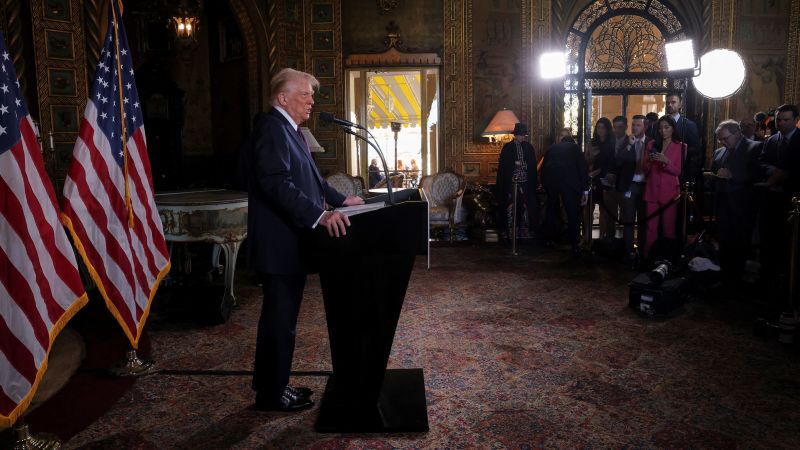
This move reframed the issue from partisan politics into everyday economic concerns. Instead of abstract debates, it became about taxpayers’ money, priorities, and fairness—topics that tend to resonate far beyond traditional political divisions.
The response was swift. Public discourse in Florida began shifting, with increasing scrutiny directed toward the scale and justification of such expenditures. Gregory had effectively moved the battleground onto terrain where public sentiment could turn quickly.
Her final step was perhaps the most traditional, yet equally impactful. Gregory entered the district and met voters face-to-face, listening to concerns and emphasizing immediate, tangible issues affecting their daily lives.

This approach contrasted sharply with perceptions surrounding Trump’s presence in the area, often associated with exclusivity and large-scale private developments. The visual and emotional difference was difficult for voters to overlook.
By focusing on accessibility and responsiveness, Gregory positioned herself as a representative grounded in the community rather than above it. In doing so, she reinforced a narrative of accountability and proximity to voters.
Taken together, these three actions formed a coherent strategy: redefine the narrative, challenge financial priorities, and reconnect with constituents. Each step built upon the last, creating momentum that extended beyond a single electoral win.
Whether this marks a broader shift in Florida’s political landscape remains uncertain. However, within a single day, Gregory demonstrated how timing, messaging, and targeted action can rapidly reshape even the most entrenched dynamics.