On the Brink: U.S. Troop Surge Near Iran Signals a Defining Moment for Global Stability
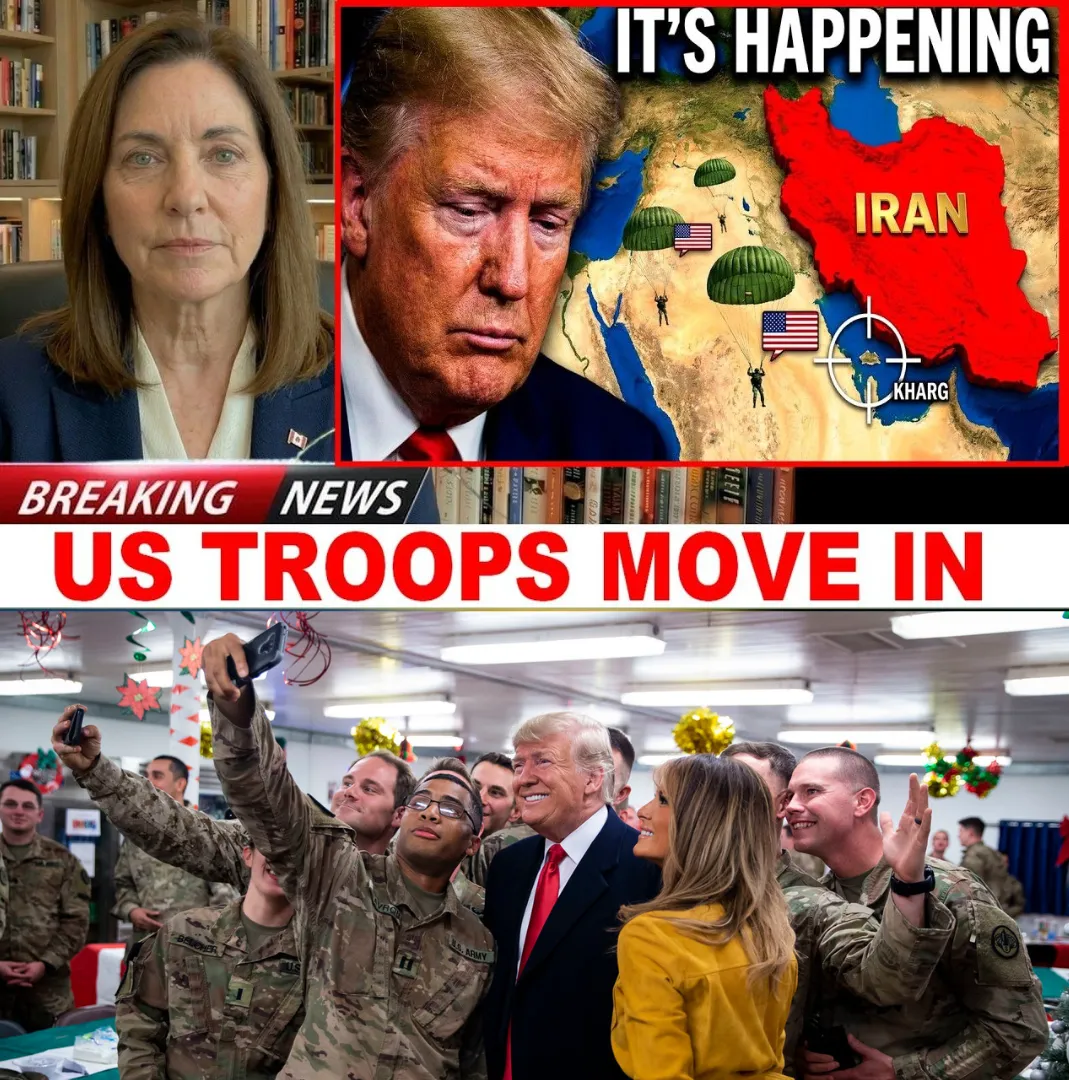
A sudden military escalation in the Middle East has thrust the world into a moment of acute uncertainty. Thousands of U.S. troops are now positioned near Iran, marking the most significant buildup since the Iraq War.
The crisis ignited in late February 2026, when coordinated airstrikes by the United States and Israel reportedly struck Iranian military facilities. The fallout was immediate and severe, with the death of Ali Khamenei triggering outrage across the region.
Tehran’s response was swift and economically devastating. By moving to close the Strait of Hormuz—through which roughly a quarter of global oil flows—Iran sent shockwaves through energy markets, pushing prices past $100 per barrel.

As tensions surged, Washington began deploying a layered military force into the Gulf. At its core is the 82nd Airborne Division, a rapid-response unit capable of deploying globally within hours, now preparing for potential airborne operations.
Alongside them, U.S. Marine Expeditionary Units, including the 31st and 11th MEU, are advancing aboard amphibious assault ships such as the USS Tripoli and USS Boxer, specializing in high-risk coastal and island assaults.
Operating in the shadows, elite special forces—including Delta Force and SEAL Team Six—are reportedly on standby for precision raids targeting sensitive nuclear facilities deep within Iranian territory.

Military planners are believed to be preparing a four-phase operational strategy. Initial steps focus on securing air and naval dominance, disabling Iran’s radar systems and missile capabilities to create a window for rapid offensive maneuvers.
This would be followed by airborne seizures of strategic island airfields, enabling reinforcement and supply chains. Amphibious landings would then target critical النفط infrastructure, particularly on Kharg Island, the backbone of Iran’s oil exports.
Yet analysts warn that capturing territory may be the easiest part. Holding it could prove far more dangerous. Iran’s arsenal of ballistic missiles and drone swarms presents a persistent threat capable of overwhelming even advanced defenses.

Tehran could also deploy asymmetric tactics, including fast-attack naval units and extensive sea mine networks, effectively turning the Gulf into a contested and highly volatile battlefield that disrupts global shipping routes.
Perhaps most alarming is the potential for a scorched-earth response. Should control over key النفط hubs falter, Iran may choose to destroy its own facilities—triggering an unprecedented global energy shock with cascading economic consequences.
The ripple effects are already visible. Rising oil prices are driving up fertilizer costs, threatening food inflation worldwide. Economies in Europe and Asia face mounting recession risks if energy markets remain unstable in the months ahead.

Meanwhile, regional allies including Saudi Arabia, the UAE, and Qatar are providing logistical and operational support, opening key airbases such as Prince Sultan and Al-Udeid to facilitate U.S. military operations.
Despite the growing military posture, diplomacy remains a fragile alternative. Backchannel negotiations, reportedly involving Pakistan, are attempting to de-escalate tensions and reopen critical النفط transit routes before deadlines expire.
The coming days may determine which path prevails: a negotiated settlement or a full-scale conflict. The stakes could not be higher, as decisions made now may reshape not only the Middle East—but the global order itself.