A handshake that sparked headlines: the brief moment between Trump and Paraguay’s president everyone analyzed
In international diplomacy, even the smallest gestures can become global talking points.
A handshake lasting only a few seconds can reveal body language, political symbolism, or simply a moment of awkward timing. That reality was on full display during a recent meeting where former U.S. president Donald Trump welcomed leaders from across Latin America.
Among the many greetings that day, one brief interaction quickly drew the most attention—the handshake between Trump and Paraguay’s president, Santiago Peña.
Within hours, video clips circulated online, with viewers debating what exactly had happened during that moment.
A meeting of regional leaders
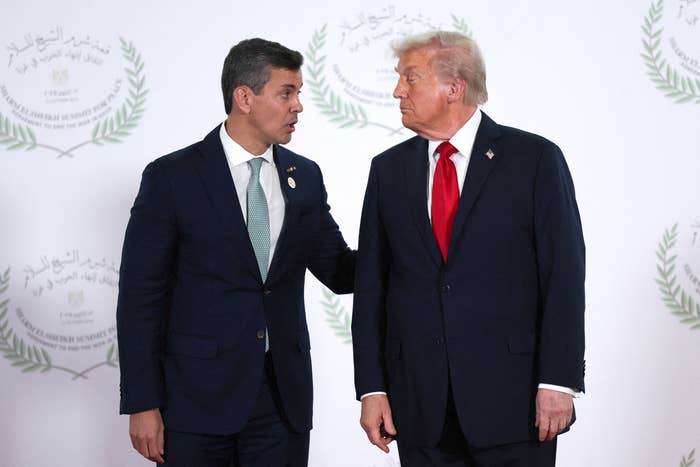
The gathering brought together leaders from roughly a dozen Latin American countries for discussions about trade, regional cooperation, and diplomatic relations.
These meetings often begin with a series of public greetings for the cameras. Leaders step forward, shake hands, pose briefly for photographs, and then move on so the next official can step into the frame.
The ritual is familiar to anyone who has watched international summits.
But because these moments take place under intense media scrutiny, even minor variations in body language can attract attention.
The handshake that looked different
Most of the greetings during the event followed a similar pattern.
Leaders approached Trump, turned slightly toward him, exchanged a quick handshake, and then shifted toward the cameras for the photo opportunity.
But when Peña stepped forward, the interaction appeared slightly different.
Video footage shows the two men shaking hands while their arms extended somewhat toward the cameras rather than directly between them. For a brief moment, it looked as though Trump tugged his hand slightly before the handshake ended.
The clip was only a few seconds long.
Yet in the age of social media, that was enough to trigger widespread analysis.
Body language experts weigh in
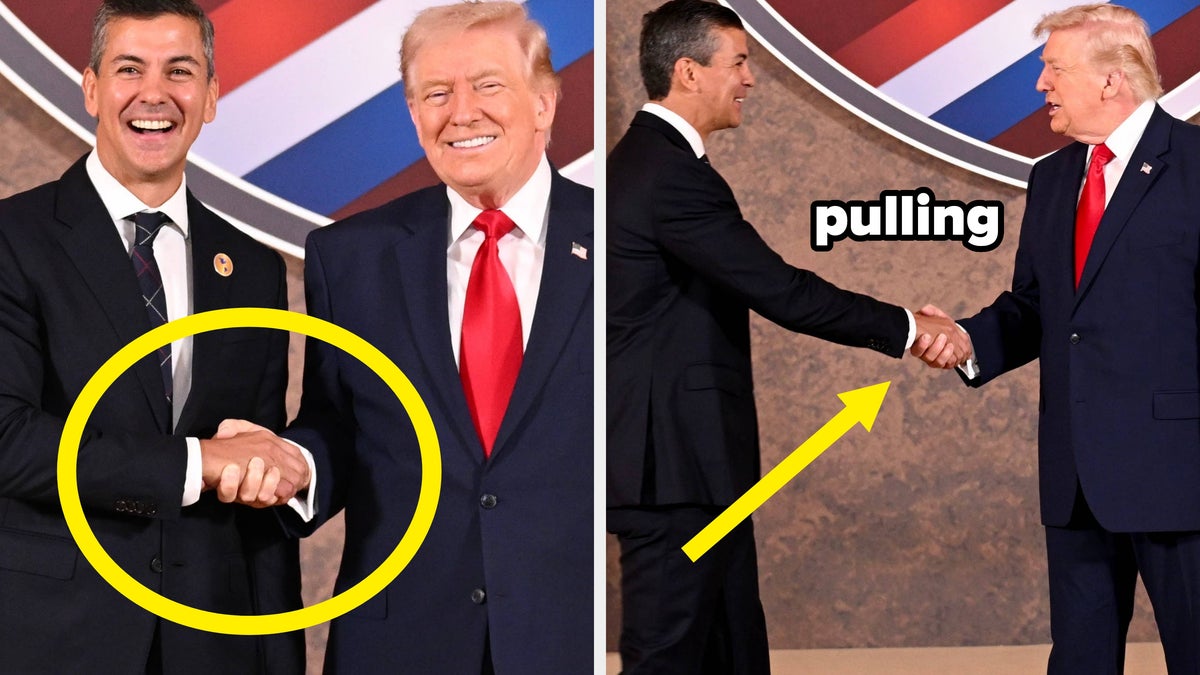
Observers who study political body language often note that handshakes between world leaders can sometimes become subtle displays of dominance or confidence.
Trump himself has long been known for distinctive handshake styles during diplomatic meetings. In the past, photographers have captured moments where he pulled another leader closer or held a handshake slightly longer than usual.
Because of that history, viewers quickly began interpreting the moment with Peña through the same lens.
Some suggested the tug might have been a reaction to positioning for the camera.
Others believed it was simply an awkward adjustment as both men tried to find the right angle for photographs.
In truth, small movements during crowded diplomatic photo sessions are common and often unintentional.
Who is Santiago Peña?
The moment also introduced many Americans to Paraguay’s relatively new president.
Santiago Peña became one of the youngest leaders in South America when he assumed office. Before entering politics, he worked as an economist and held positions in Paraguay’s central bank and finance ministry.
Peña represents a new generation of leadership in Latin America—leaders who often balance traditional political alliances with modern economic strategies.
For him, the meeting with Trump was part of broader diplomatic efforts to strengthen ties with the United States.
Trump’s earlier remarks about the young leader

The handshake moment also drew renewed attention to a previous interaction between the two leaders.
At an earlier event, Trump had commented on Peña’s youthful appearance while introducing him to the audience.
In a characteristically off-the-cuff style, Trump jokingly referred to Peña as a “young, handsome man,” before adding a humorous line that drew laughter from some in the crowd.
Such remarks are typical of Trump’s informal speaking style, which often mixes praise with humor.
For supporters, it reflects his unscripted personality.
For critics, it sometimes creates moments that become fodder for political commentary.
Why handshakes between leaders matter
While it may seem trivial, handshakes have long carried symbolic importance in diplomacy.
Historic images—from Cold War negotiations to peace agreements—often begin with a handshake between leaders.
Photographers understand that the first greeting between two political figures can become the defining image of a meeting.
That is why both leaders and their staff often try to position themselves carefully during those brief moments.
Yet with dozens of cameras flashing and officials moving quickly, perfection is rarely guaranteed.
The power of a viral clip
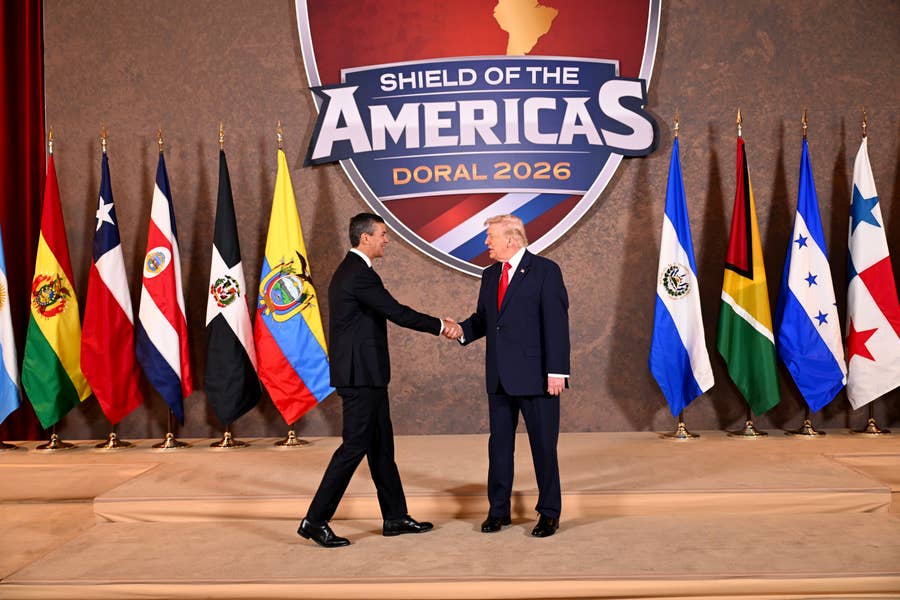
The handshake between Trump and Peña lasted only seconds.
But in today’s digital environment, even the shortest clip can become a viral political discussion.
Supporters of each leader interpreted the moment differently.
Some saw Trump asserting his typical handshake style.
Others believed Peña appeared confident and relaxed during the greeting.
In reality, the exchange likely reflected nothing more dramatic than two leaders adjusting to the positioning of photographers and cameras.
Diplomacy beyond the cameras
After the photo session ended, the meeting moved on to substantive discussions.
Topics reportedly included economic cooperation, regional security, and investment opportunities between the United States and Latin American nations.
For Paraguay, strengthening relationships with global partners remains a key priority as it continues expanding its agricultural exports and energy sector.
Those policy discussions rarely receive the same viral attention as a handshake.
But they are ultimately what such meetings are designed to achieve.
A reminder about modern political optics
The fascination with the Trump–Peña handshake highlights how modern politics increasingly plays out through visual moments.
A brief gesture can travel across the world in minutes.
Body language can become a subject of international debate.
And a simple greeting between leaders can turn into a viral clip analyzed frame by frame.
For the leaders involved, it is simply part of the reality of diplomacy in the digital age.
What the moment ultimately represents
In the end, the handshake was just that—a greeting between two political leaders meeting in front of cameras.
Yet the discussion surrounding it reveals something about how closely the public now watches every detail of international politics.
Every glance, every movement, every handshake can become a story.
And sometimes, a few seconds of body language can capture as much attention as the policies being discussed behind closed doors.