“One Question, One Fact — And the Room Went Silent: The Moment a Journalist Challenged Trump’s Claim”
In the world of politics, words can travel faster than facts. But every so often, a moment unfolds that reminds audiences why journalism still matters.
It happened during a tense exchange when former U.S. president Donald Trump attempted to explain a devastating attack on an Iranian girls’ school—an event that had already shocked observers around the world.
What followed was not simply another political dispute.
For many viewers, it became a striking example of how one calm question from a reporter can suddenly change the tone of an entire conversation.
And the journalist at the center of that moment was Manu Raju.
A Claim That Sparked Immediate Doubt
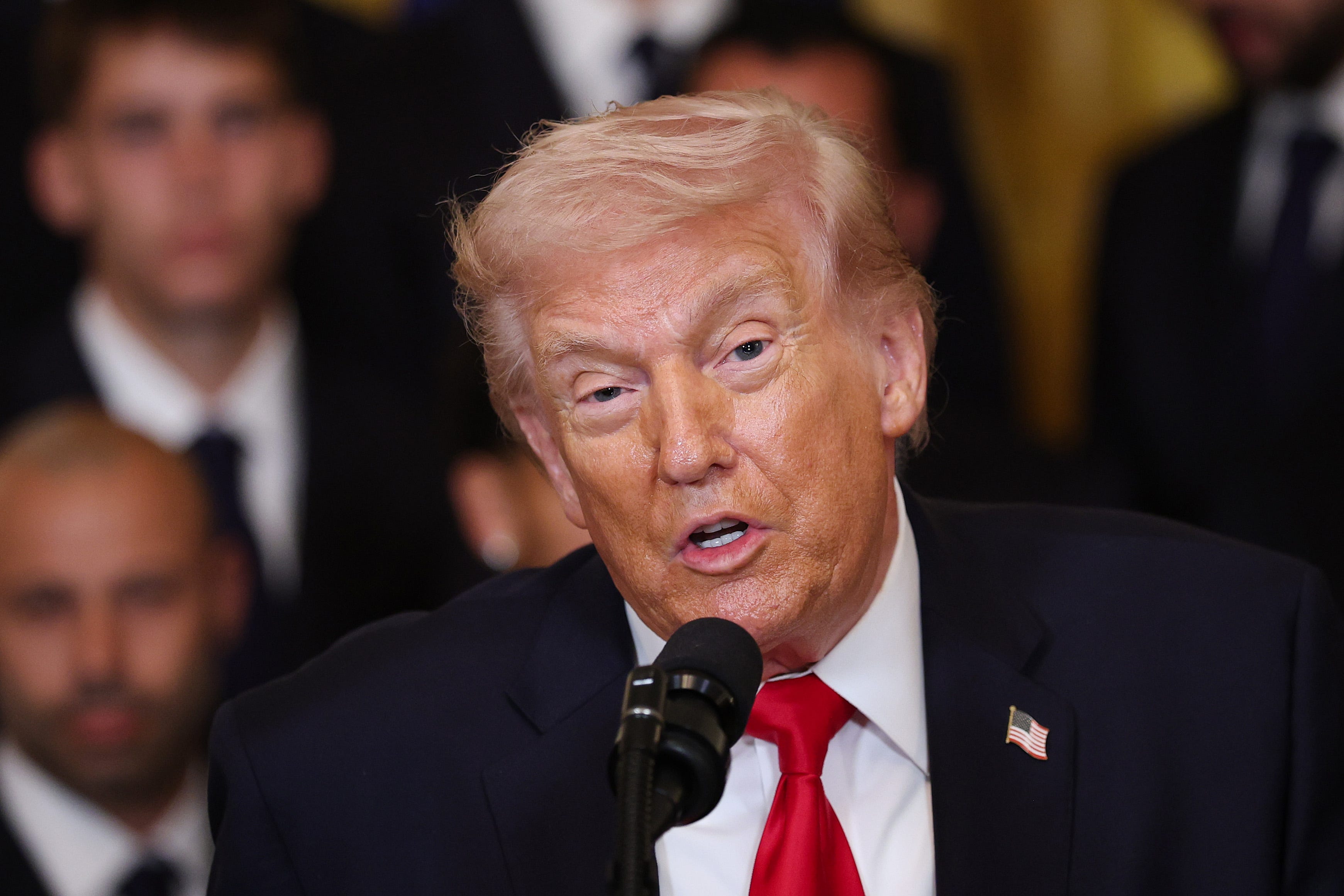
The controversy began when Trump suggested that Iran itself was responsible for the attack on the school.
According to his remarks, Iranian weapons lacked precision and could easily strike unintended targets. The implication was clear: the tragedy, he argued, was the result of Iran’s own military limitations.
But to many analysts, the explanation raised immediate questions.
For Americans and Britons who have followed international conflicts for decades, the difference between types of military weapons is not trivial. Precision-guided systems, especially those used by Western militaries, are designed to strike with extraordinary accuracy.
That is why the explanation quickly drew scrutiny.
A Reporter Steps In
During a press exchange, Manu Raju did something simple—but powerful.
He asked a question.
Instead of allowing the claim to pass unchallenged, Raju pointed out a crucial detail that many viewers had already begun discussing.
The weapons reportedly used in the attack were described as Tomahawk missiles—a highly advanced cruise missile system developed by the United States.
Tomahawk cruise missile has long been considered one of the most precise long-range strike weapons in modern warfare. First introduced during the Cold War, it has been used in numerous military operations because of its ability to strike targets with remarkable accuracy.
Raju calmly noted that such systems are designed to hit targets within meters, not wander wildly off course.
His point was direct: if such a missile was involved, the explanation that the strike happened because of “inaccurate weapons” did not match the technology.
The Room Grows Tense

For viewers accustomed to dramatic political confrontations, the moment stood out not because of shouting or chaos—but because of silence.
Trump responded by insisting that Iran might possess Tomahawk missiles as well.
But that statement only deepened the skepticism.
For years, Iran has been under extensive sanctions and restrictions on military technology. Experts widely note that the United States has never sold or transferred Tomahawk missiles to Iran.
The suggestion that Iran had access to them raised more questions than answers.
Raju, maintaining a steady tone, pressed the point again.
It was not an argument.
It was simply a request for clarity.
And that is precisely what made the moment resonate with many viewers.
Why the Exchange Struck a Nerve
For audiences in the United States and the United Kingdom—especially those over 45 who have lived through decades of global conflicts—the exchange carried deeper significance.
Many remember the era when journalists routinely held leaders accountable with detailed questions about military operations.
They remember the tough briefings during the Vietnam War.
They remember reporters pressing officials during the Gulf War.
They remember the constant scrutiny following the Iraq invasion in 2003.
In those moments, journalism served as a safeguard between political narratives and public understanding.
To those viewers, Raju’s questioning felt like a return to that tradition.
The Power of a Single Question

What made the moment unusual was how quickly the tone shifted.
Before the question, the explanation seemed designed to redirect blame.
After the question, the discussion changed entirely.
Instead of focusing on Iran’s supposed responsibility, attention shifted to the technical details of the weapons involved and whether the narrative matched the facts.
It was a reminder that in political discourse, credibility often rests on the smallest details.
One missile type.
One technical fact.
One well-timed question.
The Larger Conversation

In modern politics, accusations of misinformation appear almost daily. Every major event now unfolds across television, social media, and countless online platforms.
But moments like this highlight something important: facts still matter.
And journalists still play a crucial role in challenging statements that may not align with evidence.
For many viewers, especially those who grew up in an era when investigative reporting shaped major historical moments, this exchange felt familiar.
Not dramatic.
Not theatrical.
Just a reporter doing his job.
A Reminder About Accountability
Political leaders wield enormous influence over public perception. Their words can shape how entire nations interpret events.
That is why accountability remains central to democratic systems.
When leaders speak about international conflicts, every detail carries weight. Misstatements—intentional or not—can affect public trust, diplomatic relationships, and even the course of policy.
By asking a simple but precise question, Manu Raju reminded viewers of something that sometimes feels forgotten in today’s polarized media landscape:
Truth is rarely defended by noise.
More often, it is defended by patience, facts, and the willingness to ask the right question at the right moment.
The Moment That Stayed With Viewers
Long after the exchange ended, the clip circulated widely among political watchers.
Not because it was explosive.
But because it was revealing.
A single question had transformed the conversation.
And for many viewers—particularly those who still believe in the quiet strength of responsible journalism—it served as a small but powerful reminder that facts still have a place in public debate.
Sometimes, all it takes is one person willing to say:
“Wait a moment. That doesn’t add up.”