A brief moment in Spanish that changed the tone of the summit

At major international gatherings, the most memorable moments are not always the formal speeches or official agreements. Sometimes, a small gesture—a shared smile, a few unexpected words in another language—can shift the entire atmosphere of the room.
That is exactly what happened during the recent “Shield of the Americas” summit when U.S. Secretary of State Marco Rubio unexpectedly spoke Spanish to a room full of Latin American leaders.
The moment lasted only a short time, but it quickly became one of the most talked-about details of the event.
And it revealed something deeper about diplomacy, culture, and the power of language.
A quiet request before speaking
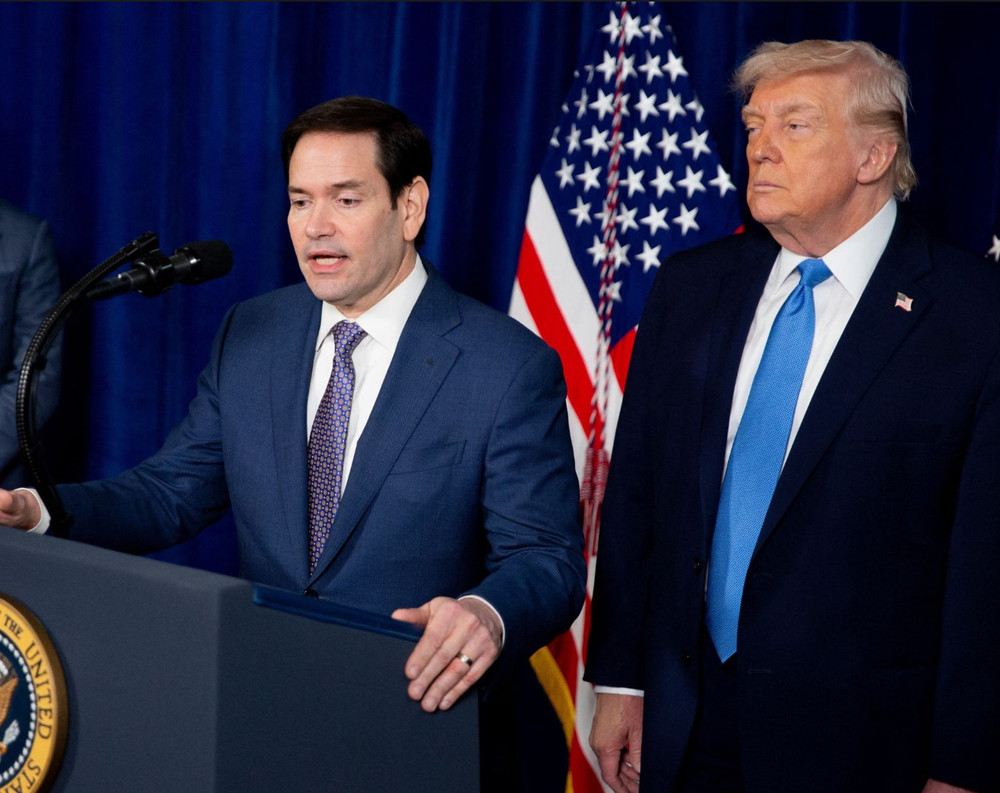
According to attendees at the summit, Rubio began by politely asking former president Donald Trump whether he could address the leaders briefly in Spanish.
Trump reportedly smiled and nodded, even making a lighthearted remark before giving Rubio the floor.
What followed was a short but meaningful shift in tone.
Instead of continuing in English, Rubio thanked the visiting leaders in Spanish and spoke about the importance of cooperation across the Americas.
The reaction in the room was immediate.
The atmosphere, many observers said, felt warmer and more personal.
Why language matters in diplomacy

In international politics, language carries symbolic weight.
Most diplomatic meetings are conducted in English or through translators, even when many participants share another language.
When a leader speaks directly in someone else’s native language, it can signal respect, cultural understanding, and a willingness to build closer relationships.
For the Latin American leaders present at the summit, hearing a senior American official address them in Spanish created a moment of familiarity that formal diplomacy often lacks.
It reminded everyone in the room that politics is ultimately about people and relationships.
Rubio’s personal connection to Spanish
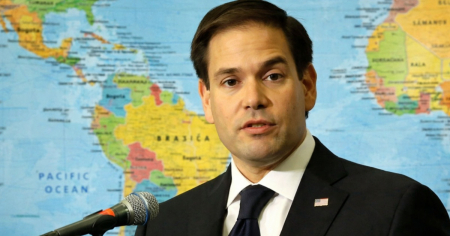
For Rubio, speaking Spanish is not a political performance—it is part of his identity.
Born in Miami to Cuban immigrant parents, Rubio grew up in a bilingual household where Spanish was spoken daily.
That background has shaped much of his political career.
Throughout his time in public office, Rubio has frequently used Spanish when speaking with Hispanic communities or engaging with leaders across Latin America.
It is one of the reasons he is often viewed as uniquely positioned to navigate relationships between Washington and the Spanish-speaking world.
A subtle diplomatic advantage
Moments like this highlight something many diplomats understand well: cultural familiarity can be as powerful as policy proposals.
Rubio’s ability to move comfortably between English and Spanish allows him to communicate in ways that feel more direct and personal.
Rather than relying entirely on interpreters, he can address leaders in their own language and respond quickly in conversation.
For many Latin American officials, that kind of interaction creates a different dynamic.
It reduces distance.
It makes discussions feel less formal and more collaborative.
And in diplomacy, that difference can matter.
Trump’s reaction in the room

Observers noted that Trump appeared relaxed during the exchange, smiling when Rubio made his request and allowing him to continue.
Trump has long favored direct, informal moments during political gatherings, often encouraging interactions that break away from rigid diplomatic scripts.
Rubio’s Spanish remarks fit that atmosphere.
Instead of creating a tense or overly formal moment, the brief switch in language added a lighter and more personable tone to the summit.
The broader message to Latin America
Beyond the symbolism, Rubio’s words also carried a broader message about regional cooperation.
He spoke about strengthening partnerships across the Americas, emphasizing economic collaboration, security cooperation, and shared democratic values.
Those themes have long been central to U.S. policy toward Latin America.
But hearing them delivered in Spanish gave the message additional resonance.
For many leaders present, it felt less like a formal diplomatic statement and more like a direct conversation.
Why small moments matter
International summits often produce lengthy statements and complex agreements.
Yet the moments that linger in public memory are frequently the simplest ones.
A handshake.
A laugh.
A few words spoken in a different language.
Rubio’s brief Spanish remarks fell into that category.
They did not change policy overnight.
But they reminded everyone watching that diplomacy is not only about negotiations—it is also about understanding culture, identity, and shared history.
A reflection of America’s diversity

The moment also reflected a broader reality about the United States itself.
America’s political leadership increasingly reflects a diverse mix of backgrounds, cultures, and languages.
Leaders like Rubio, whose families arrived as immigrants, often carry personal connections to multiple parts of the world.
In international diplomacy, those connections can become powerful bridges.
When Rubio spoke Spanish at the summit, he was not just addressing foreign leaders.
He was also representing a story familiar to millions of Americans—the story of families who arrived from elsewhere but became part of the nation’s political and cultural life.
A moment that felt human
For all the strategy and ceremony that surround global summits, diplomacy ultimately comes down to relationships between people.
The brief moment when Rubio switched to Spanish captured that truth perfectly.
It was spontaneous.
It was personal.
And for a few minutes, it transformed a formal meeting into something that felt more genuine.
Sometimes, that is exactly what diplomacy needs.