Questions Over an Affidavit: The Legal Battle That Could Reshape Election Trust
A new controversy is unfolding in the United States, drawing attention to the intersection of law, politics, and public trust. What began as a federal investigation has rapidly evolved into a broader debate about process, motive, and accountability.
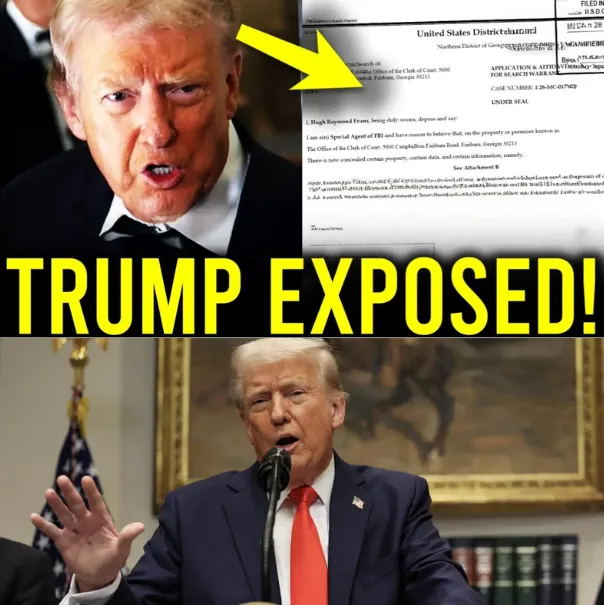
At the center of the issue is Donald Trump and an affidavit used to secure a search warrant tied to election materials in Fulton County, a region long scrutinized in post-2020 election disputes.
Federal agents reportedly seized hundreds of ballot boxes during the operation, a move that immediately raised eyebrows among legal observers. While authorities framed the action as part of an inquiry into election integrity, the scale and timing intensified scrutiny.
The affidavit itself has become a focal point of concern. Critics argue that the document lacks sufficient evidentiary strength, suggesting it may rely more on contested claims than on verifiable facts strong enough to justify such sweeping measures.
Adding complexity is the involvement of Kurt Olsen, whose past role in efforts to challenge the 2020 election has led to accusations of potential conflicts of interest within the investigative process.
Supporters of the investigation maintain that examining possible irregularities is both necessary and appropriate. They argue that no aspect of election administration should be beyond scrutiny, particularly when public confidence is at stake.
Opponents, however, see the situation differently. They warn that the use of federal authority in politically sensitive contexts risks eroding trust, especially if legal tools appear to be deployed unevenly or without clear justification.
The legal battle is now moving into the courts, where judges will determine whether the seized materials can be examined or must remain protected. The outcome could set important precedents for future election-related investigations.
Beyond the immediate dispute, the implications are far-reaching. The integrity of legal processes, the independence of institutions, and the perception of fairness all hang in the balance as the case continues to unfold.
For many observers, the central question is no longer just about the ballots themselves. It is about whether the mechanisms designed to protect democracy can remain credible in an increasingly polarized environment.
As arguments intensify and legal filings accumulate, one reality becomes clear: this is not merely a local dispute. It is a test of how far institutions can stretch before public confidence begins to fracture.
In the coming months, the courts will provide answers. Until then, uncertainty lingers, and with it, a growing sense that the stakes extend well beyond a single investigation or a single affidavit.