From $354 Million to $454 Million: How a Courtroom Calculation Shook Trump’s Financial Standing
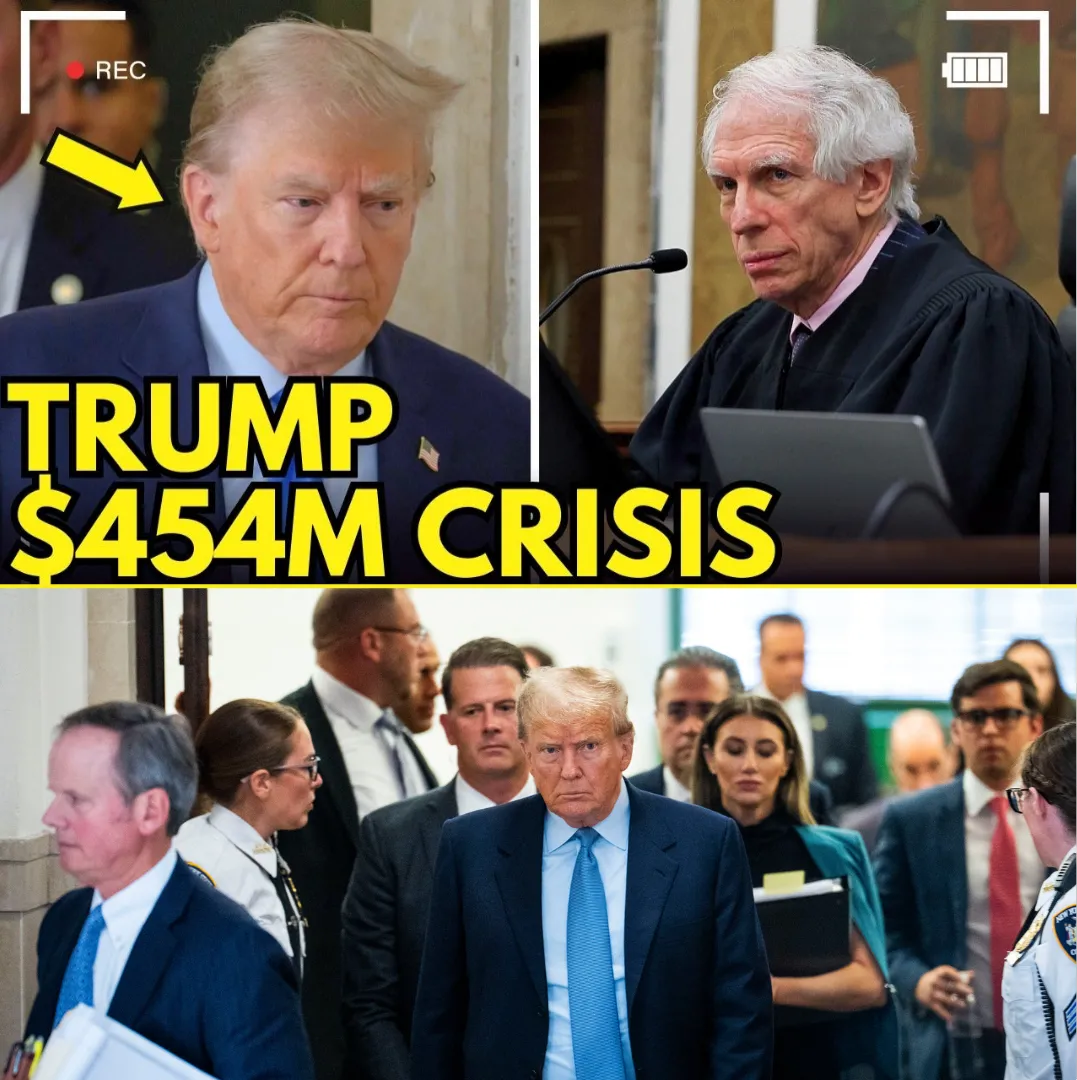
In February 2024, a ruling from a New York courtroom sent immediate shockwaves through political and financial circles. What appeared to be a substantial penalty quickly evolved into something far more dramatic, capturing attention on both sides of the Atlantic.
At the center of the case was Donald Trump, accused of inflating asset values to secure favorable loan terms. The court found that these practices constituted civil fraud, setting the stage for a significant financial judgment.
Initially, the penalty was reported at $354 million, representing profits linked to the alleged misconduct. For many observers, the figure was already striking—large enough to dominate headlines and raise serious questions about financial accountability.

Yet the true scale of the ruling only became clear days later. When the judgment was formally entered, pre-judgment interest—calculated over several years—was added, increasing the total to approximately $454 million.
The escalation was not merely symbolic. It introduced a new level of urgency, as interest began accumulating at an estimated rate of around $111,000 per day, steadily increasing the financial pressure as time passed.
Trump’s legal team faced an immediate challenge. To appeal the decision and halt enforcement, they were required to secure a bond covering the full amount. This proved difficult, as bond providers demanded substantial liquid assets rather than property holdings.

Time became a critical factor. With a 30-day deadline approaching, uncertainty grew over whether the necessary financial guarantees could be assembled quickly enough to prevent potential asset seizures.
In a pivotal development, an appeals court intervened in March 2024, reducing the required bond to $175 million. The decision provided temporary relief, effectively pausing enforcement actions while allowing the appeal process to proceed.
Trump posted the reduced bond on April 1, securing a crucial reprieve. For the moment, the immediate threat of collection was lifted, shifting attention toward the longer-term legal battle and its potential outcomes.

The story, however, did not end there. In August 2025, the appeals court delivered a significant ruling, voiding the $454 million penalty on constitutional grounds, citing concerns related to excessive fines.
Despite this reversal, the underlying findings of civil fraud remained legally complex and unresolved in broader terms. The case continued to raise questions about the boundaries of financial conduct and judicial authority.
For observers, the episode illustrates how quickly legal judgments can evolve. A single ruling expanded, intensified, and ultimately transformed, leaving behind a narrative defined as much by its twists as by its initial verdict.