When Dignity Speaks Louder Than Power: How Bad Bunny’s Grammy Moment Cornered Donald Trump Without Saying His Name
Political power often announces itself loudly. It boasts. It threatens. It dominates the airwaves.
Moral power, on the other hand, usually arrives without warning — and when it does, it leaves no room to argue.
Less than a week after Donald Trump publicly criticized Bad Bunny, dismissing him as an inappropriate voice and the “worst possible choice” for a major American stage, something unexpected happened. Not a rebuttal tweet. Not a press conference. Not a feud.
Instead, there was a microphone.
And a man who chose to speak not for himself — but for millions who are rarely allowed to speak at all.
What followed at the Grammy Awards was not spectacle. It was not provocation. It was something far more unsettling for those who rely on dominance as their shield.
It was dignity.
The Setup: Power Trying to Silence Culture
Trump’s attack on Bad Bunny fit a familiar pattern. He accused the artist of spreading “inappropriate rhetoric,” dismissed his influence, and signaled once again that he would not engage with platforms or events that gave space to voices he could not control — even declaring he would not attend the 2026 Super Bowl, citing Bad Bunny’s rumored involvement as emblematic of cultural decline.
To many, it sounded like another cultural skirmish. Another celebrity name dragged into the endless churn of outrage and counter-outrage.
But to older Americans and Britons — those who have watched rhetoric harden over decades — it felt like something else: a continuation of language that reduces people to categories, labels, and threats.
Immigrants as “others.”
Artists as “dangerous.”
Culture as something to be policed, not lived.
The Moment That Changed the Narrative
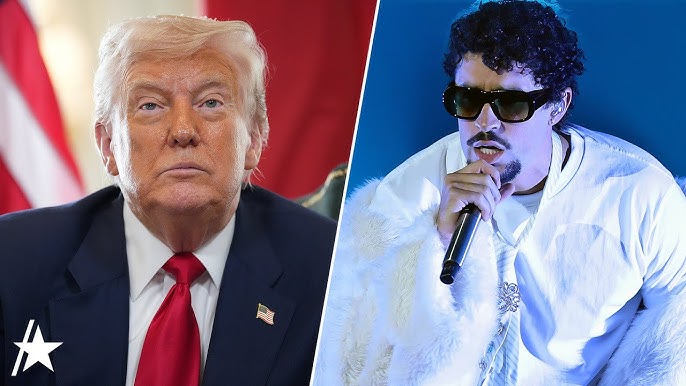
Then came the Grammys.
No theatrics. No insults. No name-calling.
Bad Bunny stood before the world and said words that should never be controversial — yet somehow have become so:
“We are not savages.
We are not animals.
We are not aliens.
We are human beings.
We are Americans.”
For viewers in their 50s and 60s, this wasn’t activist language. It was memory language.
It echoed the civil rights era.
It echoed post-war rebuilding.
It echoed the simple moral lesson many were taught as children: that humanity precedes politics.
What made the moment so powerful — and so deeply uncomfortable for Trump — was that Bad Bunny did not argue policy. He didn’t debate border security or legislation.
He went somewhere far more dangerous to hardline rhetoric.
He went to human dignity.
Why This Was So Embarrassing for Trump

Public embarrassment isn’t always about being mocked. Sometimes it’s about being rendered irrelevant.
Trump has built much of his political identity on confrontation — on the idea that strength is proven through domination and resistance. But Bad Bunny offered no enemy to fight.
No insult to return.
No claim to fact-check.
No outrage to exploit.
Instead, he reframed the conversation entirely.
By asserting humanity so plainly, Bad Bunny exposed the moral cost of dehumanizing language. And once that cost is visible, it becomes impossible to justify cruelty without sounding small.
That is what cornered Trump.
Not opposition — but elevation.
The Aftermath: When Culture Moves Forward Without Permission
What followed only deepened the contrast. Bad Bunny was not diminished by the controversy. He was amplified. Celebrated. Elevated further into the cultural mainstream — not as a provocateur, but as a voice of conscience.
And Trump?
He was left reacting to a conversation he no longer controlled.
For older generations who have lived through social change before, this felt familiar. They’ve seen it happen when artists, athletes, or ordinary citizens speak truths that institutions are unprepared to hear.
Power resists.
Dignity endures.
Why This Moment Lingers
This wasn’t about music.
It wasn’t about awards.
It wasn’t even about Trump or Bad Bunny, ultimately.
It was about a question many in midlife quietly ask themselves as the world grows harsher:
What kind of society are we becoming if reminding people of their humanity feels radical?
Bad Bunny didn’t shout. He didn’t accuse. He didn’t threaten.
He reminded.
And in doing so, he demonstrated something that political power often forgets — that moral authority doesn’t need permission, and it doesn’t need to win arguments.
It only needs to speak the truth out loud.
Sometimes, that’s enough to leave even the loudest voices with nothing left to say.