Why Trump Looked So Unhappy in Qatar — When Diplomacy Speaks Through Silence and Symbols
Diplomacy is rarely about what is said aloud.
More often, it unfolds in the details no one officially records: the order of arrival, the choice of clothing, the presence—or absence—of ceremony. For leaders who measure respect through symbols, these details are not trivial. They are the message.
That is why Donald Trump’s visit to Qatar, following a lavish stop in Saudi Arabia, felt so visibly different.
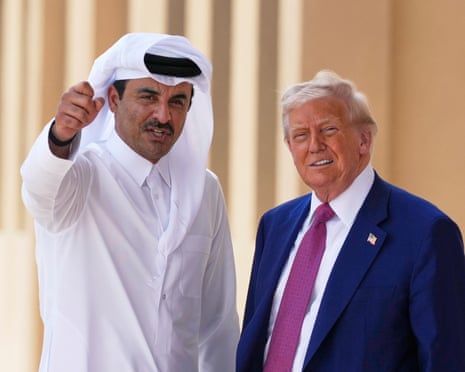
Despite being personally greeted by Qatar’s Amir upon arrival, Trump appeared noticeably displeased—more reserved, less animated, and uncharacteristically subdued. To casual observers, this may have seemed like fatigue or scheduling strain. But for those familiar with Trump’s diplomatic instincts, the tension appeared deeper.
According to several observers close to the trip, three moments stood out—not as formal slights, but as symbolic departures that Trump may have interpreted as unforgivable.
The First Moment: When Ritual Didn’t Match Expectation
Trump places extraordinary weight on optics. Throughout his political career, he has equated formality with respect and ceremony with status.
In Saudi Arabia, he was met with grandeur: uniforms, pageantry, carefully staged visuals that reinforced hierarchy and honor. In Qatar, however, the tone was different from the moment the Amir arrived to greet him.
Rather than appearing in a highly formal outfit, the Amir greeted Trump in attire that emphasized regional custom over Western diplomatic theater. To many in the Middle East, this signals confidence and authenticity. To Trump—coming immediately after Saudi Arabia’s grand display—it may have felt like a second deviation from what he expected a host to project.
In diplomacy, comparison matters. And Saudi Arabia had set a very high bar.
The Second Moment: Business Before Pageantry
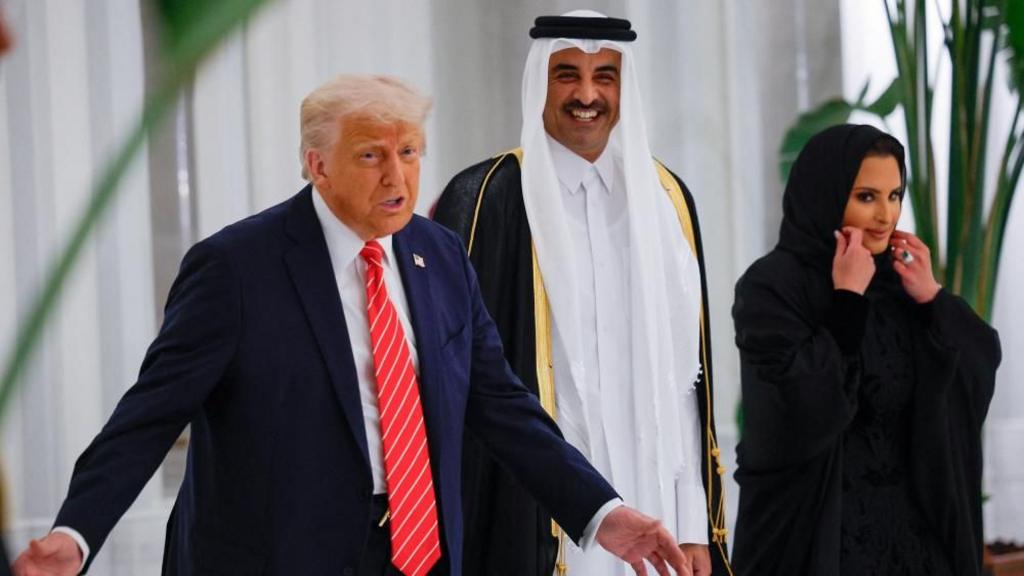
Qatar made a deliberate choice to minimize ceremonial spectacle and move quickly into substantive talks.
For some leaders, this signals seriousness and efficiency. For Trump, who has long viewed ceremony as validation, the absence of a grand welcome may have been read as emotional distance rather than strategic focus.
Trump does not separate symbolism from negotiation. He negotiates through symbolism. When the pageantry disappeared, the emotional temperature of the visit shifted.
The meeting felt less like a celebration of partnership and more like a transaction.
And Trump rarely enjoys feeling transactional unless he controls the terms.
The Third Moment: A Gesture Too Complex to Be Simple
Perhaps the most intriguing moment came when Qatar reportedly offered Trump a ride aboard a luxury Boeing 747-8, outfitted with interiors rivaling a presidential suite.
On paper, it was an extraordinary gesture—one that many leaders would interpret as respect.
But context matters.
For Trump, who prizes American dominance and carefully guards presidential symbolism, the offer may have landed ambiguously. Was it hospitality? Or was it an assertion of Qatar’s own prestige and capability—one that subtly placed the host on equal footing?
In diplomacy, generosity can sometimes feel like competition.
Why This Visit Felt Different
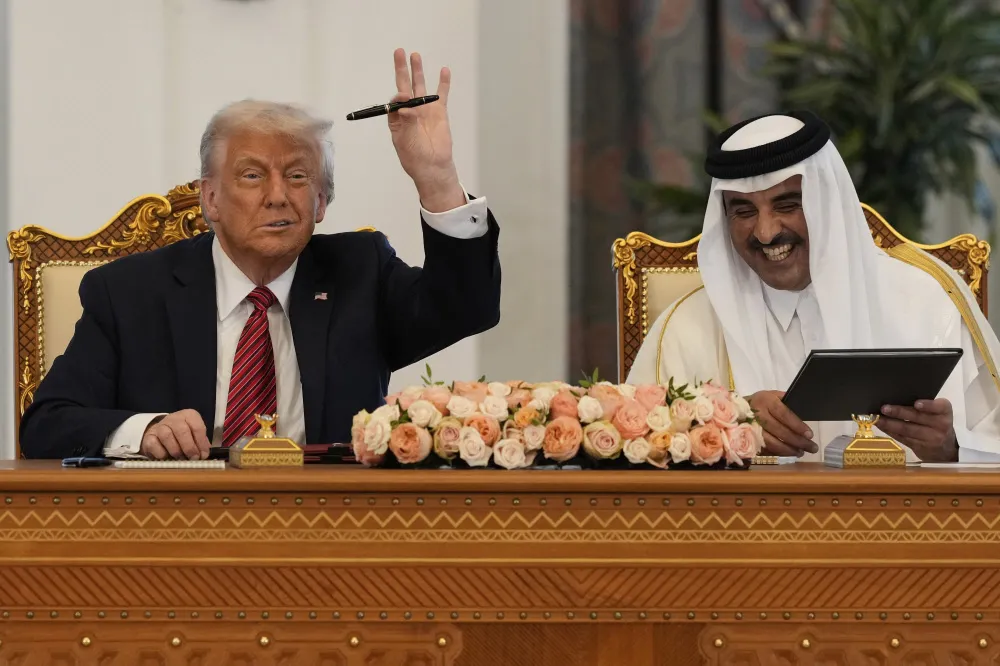
None of these moments constituted an insult. There were no raised voices, no diplomatic breaches, no official complaints.
Yet Trump’s visible discomfort suggests something more personal than procedural.
Trump’s approach to global leadership is deeply intuitive. He reads tone faster than text. When the tone changes—even slightly—he reacts emotionally before he reacts strategically.
In Qatar, the tone was calm, restrained, and self-assured.
And that may have been precisely the problem.
The Quiet Lesson of Qatar
This visit reminds us that diplomacy is not only about agreements—it’s about emotional alignment.
Saudi Arabia spoke Trump’s language of spectacle.
Qatar spoke the language of quiet confidence.
Neither is wrong.
But for a leader who equates ceremony with recognition, the difference was impossible to ignore.
Trump didn’t leave Qatar angry because of what was said.
He left unsettled because of what wasn’t.
And in the world of international politics, absence—of ceremony, of flattery, of visible hierarchy—can speak louder than any declaration.