Why Trump Publicly Praises Musk’s Son — While Keeping His Own Granddaughter Out of Sight
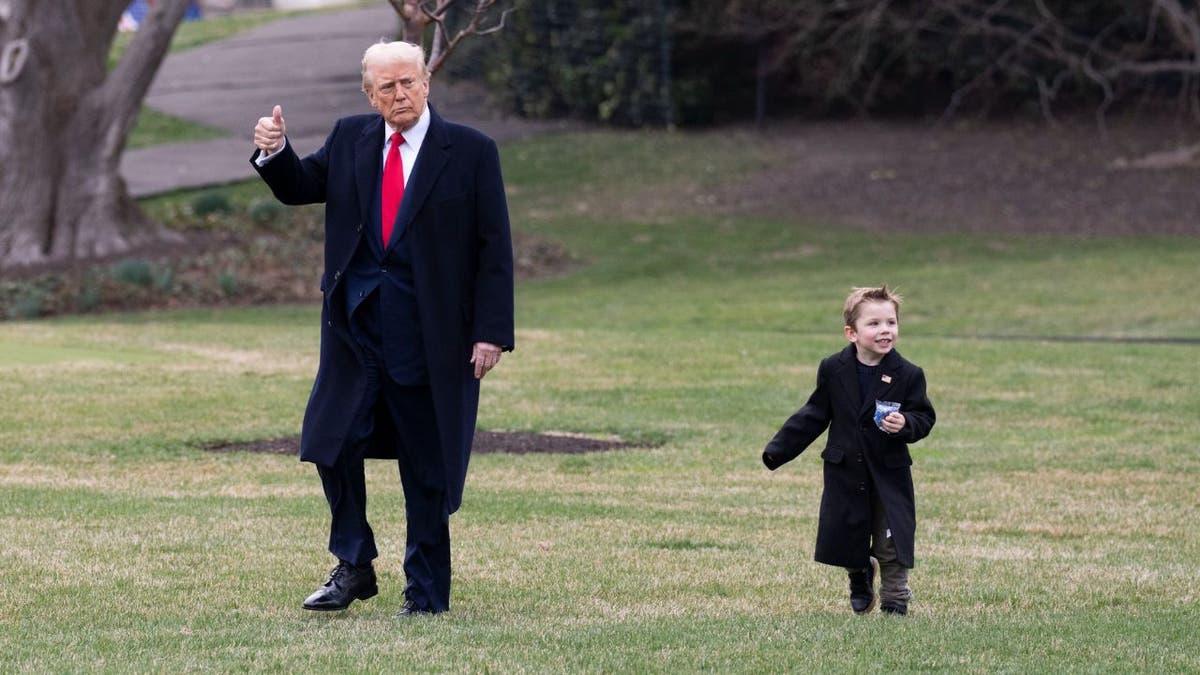 In politics, affection can be genuine—and still be strategic.
When Donald Trump was photographed boarding a plane while personally carrying Elon Musk’s young son, X, the image traveled fast. It felt warm, spontaneous, almost intimate. Trump smiled, spoke kindly, and introduced the child with admiration. The moment read as softness from a man often defined by hard edges.
Yet the contrast many observers noticed wasn’t about that child alone. It was about absence.
Trump’s own granddaughter, Karolina, remains almost entirely outside the public frame. No photo-ops. No birthday posts. No ceremonial introductions. To some, the difference feels puzzling. To others, revealing.
The explanation, however, is less about favoritism—and more about how modern political imagery works.
Public Children vs. Protected Children

Trump has long drawn a line between family members who are public-facing and those he shields from political theater. His grandchildren, particularly the youngest, have rarely been used as symbols, props, or messaging tools.
That restraint is not new. It reflects a calculation many political families make: children who are not old enough to consent should not be enlisted in campaigns, controversies, or brand-building.
Karolina’s absence from the spotlight may be less neglect than insulation.
Why Musk’s Son Appears Different
Elon Musk’s son, X, occupies a unique cultural position. He is not simply a private child; he is part of a public narrative shaped by his father’s visibility in technology, business, and social media.
When Trump engages warmly with X, the image does double work:
-
It signals closeness to Musk, a figure synonymous with innovation and the tech frontier.
-
It projects Trump as comfortable with the next generation.
-
It softens Trump’s image without exposing his own family to scrutiny.
This is not unusual in political optics. Leaders often interact publicly with symbolic figures—athletes’ children, dignitaries’ families, cultural icons—without implying personal intimacy.
The warmth is real. The placement is intentional.
The Language of Praise—and Its Limits
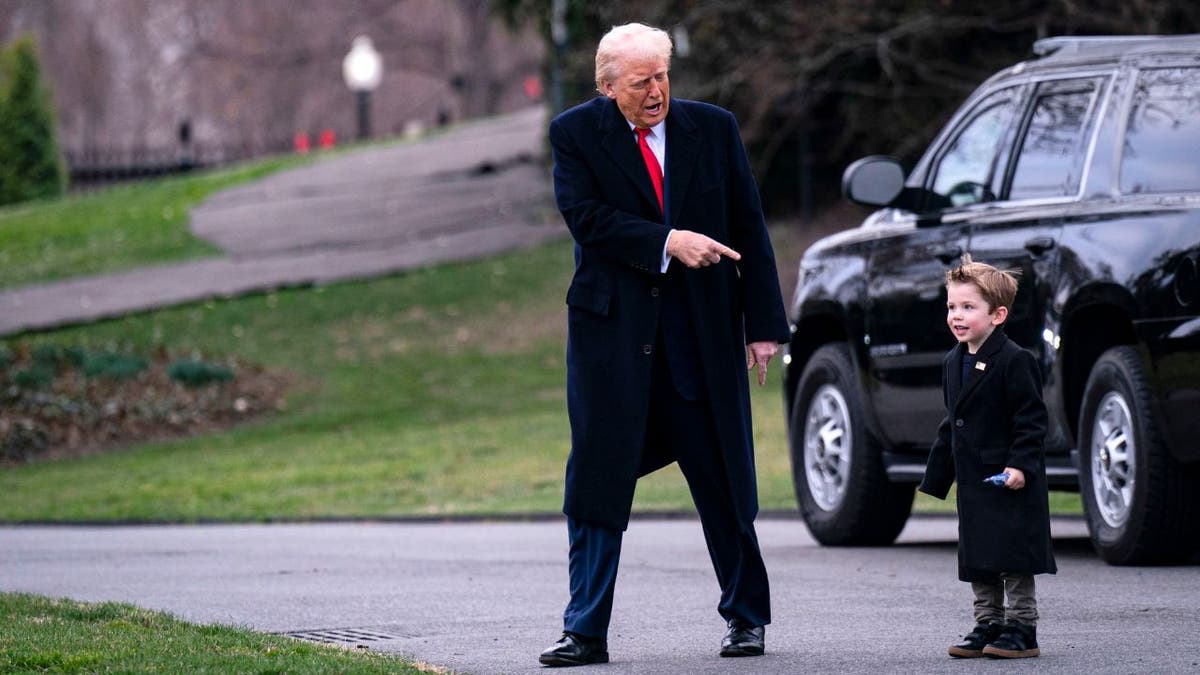
Trump’s public praise of X as “amazing” or “highly intelligent” fits his long-standing rhetorical style: exaggerated, enthusiastic, headline-friendly. It creates a soundbite that travels.
The absence of similar public language about his granddaughter is not evidence of indifference. It is evidence of boundary.
Trump does not need media amplification to affirm private family bonds. In fact, avoiding that amplification protects those bonds from politicization.
Influence, Optics, and the Age of Images
At 78, Trump understands something younger politicians are still learning: influence today is visual before it is verbal.
A single photograph can do the work of a speech.
Engaging publicly with Musk’s son aligns Trump with innovation, futurism, and generational continuity—without asking his own family to bear that weight. Karolina, by contrast, remains outside the arena where images are dissected, politicized, and endlessly repurposed.
That choice suggests not exploitation, but separation.
What This Contrast Actually Reveals
This isn’t a story about loving one child more than another.
It’s a story about how public figures decide which relationships become symbols—and which remain human.
Trump’s visible warmth toward Musk’s son serves a public narrative. His quiet protection of his granddaughter serves a private one.
Both can coexist.
Both can be sincere.
And neither requires conspiracy to explain.
In an era where children are too often turned into content, restraint can look like absence. But sometimes absence is the point.
The real divide here is not affection versus agenda.
It’s stage versus home—and Trump has chosen not to turn both into the same place.