The Black Suitcase: The Quiet Royal Rule Born From a Day of Sudden Loss
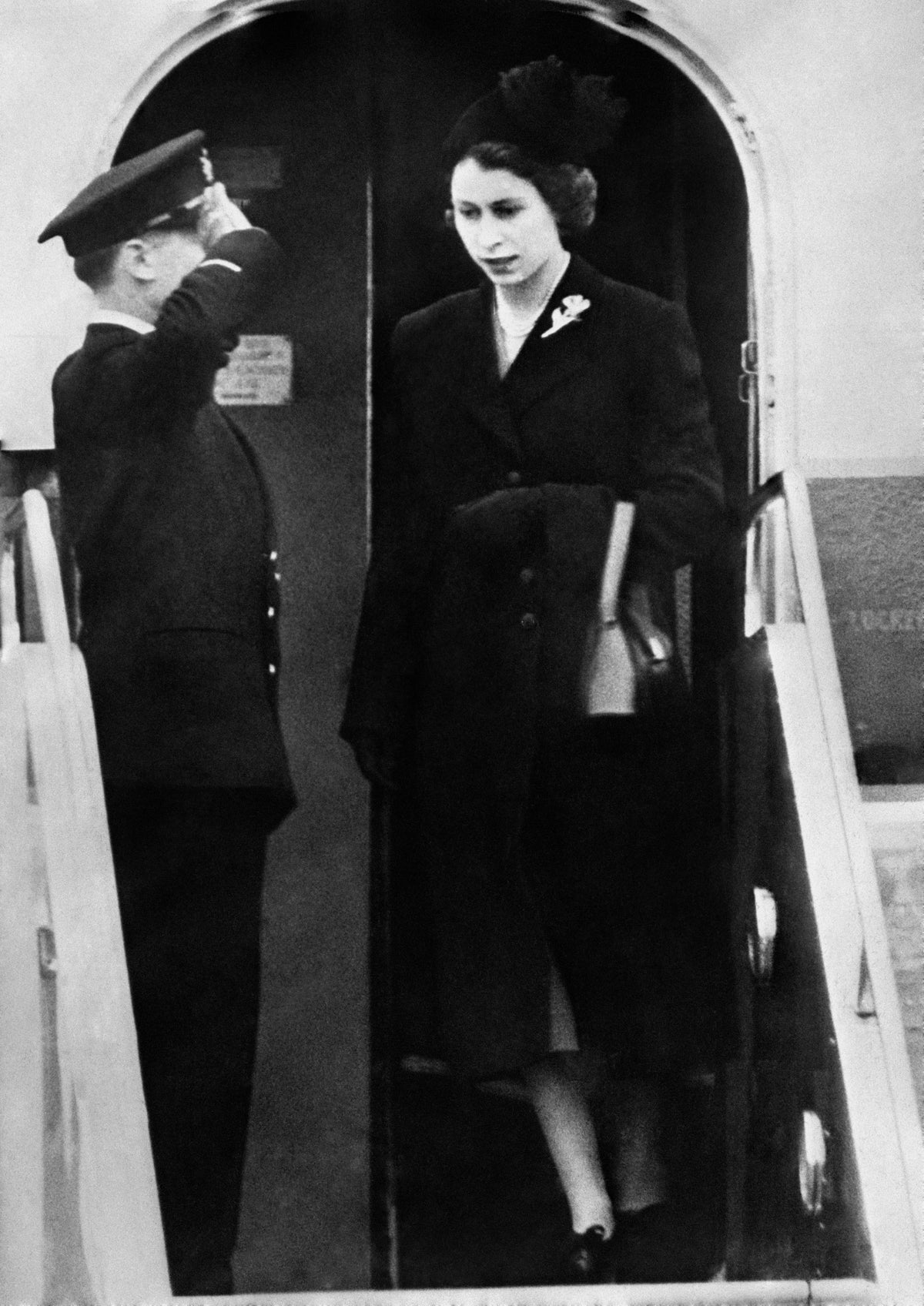
There is a small, somber ritual that follows the British Royal Family wherever they travel. Tucked discreetly into packed luggage sits a set of black clothing.
It is not for fashion. It is not for ceremony.
It is for the unthinkable.
The origin of this quiet protocol reaches back to 1952, to a moment when a young princess’s life changed between takeoff and landing.
Princess Elizabeth was in Kenya with Prince Philip, enjoying what was meant to be a hopeful Commonwealth tour.
She was 25 years old. A daughter. A wife. A mother.
She was not yet Queen.
Then the message arrived.
King George VI had died suddenly in his sleep at Sandringham. The news traveled swiftly across continents, but its emotional weight arrived all at once.
In a single breath, Princess Elizabeth ceased to be merely a royal daughter.
She became Elizabeth II.
The transformation was constitutional and immediate. The crown passes in the instant of a sovereign’s death.
Yet the world did not see that instant.
As her plane descended toward London, grief traveled with her.
But another problem emerged, practical and painfully symbolic.
Her luggage contained no black garments suitable for public mourning.
Protocol demanded that a monarch appear in appropriate dress upon arrival, especially under such circumstances.
Black, in British tradition, signifies grief, respect, solemn transition.
Without it, she could not step onto the tarmac.
So the aircraft doors remained closed.
Photographers waited outside. Officials stood ready.
Inside the cabin, the newly proclaimed Queen remained seated.
Assistants rushed to deliver a suitable black outfit to the plane.
Only after she changed into dark mourning attire did the doors finally open.
The image that followed became history.
A young Queen descending the steps in black, face composed, eyes carrying the weight of duty and loss.
For many who lived through that era, the moment remains vivid.
A nation grieving. A monarchy transformed overnight.
From that day forward, a rule took quiet hold within royal travel preparations.
No senior member of the Royal Family boards a plane without a complete black ensemble packed carefully among their belongings.
It does not matter if the journey is to sunlit Australia or a Caribbean island.
It does not matter if the schedule promises celebration and ceremony.
The black clothing travels regardless.
It is a safeguard against sudden tragedy.
It is also a reminder of 1952.

For those in Britain and across the Commonwealth who remember the late Queen’s steadfast reign, the story resonates deeply.
Elizabeth II would go on to serve for seventy years.
Yet her reign began not with a coronation, but with a delay on a runway.
There is something profoundly human in that detail.
Even sovereigns are subject to logistics.
Even history can pause for a change of clothes.
The black suitcase rule reflects the monarchy’s careful choreography.
Public appearances are never accidental.
Every detail communicates stability.
In times of grief, the Crown must appear composed, even when hearts are breaking.
The protocol ensures there will never again be a moment when a royal is unable to meet the public gaze appropriately dressed for mourning.
It is preparedness shaped by sorrow.
Over the decades, other members of the Royal Family have quietly followed the same rule.
When they travel abroad, somewhere in their luggage rests a dark suit, a black dress, polished shoes set aside for a different kind of occasion.
They hope never to use them.
But they carry them all the same.
For a family whose lives unfold under constant observation, this precaution speaks volumes.
It acknowledges fragility beneath formality.
It honors the lesson learned on a distant African tour so many years ago.
And for those who still recall the sight of a young Queen stepping onto British soil in black, it stands as a poignant symbol.
The monarchy prepares for celebration.
But it also prepares for loss.
Always.