The Funeral That Became a Political Flashpoint: Why Trump Stayed Away
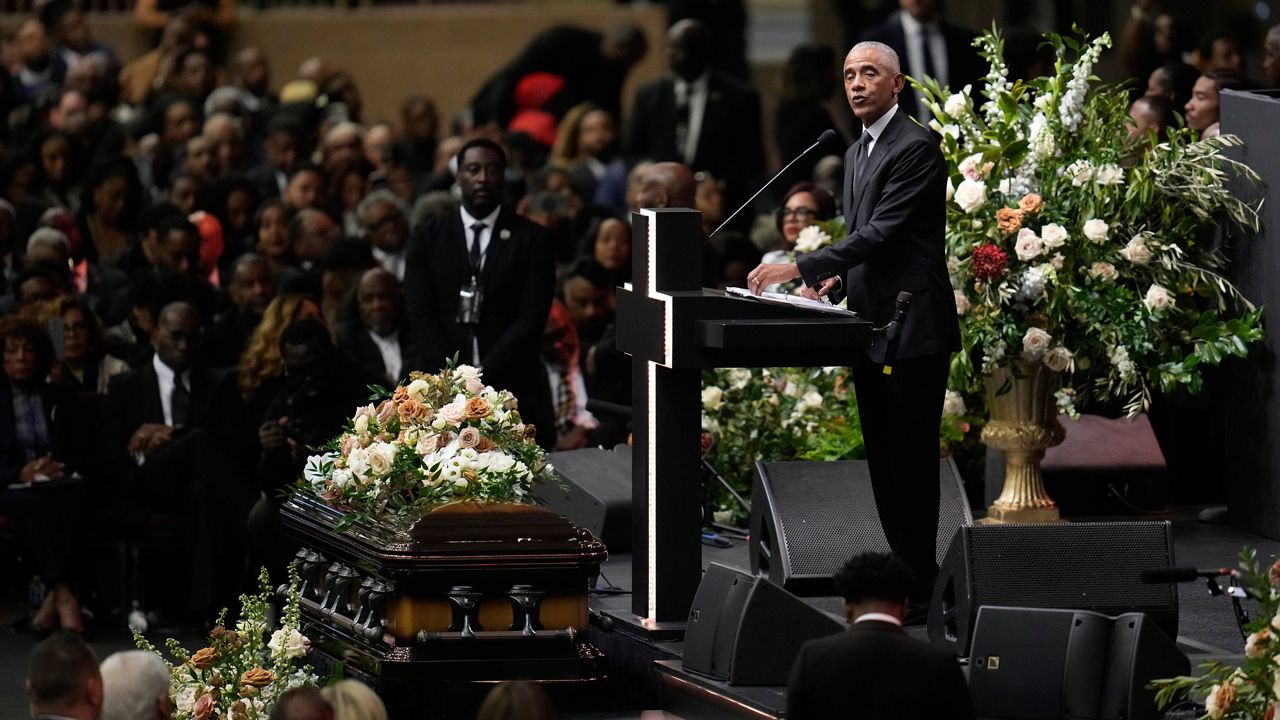
The funeral of civil rights icon Jesse Jackson was meant to be a solemn moment of remembrance. Instead, it became an unexpected political spectacle, revealing tensions that still ripple through American public life and politics.
Three former presidents—Bill Clinton, Barack Obama, and Joe Biden—arrived to pay their respects. Their presence signaled Jackson’s immense influence across generations, from the civil rights movement to modern American politics.
Yet one notable figure was missing. Donald Trump, who had once described Jackson as a friend, did not attend the ceremony. Neither did any member of his family, leaving many observers wondering what lay behind the absence.
At first glance, the explanation seemed simple. Trump and Jackson had traveled very different political paths over the years. But as the ceremony unfolded, another reason began to emerge.
During his eulogy, Barack Obama delivered a tribute that blended admiration, reflection, and unmistakable political commentary. While honoring Jackson’s legacy, he also warned that the values Jackson fought for were still under pressure.
Obama never mentioned Trump by name. Still, the message was clear enough that listeners quickly connected the dots. The speech drew applause inside the hall and ignited debate far beyond it.
The moment that sparked the strongest reaction came when Obama spoke about dignity in public life. He emphasized that leaders must defend truth, respect democratic norms, and reject rhetoric that divides Americans along racial or cultural lines.
For many in attendance, the remarks felt like a call to protect the moral spirit of the civil rights movement. For Trump’s supporters, however, the speech sounded less like a tribute and more like a thinly veiled political attack.
The tension between the two figures had already been simmering for years. Their rivalry often spilled into public view through speeches, interviews, and the relentless commentary of social media.

One episode in particular had deepened the divide. A controversial video circulating online depicted Barack and Michelle Obama in racist imagery. The clip quickly drew outrage across the political spectrum.
Critics were especially angered when Trump shared the video on social media. Although the post was eventually deleted following intense backlash, the incident left lasting damage and reinforced the bitterness between the camps.
In that context, Trump’s absence from the funeral suddenly appeared less surprising. Attending a ceremony where Obama would speak—and likely draw indirect contrasts—could have created an even larger political storm.

Funerals are traditionally moments of unity, when political rivalries fade in respect for the departed. But in today’s polarized climate, even a memorial service can become a stage where deeper national conflicts quietly surface.
For many Americans watching the ceremony unfold, the day revealed something larger than a single absence. It highlighted how the legacy of civil rights leaders continues to intersect with modern political battles.
In the end, Jesse Jackson’s funeral was not only a farewell to a historic figure. It also became a mirror reflecting the sharp divisions that still shape the American political landscape.